*WASHINGTON, D.C.* — During his recent visit to the United States,Pakistan’s Chief of Army Staff, Field Marshal Syed Asim Munir, praised thecontributions of overseas Pakistanis, calling them a beacon of “brain gain”rather than “brain drain.” Addressing members of the Pakistani diaspora,Munir described them as a vital source of pride and honor for the country,applauding their unwavering dedication and commitment to national causes.
He emphasized that overseas Pakistanis have consistently proven theirpatriotism, particularly in times of crisis. “They are often the first torespond when natural disasters strike back home,” he said. Munir expressedoptimism about Pakistan’s future, stating, “The question is no longer if wewill rise, but how quickly and with how much strength,” underscoring thecritical role the overseas community plays in the country’s development.
Shifting to regional issues, the army chief sharply criticized India’sglobal posture, pointing to recent incidents as evidence of Indianinvolvement in international terrorism. He cited the assassination of aSikh leader in Canada, the arrest and sentencing of eight Indian navalofficers in Qatar, and the ongoing case of Indian spy Kulbhushan Jadhav asexamples of what he called “India’s state-sponsored terrorism.”
Munir stressed that Pakistan has successfully countered India’s actionsthrough diplomatic channels and has taken firm stances in response toprovocations, all while managing to prevent escalation into broaderconflict.
On domestic political developments, Munir referenced the PakistanTehreek-e-Insaf (PTI)’s announcement of a lawyers’ movement against theproposed 27th constitutional amendment, though he did not delve intospecifics.
The army chief also acknowledged former U.S. President Donald Trump’sstrategic role in de-escalating tensions in South Asia. He credited Trump’sleadership with preventing a potential Pakistan–India war and contributingto the avoidance of other global conflicts.
Read Top Stories
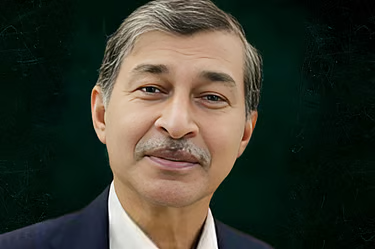
Marking his second U.S. trip in just six weeks, Munir described his visitas a “new dimension” in Pakistan–U.S. relations, signaling growingengagement between the two countries on strategic and regional issues.
Addressing wider global concerns, Munir condemned what he called the”ongoing genocide” in Gaza, describing it as one of the worst humantragedies in recent history with consequences that will resonate for years.He also issued a stern warning about the presence of multiple terroristgroups operating from Afghan soil against Pakistan, particularlyhighlighting the group he referred to as Fitna al-Khawarij.
The speech marked a blend of diplomatic assertiveness and outreach to theglobal Pakistani community, as Munir sought to solidify Pakistan’s positionon international issues while reinforcing national unity.