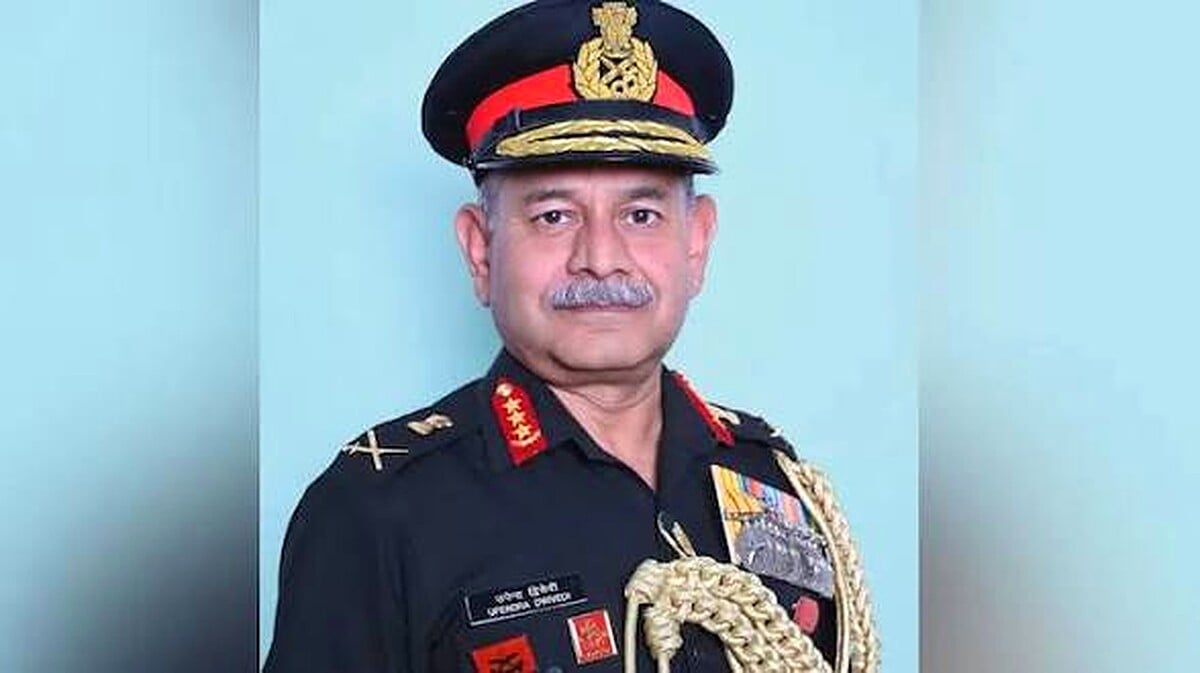




ISLAMABAD: Indian Army Chief General Upendra Dwivedi has sparked intense debate by claiming that during Operation Sindoor in May 2025 his forces deliberately avoided attacking terrorist camps while occupants offered namaz prayers.
The revelation came in a recent interview where the four-star general described operational timing decisions that factored in religious practices of the targets.
According to General Dwivedi strike windows were flexible including two o’clock four o’clock or any hour yet commanders ensured no assault occurred during prayer times because sabka malik ek hai meaning everyone’s God is one.
He added that a suitable moment was chosen when prayers were not underway to maintain this consideration.
Operation Sindoor was India’s response to the April 22 2025 Pahalgam terrorist attack in Indian-administered Kashmir that killed 26 civilians mostly tourists.
The four-day conflict from May 7 to 10 2025 involved missile strikes drone operations and aerial engagements marking the most serious military crisis between the nuclear-armed neighbours since 1971.
Indian officials claimed precision targeting of nine sites linked to Jaish-e-Mohammed and Lashkar-e-Taiba groups in Pakistan and Pakistan-administered Kashmir with no civilian or military Pakistani facilities hit.
Pakistan countered that the strikes killed at least 31 people including women and children and described them as unprovoked aggression on civilian areas.
The conflict saw over 125 fighter jets from both sides in standoff positions the largest such aerial engagement in recent decades.
General Dwivedi’s latest comments mark the first time an Indian Army chief has publicly detailed timing considerations linked to prayer schedules in the operation.
Earlier Indian Air Force chief and other senior officials had highlighted successful targeting of terror camps but without reference to religious timing.
The Army chief also mentioned consulting the Bhagavad Gita for guidance before major decisions and consulting unit scholars familiar with Quran and Guru Granth Sahib to minimise collective harm.
This approach he said reflected efforts to avoid unnecessary suffering even in combat.
Regional Pakistani media and social platforms quickly highlighted the statement with mixed reactions.
Some viewed it as an attempt to claim moral high ground nearly one year after the incident while others criticised it as performative religiosity from a military leader.
Criticism within India has also surfaced with questions raised over the narrative of restraint when the operation itself involved deep strikes inside Pakistan.
Analysts note that such statements appear aimed at projecting ethical conduct in modern warfare yet they risk undermining the operational narrative of decisive action against terrorism.
Operation Sindoor lasted 88 hours with India mobilising troops for potential ground operations if escalation continued.
Post-conflict reviews indicate India destroyed seven of nine primary targets while Pakistan claimed downing several Indian aircraft a assertion New Delhi dismissed as disinformation.
International coverage of the 2025 clashes remained limited initially focusing on escalation risks and US-mediated ceasefire efforts announced by then President Trump.
European think-tanks later provided detailed assessments confirming Indian dominance in air domain and standoff weaponry use.
General Dwivedi’s interview forms part of a broader reflection series where he discussed leadership drawing from religious texts and balancing military necessity with humanitarian aspects.
He emphasised that his unit includes personnel versed in multiple faiths allowing cross-consultation on ethical dilemmas.
Pakistan has consistently rejected Indian claims of surgical precision in Operation Sindoor maintaining that civilian casualties occurred and that its response demonstrated resolve.
The one-year mark of the conflict has revived debates on deterrence effectiveness with both sides claiming strategic gains.
Indian officials insist the operation reset assumptions about cross-border terrorism establishing a new normal of cost imposition.
Pakistani leaders have pointed to constitutional and narrative adjustments post-crisis as evidence of resilience.
General Dwivedi’s remarks have drawn particular attention for invoking shared divinity in a conflict rooted in longstanding rivalries.
Observers suggest the statement seeks to frame Indian actions within a broader moral framework yet it has invited scrutiny over its timing and intent.
Military ethics experts note that avoiding strikes during prayer times if verified would represent an unusual restraint in targeting terrorist infrastructure.
However without independent corroboration of specific timing data the claim remains part of competing narratives from the 2025 crisis.
The episode underscores challenges in information warfare where operational details mix with efforts to shape public perception months after the event.
As tensions persist along the Line of Control both nations continue modernising forces with lessons from the brief but intense confrontation.
Operation Sindoor involved integration of crewed and uncrewed systems real-time monitoring and precision munitions highlighting evolution in South Asian conflict dynamics.
General Dwivedi’s comments have reignited discussions on whether moral positioning strengthens or complicates military credibility in asymmetric threats.