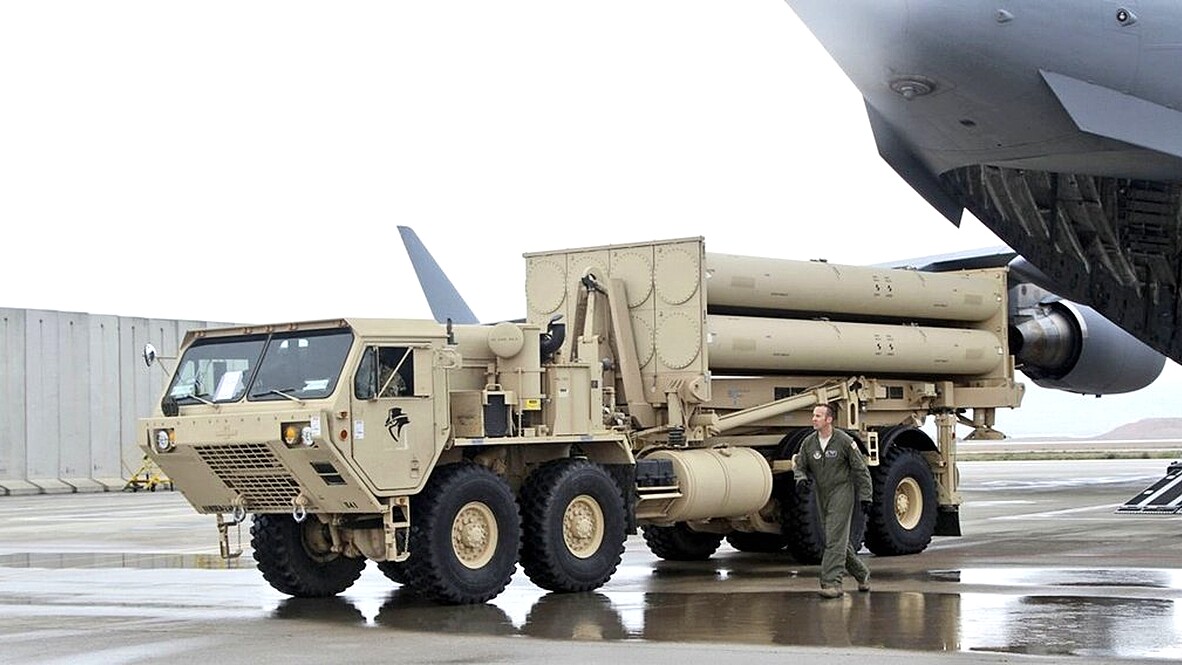
ISLAMABAD: The Pentagon has initiated the transfer of critical components from Terminal High Altitude Area Defense (THAAD) systems stationed in South Korea and Patriot interceptors from across the Indo-Pacific region to bolster defences in the Middle East, a move completed within just one week of intensified hostilities with Iran.
This swift redeployment highlights the severe strain on US missile interceptor stockpiles caused by sustained ballistic missile exchanges in the ongoing conflict.
Reports from South Korean media and US officials indicate that parts of the THAAD battery, permanently deployed in Seongju since 2016, are being relocated.
The THAAD system, unique in its foreign permanent basing in South Korea, provides high-altitude interception of ballistic missiles and radar cueing against potential threats from China.
The AN/TPY-2 radar associated with THAAD offers detection ranges exceeding 3,000 kilometres, making it a strategic asset for monitoring activities in Northeast Asia.
Recent escalations in the Middle East have depleted global THAAD interceptor reserves significantly.
During the 12-day war in June 2025, the US expended over 150 THAAD interceptors defending Israel, representing more than 25 percent of the total arsenal and costing an estimated $2.35 billion at $15.5 million per missile.
Further intense engagements since late February 2026 have accelerated this depletion, with Iranian strikes reportedly destroying key radars and overwhelming existing defences.
Patriot systems face similar pressures.
The MIM-104 Patriot, optimised for lower-altitude threats, saw over 800 interceptors launched in the first five days of recent hostilities, far exceeding usage in prolonged conflicts elsewhere.
Each Patriot interceptor costs approximately $3 million to $3.8 million, leading to expenditures in the billions over short periods.
Prior to the current crisis, Patriot stocks had already fallen to 25 percent of required levels by mid-2025 due to commitments in Ukraine and earlier Iran-related clashes.
South Korean sources confirm that Patriot PAC-3 batteries have been moved to Osan Air Base, with heavy transport aircraft such as C-17s facilitating their shipment to bases in Saudi Arabia and the United Arab Emirates.
Foreign Minister Cho Hyun acknowledged discussions between US and South Korean militaries on possible redeployments, though Seoul has not confirmed final transfers.
President Lee Jae Myung stated that South Korea cannot prevent such actions by US forces on its soil, while emphasising that national deterrence against North Korea remains intact through domestic capabilities.
Analysts express concern over potential vulnerabilities on the Korean Peninsula.
North Korea’s advancing ballistic missile arsenal poses a persistent threat, and any reduction in layered US missile defences could be interpreted as a shift in priorities away from the Indo-Pacific.
The redeployment follows a pattern, including earlier cyclic movements of Patriot batteries to the Middle East in 2025, which returned by October.
Broader Indo-Pacific implications extend beyond South Korea.
Allies such as Japan, Taiwan and the Philippines rely on US extended deterrence, including systems like Patriot and THAAD variants, to counter China’s growing missile capabilities.
Reports suggest that diverting these assets creates gaps in regional readiness, especially against mass ballistic missile salvos.
Production ramps offer limited immediate relief.
The Pentagon has agreements to increase THAAD interceptor output from 96 to around 400 units annually, but backlogs and delivery delays persist.
Patriot production also falls short of replenishing depleted stocks amid multiple global demands.
Experts warn that prolonged Middle East operations risk compromising credibility in the Indo-Pacific.
A Heritage Foundation assessment highlighted that high-end interceptors like THAAD, Patriot PAC-3 MSE and SM-3 could exhaust quickly in a major contingency against China or North Korea.
The rapid one-week timeline for initiating these transfers underscores the urgency faced by US commanders.
With Iranian ballistic missile barrages continuing and US bases in the region sustaining damage, the Pentagon appears to prioritise immediate survival over long-term positioning.
South Korean commentators describe the THAAD deployment as part of a broader US strategy for containing China, now tested by competing theatres.
While South Korea fields its own advanced air defences, the symbolic and operational role of US systems remains significant for alliance cohesion.
The moves have sparked unease in Seoul about overreliance on Washington and potential miscalculations by adversaries.
Regional observers note that China’s monitoring of US munitions drain could influence strategic calculations in East Asia.
The situation illustrates the challenges of maintaining global deterrence with finite high-value assets.
As the conflict with Iran enters its second week, the full extent of the drawdown from Asia remains under close scrutiny.
US Forces Korea has declined detailed comment citing operational security.
The transfers signal a stark reality: defending one theatre at high intensity can rapidly erode capabilities elsewhere.
This development prompts renewed calls for accelerated domestic production and diversified defence strategies among Indo-Pacific partners.