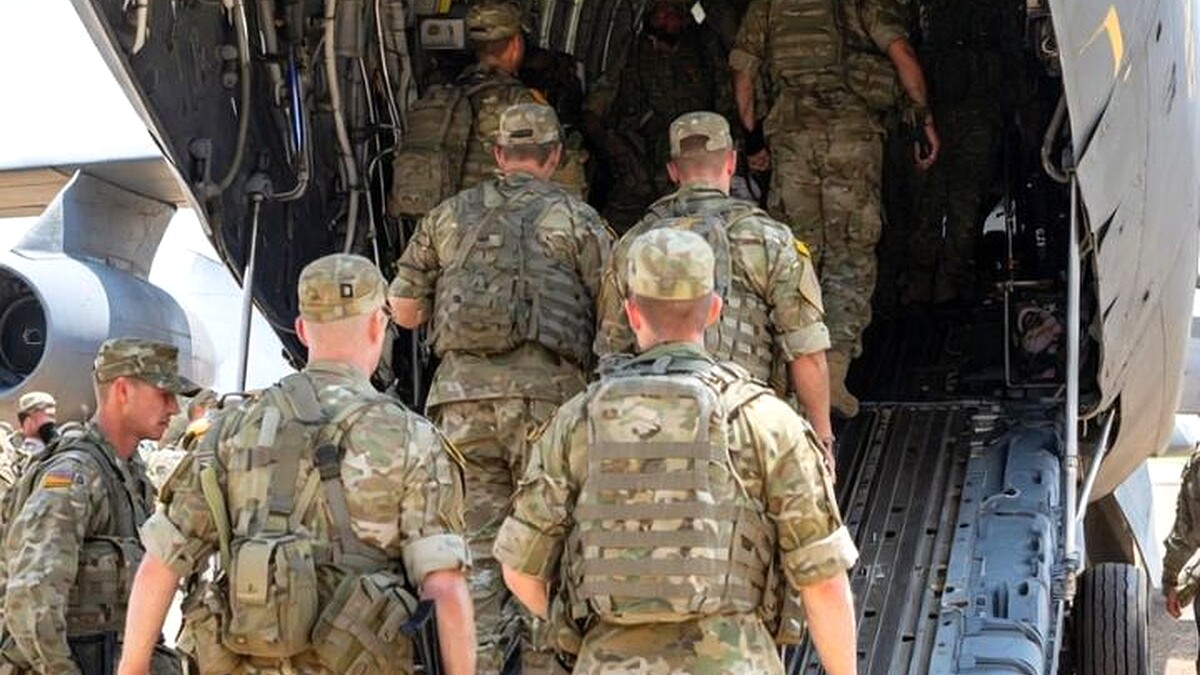
ISLAMABAD: Australia has firmly rejected any deployment of ground troops to Iran, emphasising a limited defensive role in the escalating Middle East conflict.
Prime Minister Anthony Albanese and Foreign Minister Penny Wong have repeatedly clarified that Australian forces will not engage in offensive operations or enter Iranian territory.
This stance comes as the government responds to requests from Gulf nations facing Iranian missile and drone attacks following US and Israeli strikes on Iran.
The decision marks a careful calibration of Australia’s alliance commitments while avoiding deeper entanglement in what critics call a potential prolonged war.
In recent statements, Wong stressed that Australia is not participating in any offensive actions against Iran.
She explicitly ruled out ground troop involvement, drawing a sharp contrast with past engagements.
“This is not Iraq, and we are not the Howard government,” Wong told reporters, referencing the 2003 invasion that saw Australian troops deployed under John Howard.
“We are not asking Australians to accept men and women being deployed into a ground war.”
The comments address domestic concerns over military overreach amid rising regional tensions.
Australia has confirmed it is considering defensive military assistance to Gulf states hit by Iranian retaliatory strikes.
Prime Minister Albanese announced the deployment of an E-7A Wedgetail surveillance aircraft and around 85 Australian Defence Force personnel to the United Arab Emirates.
This support aims to bolster collective self-defence for affected nations, including protection against aerial threats.
The Wedgetail, a long-range reconnaissance platform, will operate for an initial four-week period.
Additionally, Australia is providing advanced medium-range air-to-air missiles to enhance defensive capabilities.
These assets focus on surveillance, early warning, and interception rather than direct combat roles.
The government maintains that personnel will not take part in offensive missions.
This limited contribution responds directly to a request from UAE President Mohamed bin Zayed Al Nahyan.
Australia’s position aligns with its broader foreign policy of supporting allies without committing to ground operations.
Experts note that such deployments avoid the legal and political risks of entering a sovereign conflict zone.
International law specialists have warned that direct involvement could implicate Australia in the wider war.
The Greens’ defence spokesperson, David Shoebridge, criticised any escalation, arguing it serves US interests over Australian ones.
“There is no rational Australian interest in sending troops to the Gulf,” Shoebridge said.
He described potential deeper involvement as signing up to “another US forever war by deception and stealth.”
Public sentiment in Australia remains wary of Middle East commitments following experiences in Iraq and Afghanistan.
The Albanese administration has prioritised defensive postures to maintain bipartisan support where possible.
Opposition figures have indicated openness to defensive measures if deemed in the national interest.
The conflict has seen rapid escalation since US and Israeli operations targeted Iranian facilities.
Iran responded with missile barrages against Gulf neighbours, heightening fears of broader instability.
Oil prices have surged due to threats to shipping lanes and energy infrastructure.
Australia’s approach reflects a balance between alliance obligations and domestic priorities.
Defence analysts highlight the strategic value of the Wedgetail in monitoring aerial threats across vast areas.
The deployment underscores Australia’s growing role in Indo-Pacific and Middle East security networks.
Yet, the explicit refusal to send ground forces signals limits to involvement.
Wong reiterated that decisions follow careful assessment of national interests.
Australia continues diplomatic efforts for de-escalation while supporting affected partners.
The government’s transparency on troop limits aims to reassure the public amid global uncertainty.
As the situation evolves, Canberra will monitor requests and adjust contributions accordingly.
This measured response contrasts with calls for greater restraint from opposition voices.
Australia’s refusal to deploy ground troops to Iran reinforces a policy of selective engagement in distant conflicts.