*LONDON – Pakistan Army has reversed the centuries old great game played inthe region, a leading British security think tank Royal United ServicesInstitute (RUSI) has said.*
*RUSI assessed that for the first time in 200 years, Pakistan Army hasabandoned the British policy of confronting Russia for control over CentralAsia.*
*Pakistan’s army now sees the Russians as their strategic partners. *Pakistan’sarmy, emboldened by Operations Zarb-e-Azb and Raddul Fasaad, has takenconcrete steps of reforms and relationship which demonstrate that Pakistandoesn’t see Russia as a threat anymore and closer defence relationshipbetween the former hostile powers is visible.
Kamal Alam, the RUSI’s Fellow on defence and report author, wrote thatPakistan army has pushed the militants out of FATA and cleared the areas ofthose groups fighting the Pakistani state, have announced an end to theBritish-era policy of the Frontier Crimes Regulation which residents of theFata are denied basic legal rights.
“This would mean the fabled ‘buffer zone’ of Curzon and British India wouldbe no more, once the incoming parliament passes it in law in the comingyear. This means that for the first time there is no need to have a tribalarea. Fata will be abolished, and the areas on the Afghan border will bebrought in line with the laws of the Pakistani state. In effect, theRussian threat is over. Pakistan’s army and Russia are sealing anever-closer defence relationship which will have a strategic impact on theworld stage for years to come. Pakistan’s army has also won over Moscow andTehran to their side of the Afghan issue after decades of mistrust.
The RUSI report noted that the current Pakistani military leadership underChief of Army Staff (COAS) General Qamar Javed Bajwa is set to reverse theGreat Game and thereby end almost 200 years of “looking over theirshoulder” and fearing the Russian threat.
It said: “Pakistan’s army is frantically mending its historically weak tieswith the Russian army and making progress through defence diplomacy at adizzying pace by making a pivot to Russia instead of its traditionallyclose military ties with the US. There are multiple military deals,intelligence cooperation and joint training exercises that are redefiningthe region. As a US led by President Donald Trump further isolatesPakistan, the army under Bajwa is shoring up its Western flank with thehelp of its erstwhile enemy, the Russian military.”
The report analysed that Pakistan army has felt that the policy of having abuffer zone with Afghanistan is no longer required as the Russians are nolonger a threat to Afghanistan – and by default Pakistan.
It said that while Pakistan has always been a willing partner of Americaand firmly on side of the west, Donald Trump’s administration has forcedPakistan into policy re-think because “the Trump doctrine is now maturinginto a permanent aggressive foreign policy against Pakistan in the shape ofblocking military aid and putting pressure on the IMF not to grant thecountry more bailouts”.
Read Top Stories
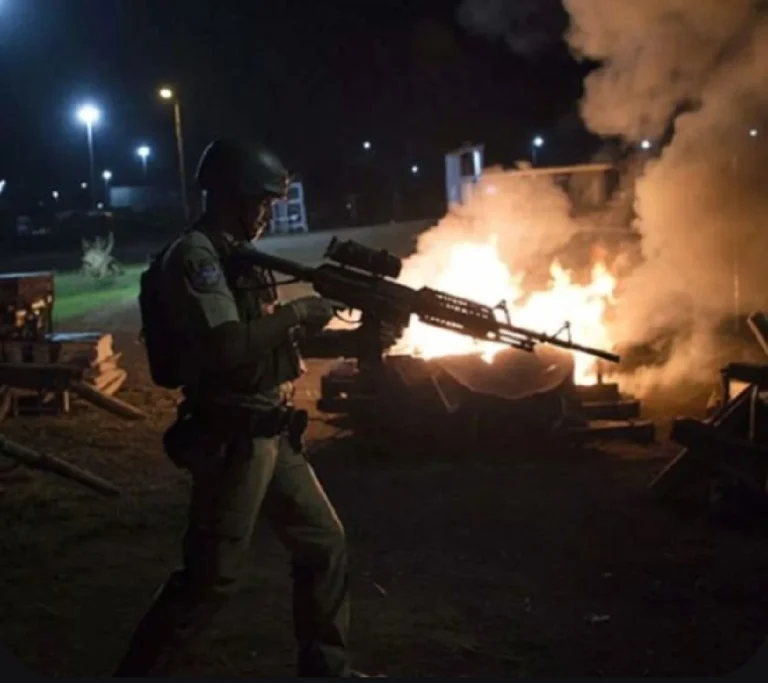
It noted that the aggressive behavior was shown when in the first week ofAugust, the Americans cancelled military training for the Pakistanimilitary. “It was no coincidence that as the Americans announced this, theRussians, for the first time in history, announced the start of militarytraining for Pakistani military officers.”
“That Pakistan’s army sees Russia as an ally in Afghanistan and CentralAsia is a complete turnaround from 200 years of fearing and indeed fightingthe ‘bear’ from across the River Oxus. Just 20 or even 10 years ago it wasunthinkable that both Russia and Iran would support the Afghan Taliban.This was previously the preserve of just the Pakistani army and itspowerful Inter-Services Intelligence (ISI). The Taliban had always beenanti-Russian because of Russia’s support for the Taliban’s erstwhileenemies, the Northern Alliance, and they had also killed nine Iraniandiplomats. Now, however, it is a widely accepted fact in most Americanmilitary circles that both the Russians and the Iranians are following thePakistani policy of supporting the Afghan Taliban,” said the report.
The report mentioned how relations between the two started becoming normalstarting from 2002 but then picked up significantly over the issue ofAfghanistan.
“Both countries now feel that the US-led war in Afghanistan is a threat totheir security. Although Bajwa has carried out the policy of rapprochementto the Russians, there has been a slow drift away from the US by hispredecessors, with the full support of the Corps Commanders, the executivearmy of the military leadership which decides strategic decisions as agroup. As the frenzy of American criticism on the Pakistani military rises,senior Russian defence officials have been publicly praising the Pakistanimilitary’s efforts against terrorism on the Afghan borders.”
The report said that whilst all the talk during the Cold War was of aRussian threat to Pakistan and of it reaching the warm waters of theArabian Sea, the Russians are now on board with the China-Pakistan EconomicCorridor (CPEC).
It added: “Moscow’s approach to participating in the development of GwadarPort in Pakistan, seen as Pakistan’s economic future, is considered agame-changer in Pakistan.