



UAE demands full Iranian compliance with ceasefire terms amid high-stakes Islamabad peace negotiations.
ISLAMABAD: The UAE Embassy in Islamabad has issued a strongly worded tweet that is sending shockwaves through diplomatic circles as ceasefire talks between the United States and Iran get underway in the Pakistani capital.
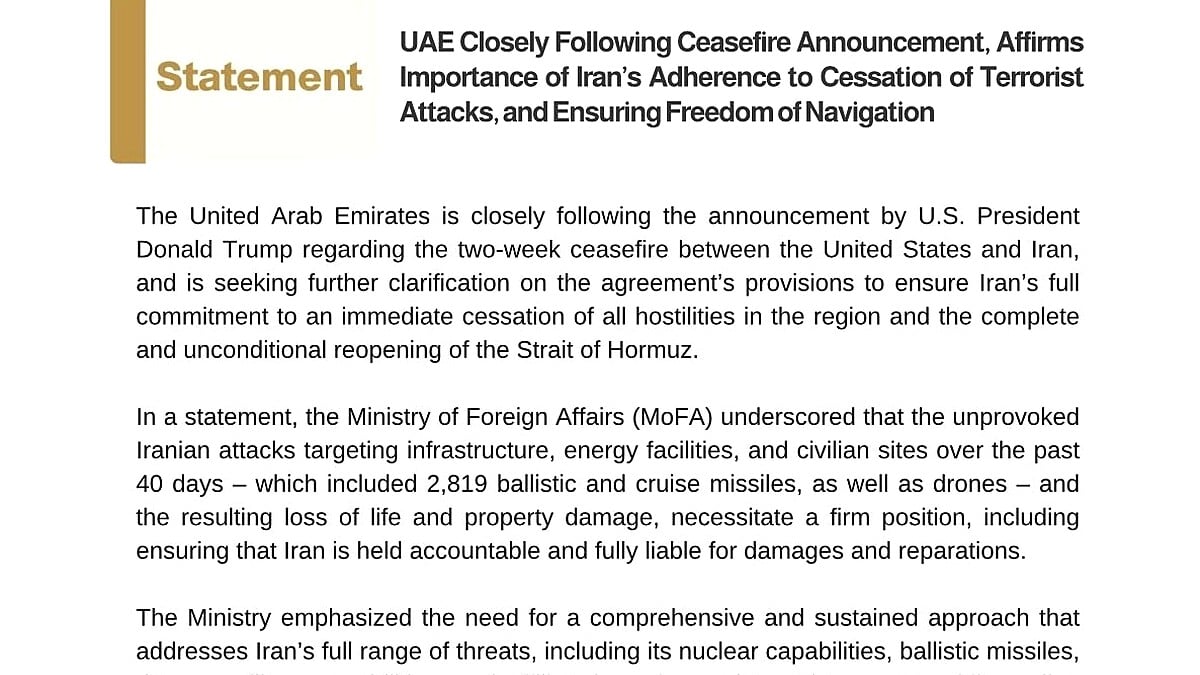
In its official statement the embassy declared that the United Arab Emirates is closely reviewing the two-week ceasefire announcement while insisting Iran must fully honour its pledges to halt all terrorist activities and guarantee unrestricted freedom of navigation in international waterways.
The move comes just hours after Pakistan successfully brokered the fragile truce that has already drawn global attention with Vice President JD Vance expected to lead the US delegation to Islamabad on Friday.
Regional observers note that the UAE position reflects deep Gulf concerns over more than 40 days of Iranian aggression that included the launch of 2,819 ballistic and cruise missiles along with waves of drones targeting civilian and energy infrastructure across the region.
UAE air defences intercepted the vast majority of these projectiles yet the sheer volume of attacks caused significant property damage and loss of life according to official tallies released by the UAE Ministry of Defence.
The Strait of Hormuz which carries an average of 20.3 million barrels of oil per day representing 25 percent of global maritime petroleum trade remains the focal point of the standoff.
Iran’s repeated threats to close the vital chokepoint had already disrupted shipping with daily transits dropping to a fraction of normal levels before the ceasefire and forcing oil prices to spike worldwide.
Pakistan Prime Minister Shehbaz Sharif who played a pivotal mediating role has invited both American and Iranian teams to Islamabad for face-to-face negotiations aimed at converting the temporary pause into a lasting agreement.
The UAE tweet explicitly demands unconditional reopening of the Strait and an immediate end to proxy attacks by Iranian-backed groups emphasising that mere words on paper are insufficient without verifiable behavioural change.
Diplomatic sources in Islamabad confirm that the embassy’s statement was coordinated with the UAE Ministry of Foreign Affairs and reflects Abu Dhabi’s commitment to regional stability following direct strikes on Emirati territory earlier in the conflict.
Analysts highlight that the UAE’s firm language marks one of the strongest public interventions by a Gulf state since the ceasefire was announced underscoring the high stakes for energy security and international trade routes.
With China receiving 37.7 percent of all oil exports passing through Hormuz and India 14.7 percent any renewed disruption could trigger immediate shortages across Asia and beyond.
The embassy further stressed that Iran cannot hold the United States the UAE and the global economy hostage adding that a simple ceasefire declaration falls short without full accountability for damages and reparations.
Pakistani officials have welcomed the UAE’s input describing it as constructive support for the Islamabad process while maintaining close contact with all Gulf allies including Saudi Arabia Qatar and the broader GCC.
International media outlets including Reuters have reported the UAE’s call for clarification on ceasefire terms focusing on Tehran’s nuclear military and proxy activities as essential preconditions for any sustainable peace.
The timing of the tweet coincides with heightened security measures around the planned talks venue in Islamabad where Pakistani authorities are preparing for the arrival of high-level delegations under strict protocols.
Experts estimate that full compliance by Iran could restore daily oil flows worth billions of dollars to the world market while failure risks reigniting hostilities that have already claimed hundreds of lives and inflicted billions in economic losses.
The UAE Embassy’s intervention has drawn praise from regional partners who view it as a timely reminder that Gulf states will not accept half-measures in addressing Iranian threats to maritime security.
As delegations converge on Islamabad this weekend the world watches whether the ceasefire holds or whether the UAE’s demand for iron-clad guarantees will shape the final outcome of these critical negotiations.