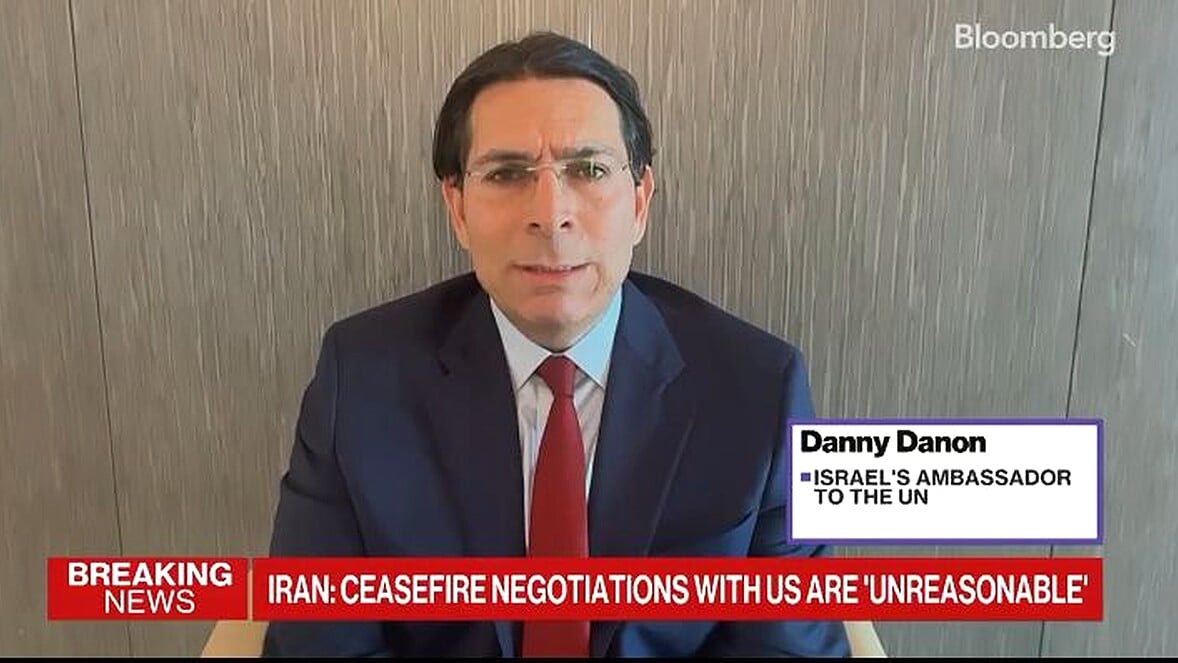




Danny Danon explains firm stance on Iran nuclear threat amid Pakistan mediation efforts.
ISLAMABAD: Israel's Ambassador to the United Nations Danny Danon has categorically stated that his country will not send any delegation to Islamabad for upcoming ceasefire negotiations between the United States and Iran.
In a direct Bloomberg interview, Danon made clear that Israel remains uninvolved in the reported talks scheduled in the Pakistani capital later this week. He emphasised that joint Israeli-US military operations against Iranian targets continue unabated.
The revelation comes as Pakistan has emerged as a key mediator in the escalating US-Iran conflict that has gripped the region for weeks. Pakistani Prime Minister Shehbaz Sharif and Army Chief Field Marshal Asim Munir have facilitated backchannel communications leading to a fragile two-week temporary ceasefire.
Regional media reports highlight Pakistan's intensive diplomatic push involving multiple calls with US President Donald Trump and Iranian officials. Islamabad hosted preliminary discussions amid fears of wider regional spillover including disruptions in the Strait of Hormuz.
Danon told Bloomberg that as far as he knows Israel has no participation in the Pakistan-hosted talks. He stressed that strikes on Iranian military infrastructure have achieved significant degradation of air defences and naval assets yet fall short of eliminating the core threats.
Official figures from Israeli assessments indicate that operations have targeted Iranian nuclear-related sites and ballistic missile facilities. Danon insisted that any future negotiations must ensure Iran possesses zero nuclear capability and no advanced ballistic missile programme.
The Israeli position underscores deep scepticism towards diplomatic overtures while military actions persist. Danon noted the high level of coordination between Israel and the United States in ongoing strikes described as necessary to counter existential dangers from Tehran.
Pakistan's mediation role has drawn international attention with reports suggesting Iran received a 15-point US proposal via Pakistani channels. Iranian sources acknowledged gratitude to Pakistani leadership for their efforts yet expressed reservations about long-term commitments.
Data from regional analysts show that the conflict has already impacted global energy routes with shipping through the Strait of Hormuz facing intermittent halts. Over 180 casualties were reported in related strikes in Lebanon where Israel maintains operations outside the main ceasefire framework.
Bloomberg coverage captured Danon's firm tone during the late edition of Balance of Power programme. He reiterated Israel's determination to do whatever is necessary to neutralise future Iranian threats regardless of diplomatic timelines.
The absence of an Israeli delegation in Islamabad raises questions about the viability of talks aimed at a permanent settlement. US officials have described the truce as fragile while European and other international actors welcomed Pakistan's bridging efforts.
Pakistan has positioned itself as a neutral facilitator leveraging longstanding ties with both Iran and indirect channels to Washington. Diplomatic sources in Islamabad claim the mediation prevented further escalation that could have engulfed broader Middle Eastern territories.
Danon recalled that Israel has long advocated for enforced agreements rather than mere declarations. He pointed to past UN resolutions and Iran's history of non-compliance as reasons for caution in the current process.
Military experts estimate that continued operations have reduced Iran's naval fleet capacity by substantial margins though exact classified figures remain undisclosed. Ballistic missile stockpiles have also faced targeted degradation according to Israeli briefings.
The development highlights complex geopolitics where Pakistan balances its non-recognition of Israel with active peacemaking between Washington and Tehran. Regional reports from Pakistani outlets authenticate the intense shuttle diplomacy undertaken by Sharif and Munir in recent days.
International coverage including Bloomberg and Times of Israel has amplified Danon's remarks underscoring Israel's exclusion from the Islamabad track. This stance may influence the trajectory of talks set for April 10 in the Pakistani capital.
Analysts warn that without Israeli buy-in the ceasefire risks collapse particularly over unresolved issues like Iran's nuclear programme and proxy activities. Danon made it explicit that Israel will not accept any deal permitting Tehran to retain enrichment capabilities or missile development.
The situation remains fluid with potential for renewed hostilities if core demands go unmet. Pakistan's diplomatic success in arranging the initial truce stands as a notable achievement yet faces tests in the coming negotiations.
Observers note the high stakes for regional stability with economic implications extending far beyond the Middle East. Energy markets have shown volatility amid uncertainties surrounding the Hormuz corridor.
Danon's Bloomberg appearance serves as a stark reminder of divergent priorities among key players. While Pakistan pushes for dialogue Israel maintains focus on decisive military outcomes to secure long-term deterrence.