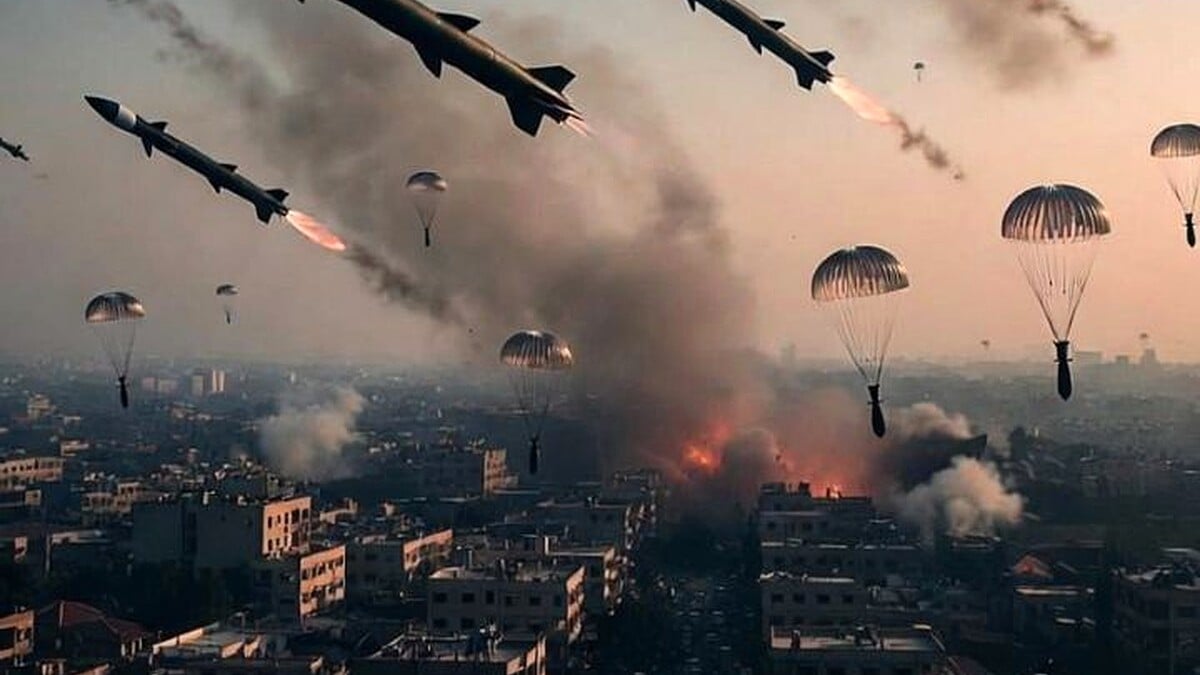
ISLAMABAD: Iran’s Islamic Revolutionary Guard Corps launched a large-scale barrage of missiles and drones targeting Israel following the selection of Mojtaba Khamenei as the new Supreme Leader, causing explosions to rock Tel Aviv and several other cities across the Zionist entity.
Air raid sirens wailed across multiple regions as projectiles streaked through the night sky, with reports confirming injuries among civilians in central Israel.
The strikes mark a significant escalation in the ongoing conflict that erupted after joint US-Israeli operations began on February 28, initially killing former Supreme Leader Ayatollah Ali Khamenei and targeting Iran’s military infrastructure.
Iran’s retaliatory actions have intensified since Mojtaba Khamenei’s appointment, with the IRGC describing the operation as part of continued resistance against aggression.
Multiple waves of ballistic missiles, including advanced models such as Khaibar Shekan and Khorramshahr, were reportedly used in the assaults, aiming to overwhelm Israel’s multi-layered defense systems.
Although Israel’s Iron Dome and other interceptors engaged many incoming threats, some missiles penetrated, leading to impacts in populated areas and causing material damage alongside casualties.
Emergency services in Israel reported at least six injuries from a recent barrage, echoing similar figures from prior attacks where cluster munitions wounded civilians in central regions.
The latest assault follows a pattern of daily Iranian missile volleys, with data indicating over 90 attempted strikes between late February and early March, though the volume has decreased due to degradation of Iran’s launch capabilities from allied counterstrikes.
In parallel developments, clashes intensified along the Israel-Lebanon border, where Hezbollah forces engaged Israeli troops in southern Lebanon.
Two Israeli soldiers lost their lives in an attack near an army post, marking the first IDF fatalities in ground operations since the resumption of hostilities tied to the broader regional war.
The incident involved anti-tank projectiles or mortars striking military equipment, resulting in a fire that claimed the lives of the personnel.
Hezbollah’s involvement stems from solidarity with Iran, with the group launching its own missiles and drones toward northern Israel in coordination with Tehran’s efforts.
On the American front, US Central Command confirmed the deaths of two additional service members, bringing the total US fatalities in the conflict to eight.
These losses occurred amid Iran’s widespread retaliatory strikes on US positions and allies across the Middle East, including bases in Saudi Arabia and other Gulf states.
The fatalities highlight the expanding scope of the war, which has drawn in multiple actors and disrupted regional stability.
Iran’s missile program has faced severe setbacks from sustained US-Israeli airstrikes, with reports indicating destruction of around 75 percent of launchers and significant damage to production sites.
Despite these blows, Tehran has persisted with barrages, targeting not only Israel but also Gulf nations in response to perceived support for the campaign against it.
The conflict has resulted in substantial casualties, with over 1,200 deaths reported in Iran from allied operations, hundreds in Lebanon from Israeli actions against Hezbollah, and a smaller but growing number in Israel from Iranian projectiles.
Civilian infrastructure has suffered, including oil facilities in Iran and various sites in targeted countries.
International observers note the rapid escalation following the leadership transition in Tehran, with Mojtaba Khamenei assuming the role amid ongoing bombardment.
Israel has vowed to continue operations to neutralize threats, while Iranian officials have signaled sustained retaliation.
The involvement of Hezbollah has widened the front, drawing Lebanon deeper into the fray and displacing large populations in border areas.
US officials have emphasized the degradation of Iran’s capabilities, with strikes occurring frequently to limit further attacks.
The war’s economic ripple effects include surging oil prices and disruptions to global supply chains.
As the conflict enters its second week, the risk of broader involvement remains high, with all parties issuing strong statements on their positions.
The selection of the new Supreme Leader appears to have galvanized Iran’s response, leading to intensified operations against Israel and its allies.
Continued exchanges along multiple fronts suggest the situation could prolong without immediate de-escalation.
Regional powers monitor developments closely, as the outcome may reshape Middle East dynamics for years.