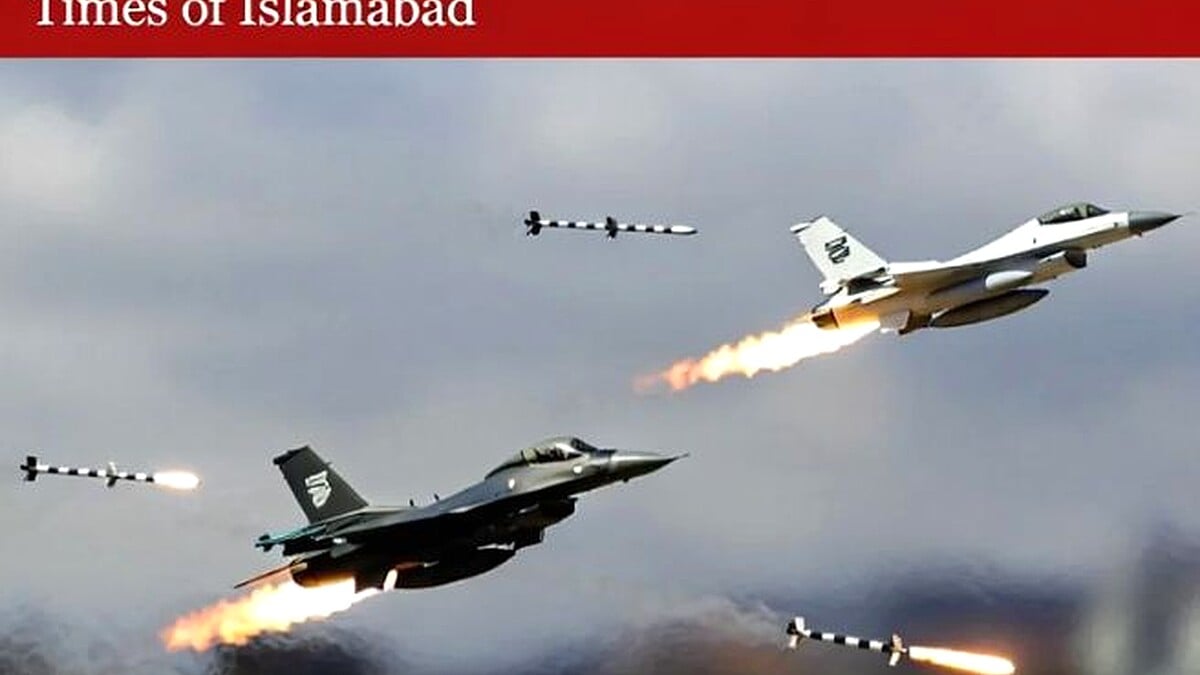
ISLAMABAD: The rapidly escalating war between the United States, Israel and Iran has begun spilling across the Persian Gulf, placing regional Arab states in an increasingly precarious position as missile and drone attacks hit military bases, energy facilities and shipping routes. As Washington intensifies military operations against Tehran, calls from American political figures such as Senator Lindsey Graham urging stronger regional alignment have renewed debate over whether Gulf monarchies could eventually be drawn into a direct confrontation with Iran.
The conflict erupted after large-scale American and Israeli air and missile strikes on Iran on February 28, targeting military leadership, strategic infrastructure and nuclear-related facilities in what officials described as a campaign designed to weaken the Iranian state and its regional capabilities. Tehran responded swiftly with missile and drone attacks across the Middle East, targeting Israel, American military installations and countries hosting US forces.
Within days, the confrontation had expanded beyond the original battlefield. Iranian missiles and drones began striking targets in several Gulf countries including Bahrain, Kuwait, the United Arab Emirates and Oman — states that host key American military bases or logistics hubs used in regional operations.
These attacks have dramatically intensified fears that the conflict could transform from a US-Iran confrontation into a wider Gulf-Iran war with major global consequences.
Recent intelligence reports indicate that Iran has targeted infrastructure linked to American forces throughout the region. Drone and missile strikes have damaged facilities linked to the US Navy’s Fifth Fleet headquarters in Bahrain, while attacks have also struck energy installations and desalination infrastructure critical to Gulf economies.
Kuwait has also experienced significant strikes, including attacks on air bases and logistical facilities hosting American troops. Iranian drones and missiles have targeted Camp Buehring and other military installations, reportedly causing casualties among US personnel and Kuwaiti forces.
In the United Arab Emirates, dozens of Iranian missiles and hundreds of drones have been launched toward US-linked bases including Al Dhafra Air Base near Abu Dhabi. Although most projectiles were intercepted by advanced air defence systems, falling debris and impacts have damaged civilian infrastructure and caused casualties in populated areas.
Iranian attacks have also extended to maritime targets and commercial infrastructure in Oman. Drone strikes have hit fuel storage facilities at Duqm Port and targeted oil tankers operating near the Strait of Hormuz, highlighting Tehran’s ability to threaten one of the world’s most important energy shipping corridors.
The growing geographic scope of the conflict illustrates Iran’s strategy of expanding the battlefield beyond its own territory. Analysts say Tehran’s objective is to increase the cost of war for the United States and its regional partners by demonstrating that any country hosting American forces could become a potential target.
This dynamic has placed Gulf governments in an exceptionally delicate position. Most Gulf states maintain strong defence partnerships with Washington and rely heavily on American security guarantees. At the same time, their economies depend on stability, uninterrupted oil exports and secure shipping routes.
Officials in the United Arab Emirates have already urged de-escalation, warning that attacks on civilian infrastructure and energy facilities could destabilise the entire region. Diplomatic representatives have emphasised that Gulf territory should not become a launch platform for attacks on Iran, even as their countries face incoming strikes.
Public debate within the Gulf has also intensified after American Senator Lindsey Graham made remarks widely interpreted as encouraging stronger regional alignment against Tehran and suggesting that the conflict could reshape control over energy resources. His comments have sparked criticism from several regional figures who warn that a broader war would devastate Gulf economies and expose millions of civilians to direct military threats.
For Saudi Arabia, the region’s largest economy and leading oil exporter, the stakes are especially high. The kingdom has long viewed Iran as its principal geopolitical rival, but it also understands that a full-scale war would expose its energy infrastructure to severe risk. The memory of the 2019 drone and missile strikes on Saudi oil facilities remains a powerful reminder of how vulnerable critical infrastructure can be during asymmetric warfare.
The economic implications of a wider Gulf-Iran war would be profound. Nearly one-third of the world’s seaborne oil shipments pass through the Strait of Hormuz, making the region indispensable to global energy markets. Any sustained disruption could trigger a severe supply shock, sending oil prices soaring and destabilising global financial systems.
Shipping lanes have already come under pressure. Reports indicate that Iranian forces have attacked commercial vessels operating in the region, increasing insurance costs for maritime transport and forcing shipping companies to reconsider routes through the Gulf. These disruptions threaten to ripple across global supply chains, affecting industries far beyond the Middle East.
The conflict is also widening geographically. In Lebanon, Hezbollah — a powerful Iranian-aligned movement — has launched attacks against Israel, opening another front in the war and increasing the risk of a multi-theatre regional confrontation.
Meanwhile, the United States has expanded its military operations against Iranian forces, reportedly destroying naval vessels, communications systems and air defence networks during the early stages of the campaign.
Despite this escalation, many analysts believe Gulf states are unlikely to formally join an offensive coalition against Iran. Instead, they are expected to pursue a strategy of defensive cooperation with the United States while simultaneously pushing for diplomatic de-escalation.
This cautious approach reflects the complex realities of Gulf geopolitics. While governments in the region remain wary of Iranian influence, they also recognise that an open war with Tehran would place their own cities, ports and energy infrastructure directly in the line of fire.
If the conflict were to evolve into a full Gulf-Iran war, the consequences could be catastrophic for the entire Middle East. Energy infrastructure across multiple countries could become targets, maritime trade could collapse in one of the world’s most vital shipping corridors, and millions of expatriate workers could face sudden displacement.
Beyond the region, such a war would likely draw in major global powers. China depends heavily on Gulf energy imports, while Russia maintains strategic relations with Iran. Any prolonged conflict could therefore reshape global alliances and trigger broader geopolitical competition.
For now, Gulf governments appear determined to avoid direct military involvement while strengthening air defence systems and protecting critical infrastructure. Yet with missile strikes continuing across the region and political rhetoric escalating in Washington and Tehran, the possibility of a wider Gulf-Iran war remains one of the most serious security threats facing the Middle East today.