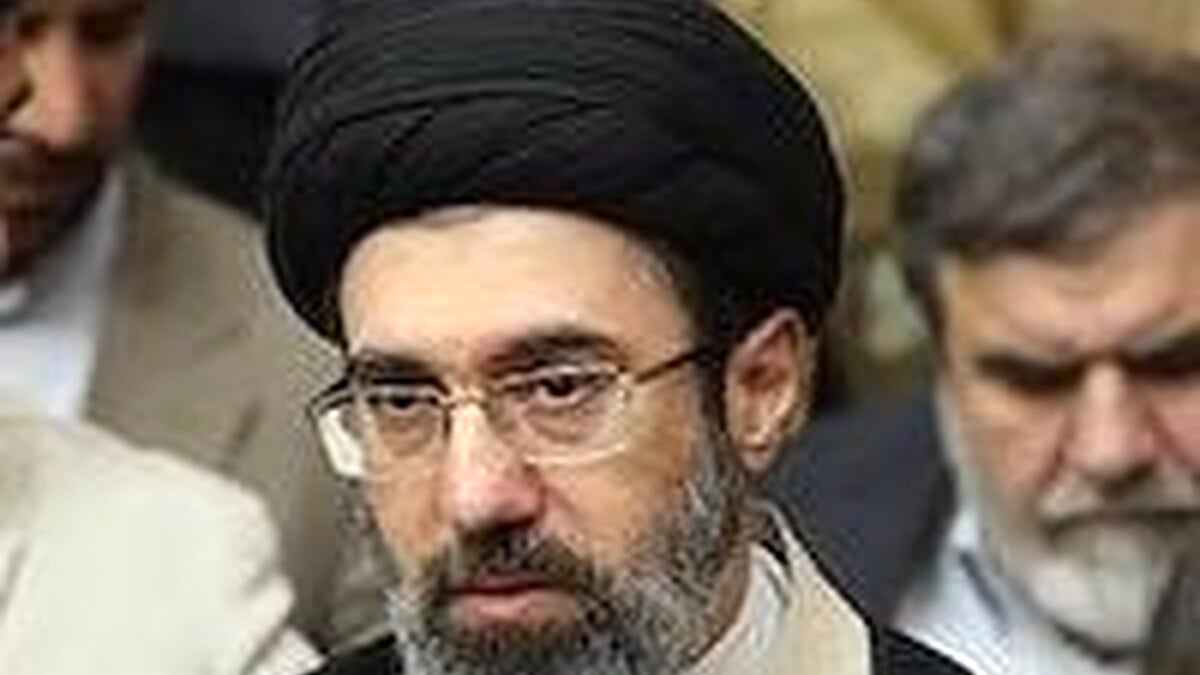
ISLAMABAD: Oman’s Sultan Haitham bin Tariq has sent a formal letter to Ayatollah Mojtaba Khamenei, congratulating him on his recent election as Iran’s new Supreme Leader and wishing him success in guiding the nation through challenging times.
The message from Muscat marks what appears to be the first public congratulations from a Gulf Cooperation Council state to the newly appointed leader. This development comes against the backdrop of Iran’s recent military engagements with regional neighbors and escalating hostilities involving the United States and Israel.
Mojtaba Khamenei, aged 56, was selected by Iran’s Assembly of Experts on March 8, 2026, to succeed his father, the late Ayatollah Ali Khamenei. The elder Khamenei was killed in US-Israeli airstrikes that initiated the current conflict in late February 2026.
The succession represents a historic shift in Iran’s post-revolutionary system. For the first time since 1979, leadership has passed from father to son, breaking from the tradition of avoiding hereditary transitions in the Islamic Republic.
Reports from Iranian state media and international outlets indicate the Assembly of Experts, a body of 88 senior clerics, voted decisively in favor of Mojtaba Khamenei. Sources suggest he received overwhelming support, reflecting the influence of hardline factions and the Islamic Revolutionary Guard Corps.
Mojtaba Khamenei has long operated as a behind-the-scenes power broker. He coordinated aspects of intelligence, military affairs, and political decision-making within his father’s office without holding public office.
His low public profile contrasted with widespread speculation over his potential role. Observers noted his ties to the Revolutionary Guard and his involvement in suppressing dissent during past protests.
The appointment occurred amid an active war. Ongoing airstrikes have targeted Iranian infrastructure, causing significant disruptions and driving global oil prices above $100 per barrel for the first time in years.
US President Donald Trump previously described Mojtaba Khamenei as an unacceptable choice for successor. He warned that such a selection would not lead to de-escalation.
Despite international criticism, domestic reactions in Iran have been mixed. Supporters celebrated in cities like Tehran and Qom, viewing the transition as ensuring continuity of the Islamic Revolution’s principles.
Opposition voices, including some chants reported from residential areas, expressed dismay over the dynastic nature of the succession and concerns about further entrenchment of hardline rule.
Oman’s gesture stands out in the Gulf region. Other states have remained silent or issued cautious statements on the leadership change.
Oman has maintained a policy of diplomatic neutrality and mediation in regional disputes. It hosted talks involving Iran and Western powers in the past and facilitated communications during crises.
The sultan’s letter emphasized wishes for stability and progress under the new leadership. It highlighted Oman’s interest in continued bilateral cooperation despite broader tensions.
Analysts view this move as pragmatic. Oman shares maritime boundaries with Iran across the Strait of Hormuz, a vital chokepoint for global energy shipments.
By extending congratulations promptly, Oman signals a willingness to engage constructively. This contrasts with the positions of other Gulf states that have aligned more closely with US and Israeli stances in the current conflict.
The timing is notable. Iran’s recent attacks on regional targets heightened fears of wider escalation. Oman’s outreach may aim to preserve channels for dialogue.
Regional observers note that Hezbollah and Russian President Vladimir Putin have also sent congratulatory messages. These reflect alliances supportive of Iran’s leadership continuity.
In Tehran, President Masoud Pezeshkian welcomed the appointment as ushering in a new era of strength and dignity for the nation.
The Assembly of Experts justified the choice by citing the need for a leader respected for resilience against external pressures.
Mojtaba Khamenei’s elevation consolidates hardline control at a critical juncture. It signals no immediate shift toward moderation amid the war.
Global markets continue reacting to the instability. Oil price surges underscore the conflict’s economic ripple effects beyond the Middle East.
Diplomatic circles watch closely for further international responses. Oman’s initiative may encourage other states to define their positions on Iran’s new era.
The congratulations highlight the complex interplay of ideology, pragmatism, and security interests shaping Gulf-Iran relations in turbulent times.