ISLAMABAD – Finance Minister Ishaq Dar on Friday warned Moody’s InvestorService that he would give a “befitting reply” in an official meeting ifthe agency did not reverse the downgrade of Pakistan’s sovereign creditrating.
On Thursday, Moody’s cut Pakistan’s sovereign credit rating by one notch toCaa1 from B3, citing increased government liquidity and externalvulnerability risks, following the devastating floods that hit the countryearlier this year.
“The outlook remains negative,” said the New York-based rating agency,adding that the floods had exacerbated Pakistan’s liquidity and externalcredit weaknesses and vastly increased social spending needs, whilegovernment revenue is severely hit.
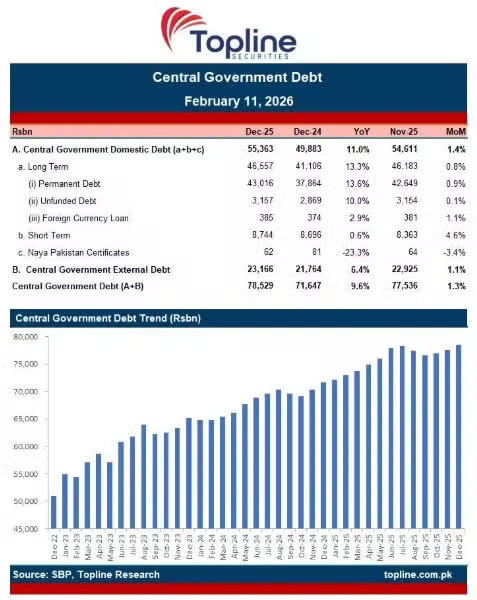
Debt affordability, a long-standing credit weakness for Pakistan, willremain extremely weak for the foreseeable future. The downgrade has pushedthe country into the C-category after seven years, i.e. March 2015.
Talking outside an accountability person in Islamabad today, Dar said hehad spoken to the agency’s officials and told them that they “should nothave done it”.
Moody’s should have consulted Pakistan prior to the downgrade, the financeminister said, adding that there was “no cause for worry” as rating agencyFitch had also downgraded the United Kingdom earlier this week.
Read Top Stories


“The main work of these rating agencies is related to bonds. We floated$500 million bonds in April 2014 and we had 14 times oversubscription.
Moody’s said Pakistan’s weak institutions and governance strength added tothe uncertainty whether the country will maintain a credible policy paththat supports further financing. The negative outlook also captures risksthat, should a debt restructuring be needed, it may extend to privatesector creditors.
Concurrently, the Moody’s also lowered Pakistan’s local and foreigncurrency country ceilings to B2 and Caa1 from B1 and B3, respectively. Thetwo-notch gap between the local currency ceiling and sovereign rating isdriven by the government’s relatively large footprint in the economy, weakinstitutions, and relatively high political and external vulnerability risk.