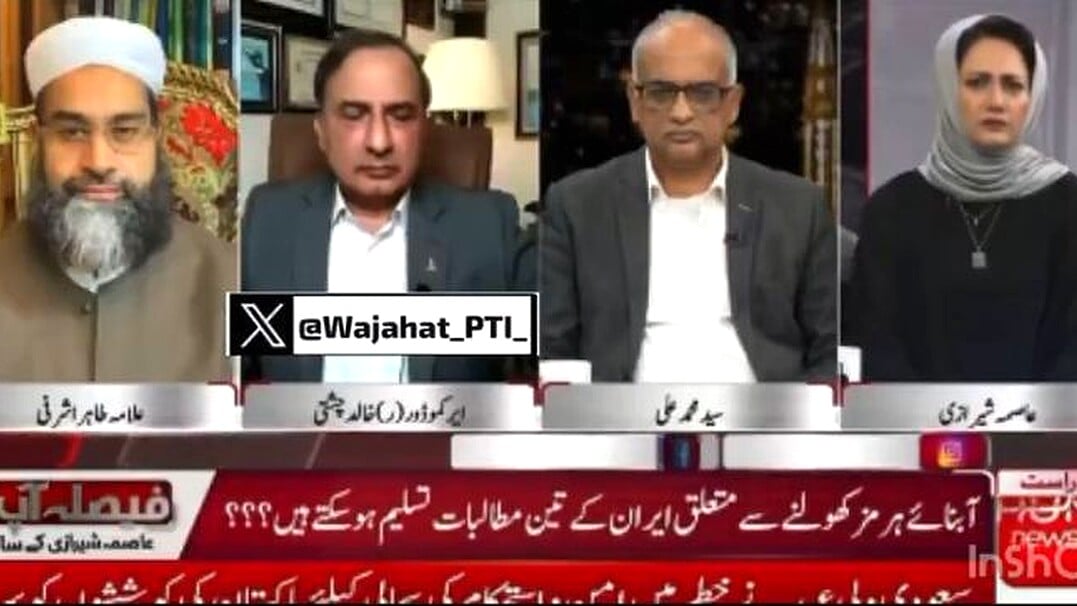




ISLAMABAD: Prominent Pakistani religious scholar Hafiz Tahir Mahmood Ashrafi has declared that any decision by Saudi Arabia to grant military bases to the United States remains a fully sovereign choice.
He stressed that Riyadh operates independently and is not under Iranian influence, urging Tehran to refrain from objections.
This blunt assessment comes amid escalating Iran-US tensions that have already drawn Gulf states into direct conflict.
Ashrafi’s statement highlights a deepening rift in regional alliances as Iranian strikes target American facilities across the Middle East.
According to recent Pentagon briefings, the United States maintains over 40,000 troops across ten countries in the region, with approximately 2,300 stationed in Saudi Arabia alone as of late 2024.
The bulk of these forces operate from Prince Sultan Air Base, home to Patriot and THAAD missile defence systems supporting joint Saudi-US operations.
Iran has launched relentless retaliatory attacks, firing at least 390 ballistic missiles and 830 drones at Gulf targets in the conflict’s opening phase.
One strike on Prince Sultan Air Base wounded at least 15 American troops, including five seriously, and damaged critical radar and aircraft assets.
Satellite imagery confirms fresh destruction at the base, with smoke rising from THAAD components and an E-3 AWACS surveillance plane severely hit.
Overall Iranian strikes on US-linked bases in Saudi Arabia, Qatar, Kuwait and the UAE have inflicted an estimated 800 million dollars in damage to infrastructure, buildings and aircraft.
Regional analysts note that Saudi Arabia hosts these facilities under bilateral agreements dating back decades, independent of Iranian pressure.
Ashrafi emphasised that Riyadh’s foreign policy decisions reflect its own national interests and security needs.
He pointed out that Saudi Arabia has repeatedly informed Tehran it would not permit its territory to be used against Iran, yet maintains the right to host allies for defence.
The scholar’s remarks carry weight across Pakistan and the wider Muslim world, where he serves as chairman of the Pakistan Ulema Council.
His position aligns with Saudi official statements rejecting Iranian pretexts for attacks on civilian and military sites alike.
Data from the US Central Command reveals that Iran has hit at least 17 American military sites in the region since the current escalation began.
Eleven of these were full-scale bases housing thousands of personnel, including Al Udeid in Qatar with over 10,000 troops and the Fifth Fleet headquarters in Bahrain.
Despite the violence, Saudi Arabia has not altered its stance on hosting US forces, viewing it as essential for regional stability and its Vision 2030 economic transformation.
Ashrafi warned that Iranian objections ignore the principle of national sovereignty respected by all independent states.
He argued that Tehran’s influence does not extend to dictating Riyadh’s defence partnerships.
This assertion gains urgency as Iranian missiles have also struck non-military targets such as airports, ports and hotels in Gulf cities.
Casualty figures continue to rise, with more than 300 American service members wounded across the theatre.
International reports confirm Saudi press coverage framing Iranian actions as deliberate attempts to sow chaos rather than legitimate retaliation.
Ashrafi’s comments reflect a broader Pakistani diplomatic effort to mediate Gulf tensions while supporting Saudi autonomy.
Analysts tracking the conflict project that unresolved base disputes could prolong the war by months.
The scholar called for dialogue grounded in mutual respect for sovereign decisions.
He cautioned that continued Iranian pressure risks destabilising the entire Islamic world.
Fresh intelligence indicates additional US deployments to Saudi facilities, underscoring Riyadh’s commitment to the partnership.
Ashrafi’s intervention arrives as Gulf states coordinate responses to Iranian threats against energy infrastructure.
Oil facilities at Ras Tanura in Saudi Arabia and Ras Laffan in Qatar have already sustained damage in separate strikes.
The scholar’s message is clear: Saudi Arabia’s choices are its own, and external powers must accept this reality to avoid wider confrontation.
Regional media in Pakistan and the Gulf have amplified Ashrafi’s remarks, positioning them as a voice of reason amid chaos.
As missile exchanges persist, his defence of sovereignty may shape future diplomatic overtures between Riyadh and Tehran.