



ISLAMABAD: CNN has confirmed that US President Donald Trump has agreed to hand operational control of the Strait of Hormuz to Iran as part of a two-week ceasefire deal.
The announcement came late on Tuesday just hours before Trump’s self-imposed 8pm ET deadline to escalate strikes on Iranian infrastructure.
Pakistan mediated the breakthrough proposal that both sides accepted after nearly 40 days of open conflict.
The war erupted in late February when Iran closed the strait disrupting global energy flows.
Under the ceasefire Iran’s armed forces will coordinate safe passage for all vessels through the waterway for the next 14 days.
Iran will also collect tolls of up to two million dollars per ship with proceeds shared with Oman to fund postwar reconstruction.
The Strait of Hormuz handles 21 percent of the world’s seaborne oil trade equivalent to roughly 20 million barrels per day before the blockade.
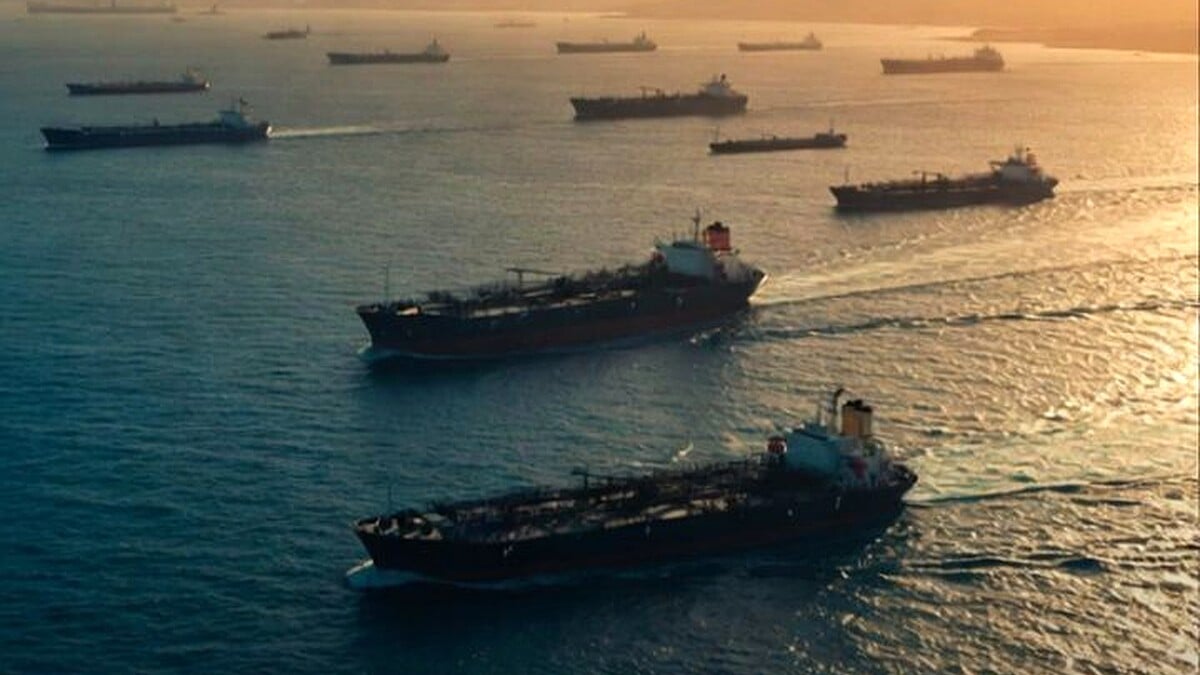
Its closure drove global oil prices up more than 30 percent at the height of fighting and stranded hundreds of tankers.
Shipping analysts at Lloyd’s List report at least one vessel has already paid the two-million-dollar fee in Chinese yuan.
Trump posted on Truth Social calling the arrangement a “double-sided ceasefire” that achieved core US military objectives in 38 days.
Iran’s Supreme National Security Council declared victory stating its hands remain on the trigger while accepting the truce.
Negotiations for a permanent peace deal will begin Friday in Islamabad under continued Pakistani facilitation.
The 10-point Iranian proposal that formed the basis of the deal explicitly included regulated passage and toll collection rights.
Critics including the lead architect of the original Iran nuclear agreement described the framework as a “catastrophically bad starting point” for long-term US interests.
Stock futures surged immediately after the announcement as markets priced in the reopening of the critical chokepoint.
US officials insist the military campaign created maximum leverage that forced Iran to the table.
Yet regional analysts warn the arrangement institutionalises Iranian influence over a waterway that supplies energy to Asia Europe and beyond.
The ceasefire also includes Israel’s agreement to halt operations against Iranian targets during the two-week window.
Trump later added that American forces would assist with traffic management through the strait to prevent bottlenecks.
This marks the first time a US administration has formally accepted Iranian coordination and toll authority over the international waterway.
Global energy markets remain on edge with Brent crude still trading well above pre-war levels.
The deal comes amid fears that prolonged closure could have triggered a worldwide recession through sustained high energy costs.
Iranian state media emphasised that the arrangement does not end the broader conflict but merely pauses it.
White House spokespeople highlighted that reconstruction aid and supply shipments could now flow into Iran under US oversight.
Experts note the two-million-dollar toll could generate hundreds of millions in revenue if daily tanker traffic resumes at pre-war volumes.
Pakistan’s diplomatic intervention prevented what Trump had warned could become the “complete demolition” of Iranian power plants and bridges.
The development has sparked intense debate in Washington about whether the ceasefire represents strategic victory or concession.
Oil industry sources confirm dozens of supertankers are already repositioning for immediate transit once coordination begins.
The ceasefire remains fragile with both sides reserving the right to resume hostilities after 14 days.
This episode underscores the strait’s enduring role as the most vital energy artery on the planet.
International observers will closely monitor compliance as the first tankers attempt passage in the coming days.
The agreement could reshape Middle East power dynamics for years while offering a temporary lifeline to the global economy.