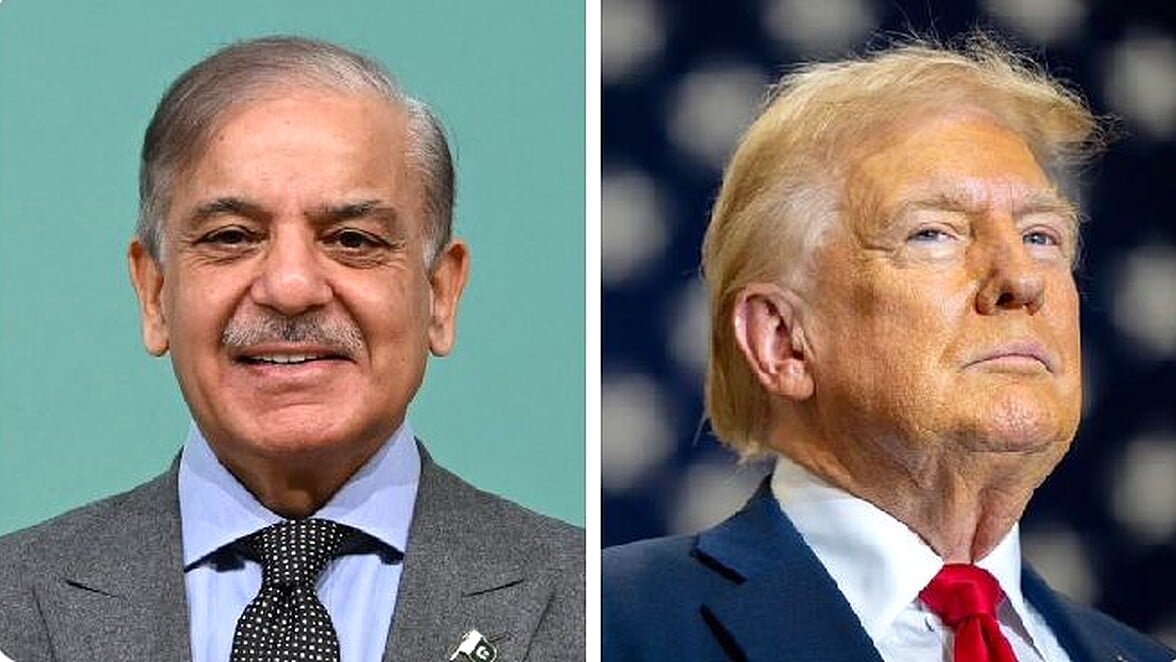




ISLAMABAD: In a high-stakes diplomatic intervention Pakistan Prime Minister Shehbaz Sharif has directly appealed to United States President Donald Trump to extend the deadline imposed on Iran by two weeks.
Sharif also urged Iranian leaders to reopen the Strait of Hormuz for the corresponding period as a reciprocal goodwill gesture.
The plea posted on social media from the prime minister’s verified account arrives hours before Trump’s 8pm Eastern Time deadline on April 7 2026 threatening strikes on Iranian power plants and infrastructure if the waterway remains closed.
The Strait of Hormuz carries nearly 20 million barrels of oil per day representing 20 percent of global petroleum liquids consumption and roughly 25 percent of seaborne oil trade.
Analysts warn that prolonged closure could push benchmark Brent crude beyond 200 dollars per barrel sending shockwaves through energy markets already strained by five weeks of conflict.
Pakistan imports more than 80 percent of its crude oil requirements through this chokepoint from Gulf suppliers including Saudi Arabia and the United Arab Emirates.
The country’s annual petroleum import bill exceeds 17 billion dollars and accounts for nearly one-fifth of total imports leaving its foreign exchange reserves highly vulnerable.
Disruptions have already contributed to domestic fuel price pressures and heightened inflation risks for a nation where oil meets around 85 percent of domestic consumption needs.
Sharif framed his request as essential to allow ongoing diplomatic efforts to bear fruit describing them as progressing steadily with potential for substantive results.
Pakistan has positioned itself as a key mediator conducting high-level calls with Saudi Crown Prince Mohammed bin Salman Egyptian officials and Iranian counterparts.
The premier briefed Riyadh on Islamabad’s peace initiatives while reaffirming solidarity with Gulf allies amid strikes on regional energy facilities.
International outlets including Bloomberg Reuters and the Associated Press have reported Pakistan’s mediation flurry alongside parallel Egyptian efforts as Trump’s ultimatum loomed.
Nearly 100 cargo vessels including oil tankers and LNG carriers normally transit the strait daily with China receiving over one-third of flows at 5.4 million barrels per day.
India South Korea and Japan each import between 1.6 million and 2.1 million barrels daily through the route heightening Asian economic exposure.
The conflict has already slashed traffic by up to 95 percent according to maritime data with Iran still exporting over 16 million barrels since early March despite hostilities.
Global strategic reserves could offset only 6 to 7 million barrels per day temporarily underscoring the impossibility of rapid replacement for the full 22 million barrels of oil and equivalent energy volumes.
Sharif’s statement also called for a broader two-week ceasefire across warring parties to facilitate conclusive peace talks.
Pakistan’s army chief has engaged United States counterparts while the premier held extended discussions with Iranian President Masoud Pezeshkian.
Economic models project that sustained Hormuz blockage could shave 0.6 percent off euro-area GDP and add one percentage point to inflation with similar ripple effects in import-dependent economies.
For Pakistan the stakes involve not only energy security but also stability in a region where it maintains balanced ties with Washington Tehran and Riyadh.
The appeal underscores Islamabad’s unique role leveraging relationships on all sides to prevent escalation that could engulf wider Middle East oil routes.
Regional analysts note that even partial reopening could stabilise prices and avert rationing already emerging in parts of Asia.
Sharif emphasised sincerity in requesting Iranian brothers to act while urging all parties to prioritise long-term regional peace and stability.
As diplomatic channels remain active the coming days will test whether this two-week window can transform fragile talks into lasting de-escalation.
The world watches closely as one of the most critical energy chokepoints in history hangs in the balance with Pakistan’s intervention offering a rare bridge amid superpower tensions.