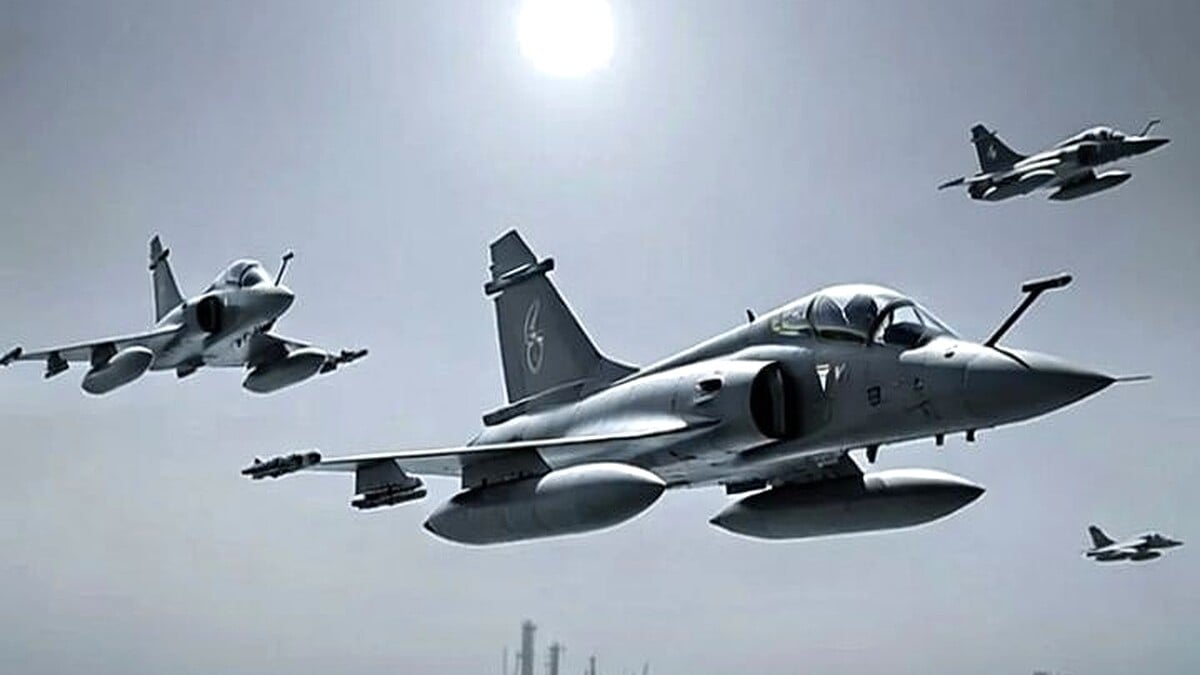




ISLAMABAD: An airstrike hit Iran’s Lavan Island oil refinery on Wednesday morning just hours after the United States and Iran announced a two-week ceasefire brokered by Pakistan raising immediate doubts about the truce’s durability in the volatile region.
The National Iranian Oil Refining and Distribution Company confirmed the assault at around 10am local time describing it as a cowardly enemy attack on the 55,000 barrels per day facility located in the Persian Gulf south of the Iranian mainland.
Black smoke billowed from the site with fires visible in social media videos shared widely as emergency teams rushed to contain the blaze yet no casualties were reported according to Iranian state media.
US officials stated clearly that American forces played no role in the strike while the Israeli Defence Forces issued an explicit denial of any involvement leaving the perpetrator unidentified in mainstream international reporting.
The timing proved especially dramatic coming mere hours into the ceasefire agreement announced late Tuesday which aimed to pause over 40 days of intense hostilities that had disrupted global energy markets and threatened wider escalation.
Under the deal Iran agreed to reopen the Strait of Hormuz a critical chokepoint carrying roughly one fifth of the world’s oil supply while both sides claimed elements of victory in the negotiations set to continue in Islamabad.
Regional media and Iranian state television highlighted the fragility of the pause noting that the Lavan facility processes high-quality crude from nearby offshore fields supplying Iran’s premium export blends according to data from the US Energy Information Administration.
The island also serves as a vital export terminal with storage capacity exceeding five million barrels and loading capabilities up to 200,000 barrels per day underscoring the strategic weight of any damage even if limited.
In swift response Iranian forces launched missile and drone barrages targeting sites in the United Arab Emirates and Kuwait state television reported framing the action as direct retaliation for the refinery strike.
The UAE confirmed its air defences engaged incoming threats including reports of 17 ballistic missiles and 35 unmanned aerial vehicles while Kuwait reported intercepting an extensive wave of drones aimed at oil and power installations.
A gas processing facility in Abu Dhabi reportedly caught fire amid the exchanges though details on damage remained preliminary as air travel and shipping faced fresh disruptions across the Gulf.
Analysts monitoring the situation pointed to the attack as a severe test for the two-week window intended to allow talks on broader issues including Iran’s nuclear programme regional proxies and sanctions relief.
Pakistan which played a central mediating role expressed hope that the ceasefire would hold despite the early breach while international observers watched oil prices for any sharp reaction given the region’s outsized role in global supply.
The Lavan refinery forms part of Iran’s refining network with its capacity contributing to domestic fuel production including gasoline meeting Euro-4 standards and other products essential for both local needs and exports.
Earlier phases of the conflict had already seen strikes on other Iranian energy sites including Kharg Island a primary oil export hub adding cumulative pressure on Tehran’s infrastructure.
No group has claimed responsibility for the Lavan strike and speculation on social media including unverified suggestions of UAE involvement found no backing in credible international or regional coverage beyond Iranian accusations of enemy action.
Firefighting operations continued into the evening with plumes of smoke persisting as Iranian officials vowed to defend their territory and maintain a hand on the trigger amid the unfolding developments.
The episode highlights the deep mistrust persisting between the parties even as diplomatic channels remain open for the upcoming Islamabad discussions scheduled to begin soon.
Broader regional dynamics including ongoing tensions involving Lebanon further complicate the picture though the core US-Iran truce focuses on halting direct hostilities for the initial two-week period.
Energy markets reacted with caution as traders assessed the potential for renewed supply disruptions through the Strait of Hormuz where safe passage remains a key condition of the agreement.
As investigations into the Lavan incident proceed questions linger over accountability and whether the ceasefire can withstand such immediate challenges in one of the world’s most combustible zones.