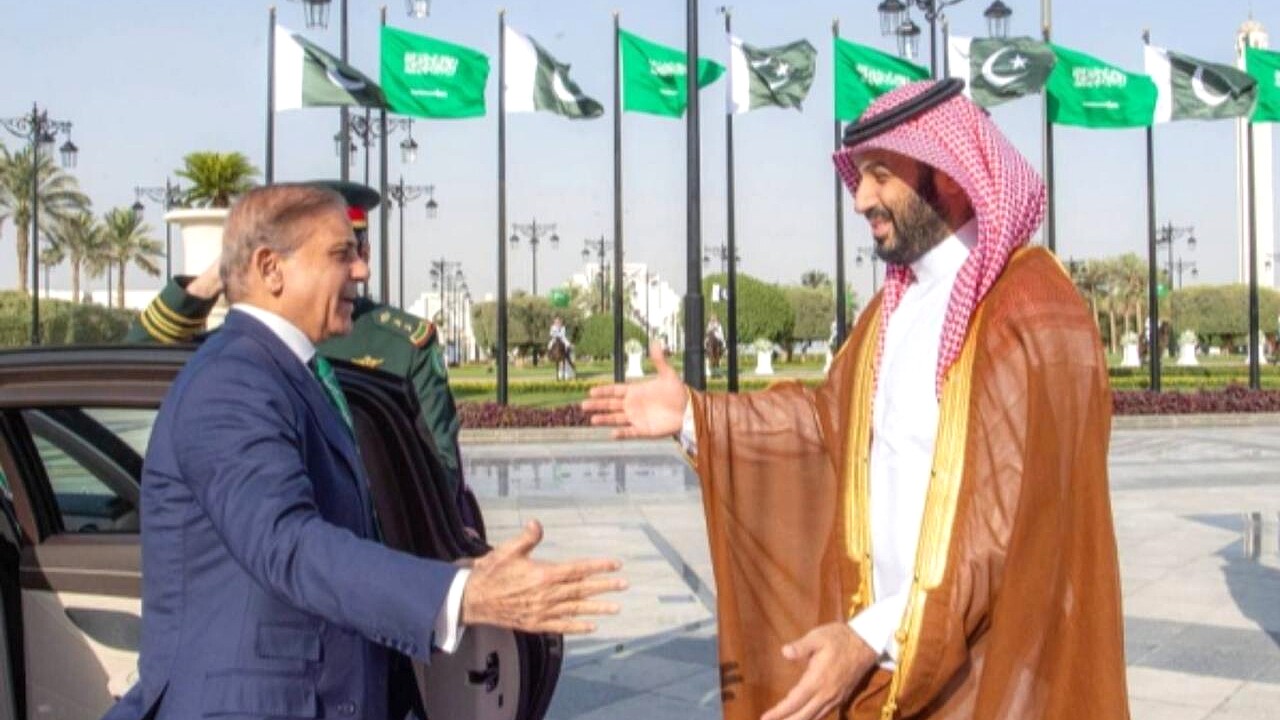
ISLAMABAD: Amid escalating regional tensions following Iranian missile and drone strikes on Saudi Arabia, claims attributing a direct warning from Pakistan’s Chief of Defence Forces Field Marshal Asim Munir to Saudi Crown Prince Mohammed bin Salman have been firmly rejected by Pakistani authorities, with no such statement appearing in Al Jazeera reporting or official channels.
The viral claim asserts that Munir told Mohammed bin Salman: “If Iran launches another attack on Saudi Arabia, Pakistan will retaliate, in accordance with the existing military-to-military agreement,” citing Al Jazeera as the source. However, extensive reviews of Al Jazeera coverage, including its March 7, 2026, article titled “Caught between Iran and Saudi Arabia, can Pakistan stay neutral for long?” reveal no such quote or direct conversation between Munir and the Crown Prince.
Instead, the article and multiple corroborating reports detail a March 7, 2026, meeting in Riyadh between Munir and Saudi Defence Minister Prince Khalid bin Salman. Discussions centred on Iranian attacks targeting sites like Prince Sultan Air Base, intercepted ballistic missiles, and joint measures to halt them under the Strategic Mutual Defence Agreement framework.
The agreement, signed September 17, 2025, in Riyadh by Prime Minister Shehbaz Sharif, Munir, and Crown Prince Mohammed bin Salman, commits both nations to view aggression against one as aggression against both, formalising decades of military, economic, and security cooperation.
Prince Khalid’s post on X described the talks as addressing the gravity of Iranian actions undermining regional stability, urging Tehran to exercise wisdom and avoid miscalculation to preserve peaceful resolution options. Pakistan’s Inter-Services Public Relations (ISPR) statement aligned closely, highlighting the security situation from drone and missile strikes and consultative steps within the pact, without any mention of offensive retaliation or explicit threats.
Pakistani sources have categorically denied interpretations suggesting Islamabad committed to direct military action against Iran. Official emphasis remains on diplomatic engagement, defensive coordination, and de-escalation.
On the same day as the Riyadh meeting, Foreign Minister Ishaq Dar spoke by telephone with Iranian counterpart Abbas Araghchi, reviewing regional developments and agreeing to sustained contact, underscoring Pakistan’s parallel diplomacy with Tehran.
This balanced approach reflects longstanding policy priorities. Pakistan shares a porous border with Iran, deep cultural and sectarian ties, and a history of avoiding entanglement in Saudi-Iran rivalries, as seen in limited involvement during the Yemen conflict.
The pact enhances Riyadh’s deterrence in a volatile Gulf environment, leveraging Pakistan’s nuclear capability and military expertise, while providing Islamabad economic leverage amid fiscal challenges and strategic depth against regional threats.
Analysts note the agreement’s activation would demand careful calibration to prevent multi-front escalation, particularly given Pakistan’s focus on internal security, Afghan border issues, and relations with major powers.
No credible Pakistani, Saudi, or international outlets—including Dawn, The Express Tribune, Anadolu Agency, Bloomberg, or NDTV—report the alleged direct quote or a Munir-MBS assurance of retaliation. The phrasing circulates primarily on social media platforms like X, often in sensational contexts tied to broader US-Israel-Iran dynamics, but lacks verifiable sourcing.
Official Pakistani responses prioritise restraint. Dawn reported the Munir-Khalid meeting as focused on gravity of attacks and joint halting measures, framing it as a test of the pact through consultations rather than confrontation.
As Iranian strikes continue amid wider Middle East volatility, Pakistan’s engagements signal a strategy of alliance fulfilment via dialogue and deterrence signaling, without crossing into overt threats that could inflame tensions further.
The discrepancy between viral claims and documented facts highlights challenges in discerning verified information during crises, with Islamabad maintaining measured diplomacy to safeguard interests across conflicting regional alignments.