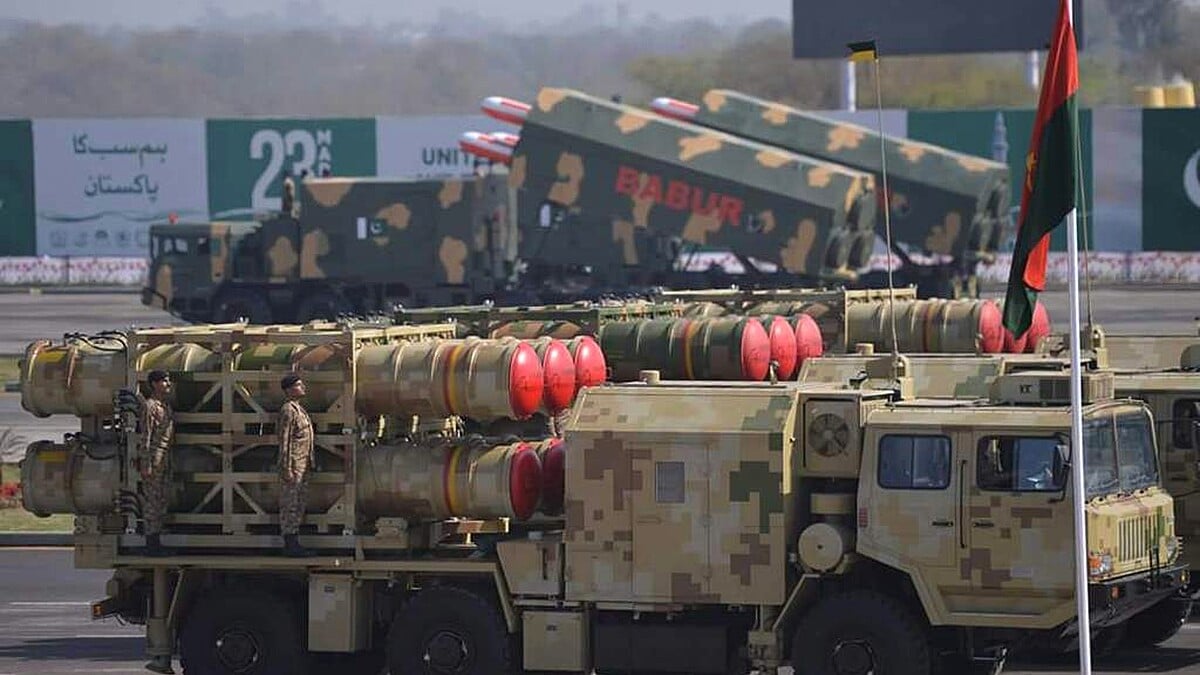
ISLAMABAD: Recent social media claims suggesting that Pakistan Army’s deployment of its Integrated Air Defense Systems to Saudi Arabia would inevitably lead to blue-on-blue incidents due to incompatible tactical data links and IFF architectures have been dismissed as unfounded speculation.
These assertions, circulating on platforms like X, argue that Pakistan’s primarily Chinese-origin air defense systems, when placed in Saudi Arabia’s operational environment, risk misidentifying and engaging Royal Saudi Air Force (RSAF) assets because of differences in datalink standards.
Pakistan’s air defense inventory heavily features Chinese systems such as the LY-80 (HQ-16), FM-90 (HQ-7), and Anza man-portable series, alongside integration with national networks.
Experts note that Pakistan has developed its own Link-17 datalink, a national standard optimized for its forces, which differs from Western or NATO-compatible systems prevalent in many Gulf states.
Saudi Arabia’s air defense network incorporates a mix of Western platforms, including Patriot systems from the United States, alongside other layered defenses.
Recent deployments reported in credible outlets involve Pakistan positioning LY-80, FM-90, and Anza-series missiles under Pakistani command to support Saudi Arabia’s air defense grid amid escalating Middle East tensions.
These moves align with the Pakistan-Saudi Strategic Mutual Defence Agreement, formalized in recent years, which codifies longstanding military cooperation.
The agreement emphasizes mutual support against aggression, building on decades of ties where Pakistani personnel have trained Saudi forces and provided advisory roles.
Reports from March indicate Pakistani Air Defence Corps units have deployed these medium- and short-range missile systems, operating in coordination with Saudi counterparts.
Senior security sources from both nations confirm close operational integration between Pakistani army, air force, and naval personnel with Saudi forces.
This deployment occurs against the backdrop of heightened regional risks, including Iran-Israel dynamics and drone threats targeting Gulf installations.
Contrary to propaganda claims of inevitable fratricide, military cooperation often includes measures for interoperability.
In multinational settings, forces employ liaison officers, joint protocols, and temporary adaptations to mitigate identification risks.
Pakistan’s systems remain under national command, allowing controlled integration rather than full merging into Saudi networks without adjustments.
Historical precedents show Pakistan has maintained troops in Saudi Arabia for training and security, with numbers around 1,500-2,000 in advisory capacities over years.
Recent high-level engagements, including meetings between Pakistan’s Army Chief and Saudi Defence Minister, reaffirm commitments to full support without escalating into direct conflict involvement.
Claims of software changes taking months overlook that short- to medium-range systems like those mentioned focus on point defense, where coordination can occur through voice, procedural controls, or limited datalink bridging.
Pakistan’s defense posture prioritizes its own security while extending alliance commitments, but Islamabad has stressed restraint in regional disputes.
No official statements from Pakistani or Saudi authorities indicate risks of blue-on-blue from these deployments.
Instead, emphasis remains on bolstering deterrence and collective security under the mutual pact.
Propaganda narratives appear amplified amid broader geopolitical speculation, including potential shifts in arms sourcing and alliances.
Pakistan’s increasing reliance on Chinese technology, including in air defense, contrasts with Saudi Arabia’s diverse suppliers, yet cooperation continues through established channels.
Observers monitor these developments closely, given implications for Gulf stability and broader alliances.
The deployments underscore deepening Pakistan-Saudi ties, rooted in shared strategic interests rather than unmanageable technical mismatches.