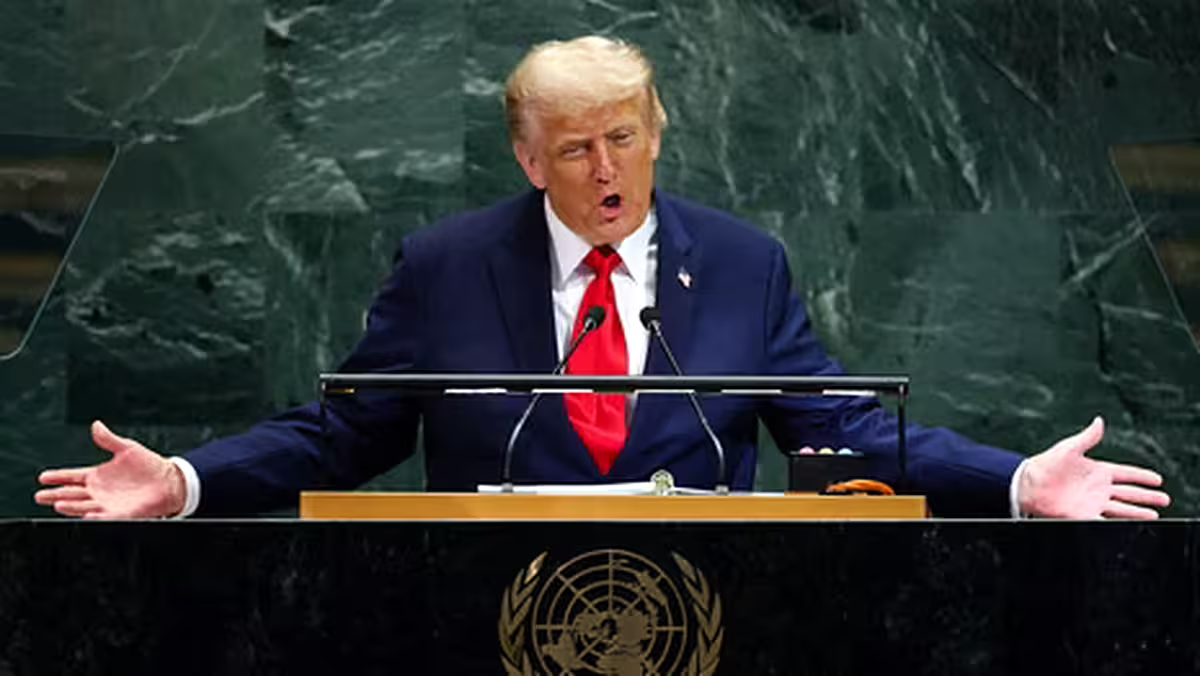
ISLAMABAD: Former CIA Director John Brennan has cautioned that President Donald Trump will intensify his threats and adopt a more aggressive tone as the military situation in Iran deteriorates further beyond American control.
Brennan’s remarks come amid heightened tensions in the ongoing US-Iran conflict, now in its second week, marked by devastating airstrikes and retaliatory actions that have targeted critical infrastructure.
The former intelligence chief emphasized that demands for Iran’s unconditional surrender represent a fundamental miscalculation, reflecting Washington’s realization that the battlefield dynamics have grown increasingly complex and unfavorable.
He described such expectations as largely meaningless, suggesting they stem from frustration over events not unfolding according to US plans.
Brennan pointed to the resilience of the Iranian people and their deep attachment to the national system and territorial integrity as key factors complicating any external intervention.
He argued that the Iranian population has demonstrated strong steadfastness in defending their homeland against perceived aggression.
The former CIA head expressed skepticism about the feasibility of installing a US-preferred government in Tehran, given the widespread public support for the current regime in the face of external pressure.
Brennan warned that any attempt to introduce American ground forces into Iranian territory would lead to severe setbacks for the United States.
He likened such a scenario to entering a quagmire from which escape would prove impossible, drawing implicit parallels to past prolonged conflicts in the region.
This assessment aligns with recent developments, including accusations from Iranian officials that US strikes have hit civilian infrastructure vital for daily life.
Iran’s Foreign Minister Abbas Araghchi recently claimed that an American attack destroyed a freshwater desalination plant on Qeshm Island in the Strait of Hormuz.
The strike reportedly disrupted water supplies to approximately 30 villages, exacerbating humanitarian challenges in an already arid region heavily reliant on such facilities.
Araghchi condemned the action as a blatant and desperate crime, warning that targeting essential civilian infrastructure sets a dangerous precedent with grave consequences.
Iranian authorities have highlighted the plant’s role in addressing severe water shortages, underscoring the civilian impact of the escalation.
In response, reports emerged of Iranian drone strikes damaging a desalination facility in Bahrain, raising fears that the conflict is expanding to target water resources across the Gulf.
Bahrain’s authorities confirmed material damage to the plant, though supplies remained operational, marking one of the first instances of direct hits on such critical civilian assets in neighboring states.
These incidents illustrate a broadening scope of the war, shifting from primarily military targets to infrastructure essential for public survival.
Brennan’s analysis suggests that as Trump perceives the ground realities diverging from initial expectations, his public statements will become sharper and less measured.
The former director noted that Trump’s rhetoric is likely to grow more disjointed and intense in response to mounting challenges.
He questioned the overall strategy, particularly the notion of achieving regime change through military means alone.
Brennan stressed that Iran’s leadership and population remain firmly committed to resisting external imposition of change.
He cautioned that underestimating this resolve could trap the US in a prolonged and costly entanglement.
Observers note that the conflict has already resulted in significant loss of life and regional instability, with no clear path to de-escalation in sight.
Brennan’s comments echo broader concerns from analysts about the risks of miscalculation in a volatile theater.
The former CIA chief’s intervention highlights divisions within US policy circles over the approach to Iran.
His prediction of escalating threats underscores the precarious nature of the current standoff.
As the situation evolves, international calls for restraint continue amid fears of further humanitarian fallout.
The targeting of water facilities has amplified worries about the conflict’s impact on civilian populations in both Iran and neighboring countries.
Brennan’s warning serves as a sobering reminder of the potential for deeper involvement and unforeseen consequences.