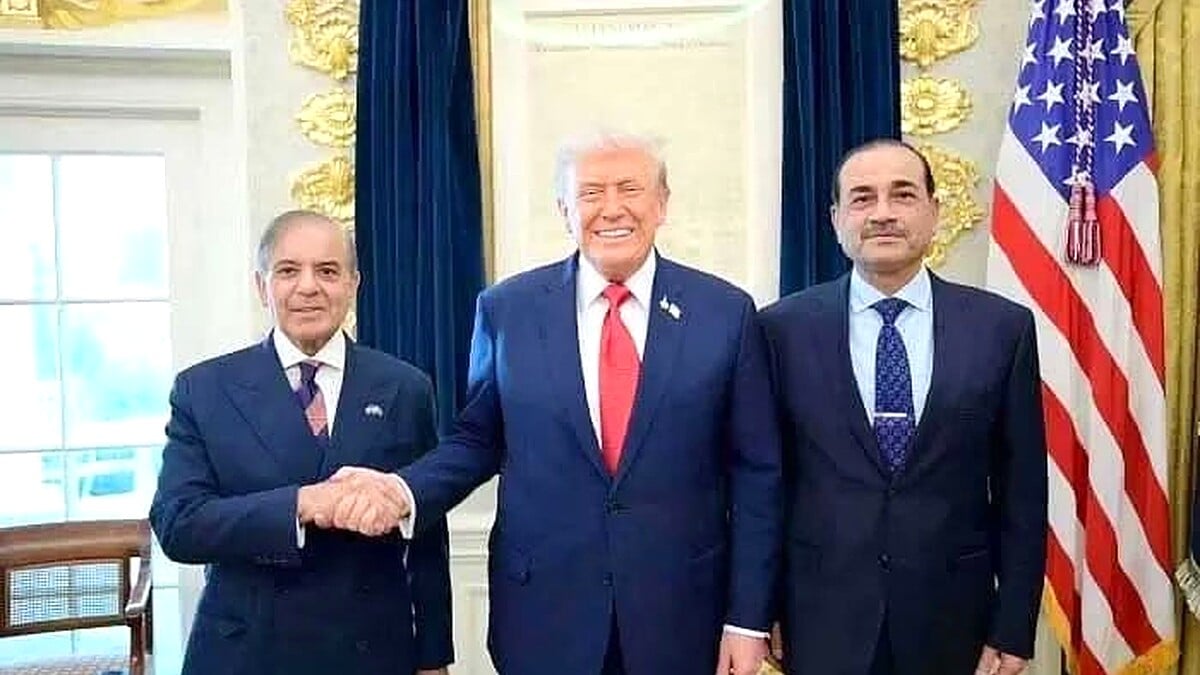




ISLAMABAD: Field Marshal Asim Munir remained deeply engaged in late-night negotiations with US Vice President JD Vance and Iranian Foreign Minister Abbas Araqchi as Pakistan’s mediation efforts encountered an apparent setback in the high-stakes US-Iran conflict.
The intense backchannel diplomacy followed President Donald Trump’s firm warnings regarding the continued closure of the Strait of Hormuz which handles nearly 21 percent of global oil trade according to recent energy reports.
Pakistan had proposed a two-phase Islamabad Accord aimed at securing an immediate ceasefire and reopening of the vital waterway within days followed by broader talks within 15 to 20 days.
Regional media outlets reported that previous Iranian delays in responding had already caused the cancellation of planned high-level US visits to Islamabad including instances when the US vice president waited in Germany and later in Portugal.
In the latest development Iranian state media IRNA confirmed that Tehran has formally rejected the US ceasefire proposal terming it unrealistic and instead transmitted its own comprehensive 10-point agenda through Pakistani diplomatic channels.
The Iranian counterproposal demands a permanent end to hostilities across the region including Lebanon and Gaza full recognition of Iranian rights over the Strait of Hormuz lifting of all international sanctions and guarantees for post-conflict reconstruction.
According to IRNA the document insists on binding international assurances rather than a temporary truce that could collapse under renewed pressure citing past experiences with short-term agreements.
This rejection marks a significant hurdle for Pakistan’s mediation role which had gained momentum after Field Marshal Asim Munir coordinated directly with senior American figures including special envoy Steve Witkoff.
Pakistani sources described the army chief’s involvement as crucial in drafting proposals intended to bridge the substantial differences between Washington and Tehran.
The proposed Islamabad Accord had included immediate de-escalation steps such as monitored reopening of the strait while postponing complex issues like Iran’s nuclear programme and regional proxy activities.
However the Iranian 10-point response shifts the focus to broader concessions significantly widening the gap and pausing hopes for a swift resolution.
Global oil markets reacted sharply to the news with prices surging amid fears of prolonged disruption to energy supplies.
Analysts estimate that the ongoing closure of the Strait of Hormuz has already caused daily global trade losses running into hundreds of millions of dollars due to rerouted shipping and elevated insurance costs.
Western international media coverage of the specific backchannel exchanges has remained limited relying largely on disclosures from Pakistani and Iranian state sources for authentication.
Regional reports from Pakistan and the Middle East have provided detailed accounts underscoring Islamabad’s emergence as a critical diplomatic bridge despite its own domestic challenges.
Observers note that Field Marshal Asim Munir’s personal rapport with President Trump has facilitated smoother communications at a time when formal channels remain strained.
The current impasse raises questions about the future of Pakistan-hosted talks which Islamabad had offered to facilitate in recent weeks.
Foreign Minister Ishaq Dar had earlier voiced optimism about Pakistan’s neutral broker status yet the latest Iranian response signals deep reservations over core US demands.
Economic repercussions continue to mount with Asian energy importers closely monitoring developments and Gulf states expressing concern over potential spillover effects.
Pakistan stands to enhance its international stature through successful mediation but also risks reputational setbacks if the efforts fail to yield progress amid escalating tensions.
As no immediate US reaction to the Iranian 10-point agenda has surfaced the coming hours remain critical in determining whether diplomatic channels can be revived or if further escalation follows.
Field Marshal Asim Munir’s sustained engagement highlights Pakistan’s commitment to regional de-escalation given the direct implications for its security and economic stability.
Diplomatic circles in Islamabad maintain cautious optimism while acknowledging the formidable challenges posed by the entrenched positions of both sides.
The Iranian document reportedly includes detailed protocols for safe maritime passage mechanisms to prevent recurrence of conflict and calls for multilateral international guarantees.
Whether these elements can serve as a basis for renewed dialogue remains uncertain as the Trump administration continues to emphasise key security concerns.
Pakistan’s active role in this mediation effort demonstrates the complex interplay of relationships in South and West Asia where military leadership often plays a pivotal part in foreign policy initiatives.
As developments unfold the international community watches closely to see if Islamabad can transform its bridging position into a meaningful breakthrough or if the Iranian rejection represents another obstacle in averting wider confrontation.