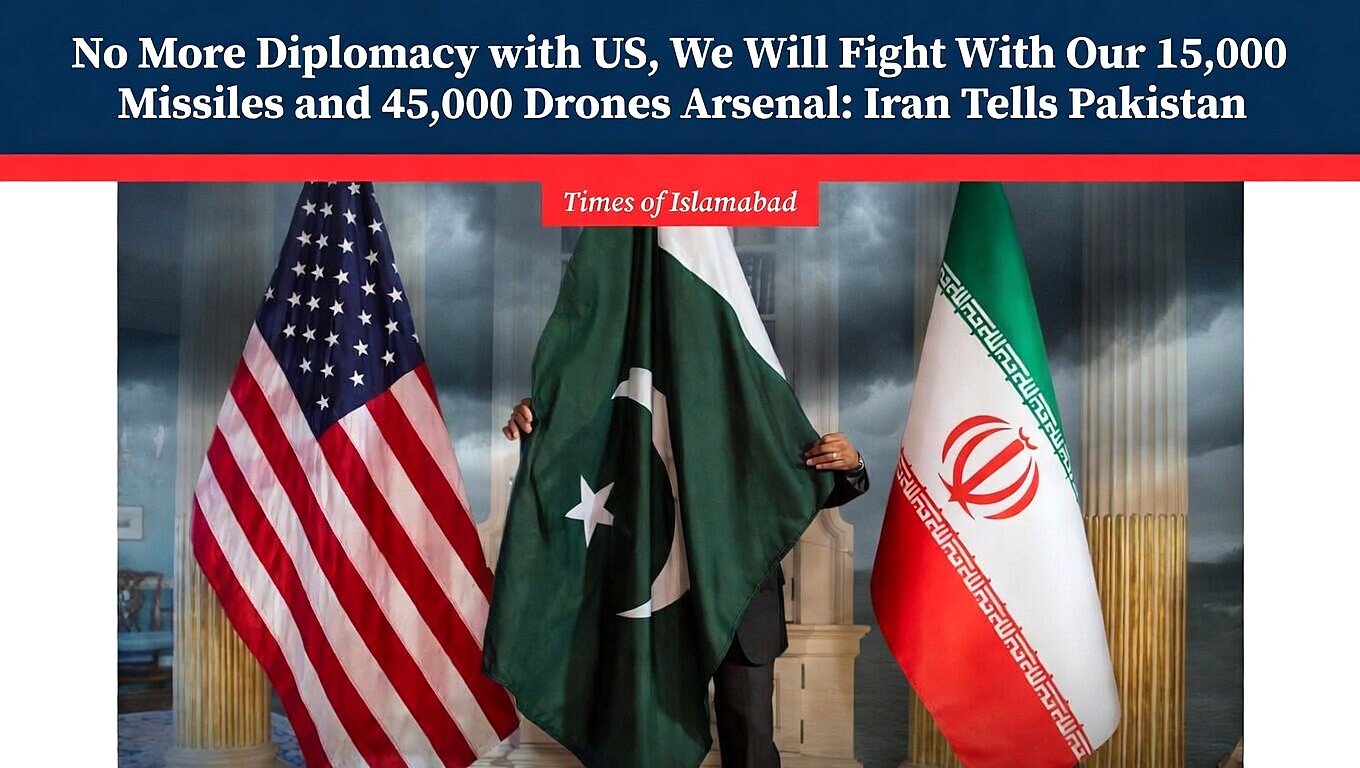




ISLAMABAD: Pakistan has received a pivotal message from Iran just before any cutoff in direct diplomatic channels with the United States, according to officials familiar with the backchannel process.
Tehran maintains an arsenal of 15,000 ballistic missiles and 45,000 drones, a staggering assessment provided by Pakistani intelligence and shared in regional diplomatic circles.
Israeli newspaper Haaretz reported the figures on April 6, citing a diplomatic source who noted Pakistan’s estimate of Iran’s remaining capabilities amid ongoing conflict.
The Wall Street Journal documented that Iran has already launched more than 290 ballistic missiles and over 500 drones at Israeli targets since the escalation began.
US Central Command assessments indicate that while production facilities were hit, Iran retains roughly half its missile launchers and thousands of one-way attack drones.
Daily barrages continue, with reports of 15 to 30 missiles or 50 to 100 drones deployed in single operations, showcasing operational resilience.
The Islamic Revolutionary Guard Corps is directing key decisions, convinced Tehran is gaining strategic ground despite sustained strikes.
Pakistan’s role as trusted intermediary proved crucial when it relayed a 15-point US ceasefire framework and received Iran’s formal response.
Foreign Minister Ishaq Dar confirmed Islamabad hosted high-level talks with Saudi Arabia, Egypt and Turkey to lay groundwork for de-escalation.
Iranian officials publicly dismissed direct negotiations yet transmitted detailed replies through Pakistani channels, keeping indirect diplomacy alive.
Shahed-series drones, low-cost yet highly effective, have forced the United States to expend million-dollar interceptors against inexpensive unmanned systems.
Pre-war Western estimates placed Iran’s ballistic missile inventory in the low thousands, making the Pakistani figure of 15,000 appear dramatically higher and potentially including rapid wartime production surges.
The 45,000-drone count encompasses variants designed for swarm attacks, reconnaissance and loitering munitions, amplifying Iran’s asymmetric warfare reach across the Gulf and beyond.
Saudi Arabia has demanded strict limits on Iran’s ballistic missile programme as a precondition for any lasting ceasefire, according to the same diplomatic briefings.
Iranian Parliament Speaker Mohammad Bagher Qalibaf warned that any US ground invasion would result in American troops being met with overwhelming resistance on Iranian soil.
Pakistan’s deepening involvement stems from its unique relationships, allowing it to facilitate proposals without direct US-Iran contact.
Analysts warn that such a vast undegraded stockpile could sustain months of conflict, raising the stakes for any negotiated settlement.
The message passed to Islamabad underscores Iran’s calibrated strategy of escalation paired with selective diplomatic openness through trusted third parties.
As regional mediators reconvene, the disclosed arsenal figures add urgency and complexity to efforts aimed at preventing wider Middle East instability.