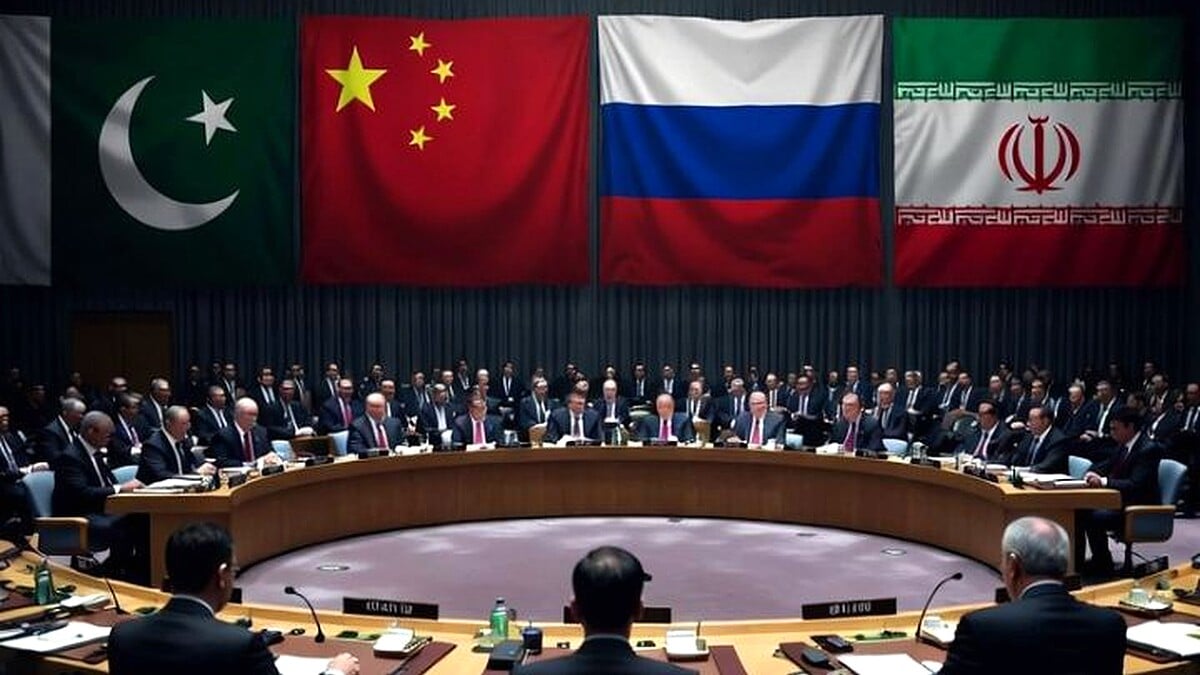




ISLAMABAD: China and Russia have vetoed a United Nations Security Council resolution calling for coordinated protection of commercial shipping in the Strait of Hormuz.
The Bahraini-drafted measure received 11 votes in favour but fell short due to the vetoes, with Pakistan and Colombia choosing to abstain.
This decision comes as the 2026 Hormuz crisis continues to paralyse one of the world’s most critical energy arteries.
Data from the International Energy Agency shows that some 20 million barrels of oil per day transited the strait in 2025, representing around 25 per cent of global seaborne oil trade.
Eighty per cent of this volume was destined for Asian markets, underscoring the strait’s pivotal role in global energy security.
Recent Iranian actions have caused tanker traffic to plummet by over 90 per cent, with more than 150 vessels anchoring outside the strait to avoid risks.
Analysts warn that sustained disruptions could push Brent crude prices beyond 100 dollars per barrel, triggering widespread economic fallout.
According to the Dallas Federal Reserve, a full closure removing 20 per cent of global oil supplies might slash quarterly global GDP growth by 2.9 percentage points.
Pakistan’s abstention highlights Islamabad’s careful diplomatic balancing act amid complex regional alliances.
As a close partner to China through the multi-billion-dollar China-Pakistan Economic Corridor, Pakistan has consistently advocated for de-escalation and multilateral dialogue.
In March, Islamabad secured a landmark agreement with Iran permitting 20 Pakistani-flagged ships to transit the strait safely.
Foreign Minister Ishaq Dar described the deal as a vital step in mitigating Pakistan’s energy vulnerabilities.
Together with China, Pakistan issued a five-point peace initiative that explicitly calls for safeguarding shipping lanes and ensuring safe passage for civilian vessels in the Hormuz.
The resolution, significantly watered down to remove any references to force, aimed merely to encourage states to coordinate defensive maritime security measures.
Yet China and Russia labelled it biased against Iran, arguing it failed to address root causes of regional tensions.
The United States ambassador urged responsible nations to step up and secure the vital waterway independently if needed.
For Pakistan, the vote reflects a principled stand for sovereignty and non-interference, consistent with its longstanding foreign policy.
The abstention by Colombia similarly signals broader divisions within the 15-member council.
Global shipping firms have suspended operations in the area, exacerbating supply chain strains across oil, liquefied natural gas and fertiliser markets.
UNCTAD reports warn of immediate consequences for production, trade and consumption worldwide.
Pakistan, heavily reliant on imported energy, faces heightened risks from price volatility and potential shortages.
By abstaining rather than opposing, Islamabad has kept channels open for further diplomacy with all stakeholders.
This approach aligns with its successful backchannel efforts between rival powers in the past.
As the crisis enters a critical phase, the veto prolongs uncertainty, threatening not just energy prices but global economic stability.
Experts estimate the ongoing blockade has already erased gains in emerging market stocks for 2026.
With 20 per cent of world oil at stake, the stakes could not be higher for Pakistan and the international community.
The UNSC’s failure to adopt the resolution leaves the door open for unilateral actions that could further escalate tensions.
Pakistan remains committed to peaceful resolution, leveraging its unique position to broker safe passage agreements.
Future talks may build on the China-Pakistan framework to restore normalcy in the strait.
Until then, the world watches as energy markets brace for prolonged volatility.