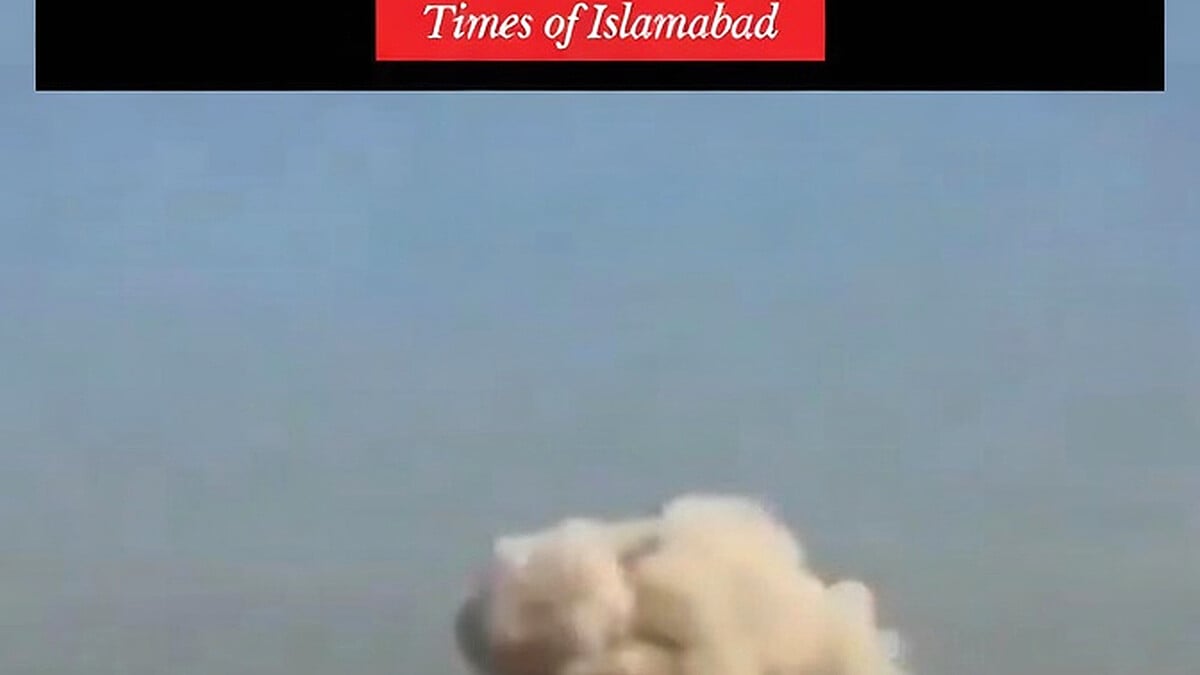
ISLAMABAD: In a dramatic escalation of the ongoing Middle East conflict, Iran conducted a drone strike near Dubai International Airport on Saturday, temporarily suspending operations at the world’s busiest international aviation hub and injuring several airport staff members.
The incident occurred amid a broader wave of Iranian retaliatory attacks across the Gulf region, following earlier US and Israeli strikes on Iranian targets. Authorities at Dubai Airports confirmed that a concourse sustained minor damage, prompting an immediate evacuation of passengers from smoke-filled areas.
Eyewitness accounts and verified video footage showed passengers fleeing corridors strewn with debris as emergency teams responded swiftly. Dubai Airports stated that four staff members were injured in the event, though no passengers were reported harmed directly from the strike.
The attack formed part of Iran’s response to perceived aggressions, with the Islamic Revolutionary Guard Corps claiming precision strikes on US-linked facilities in the UAE, including radar systems and air bases. UAE air defences intercepted most incoming threats, but debris from interceptions contributed to the chaos at the airport.
Dubai International Airport, known as DXB, handles over 90 million passengers annually and serves as the primary hub for Emirates Airline. The suspension of flights disrupted thousands of travellers, with Emirates announcing indefinite halts on operations to and from Dubai until further notice.
Regional airspace closures extended the impact, stranding passengers and forcing diversions for inbound flights. Flight tracking data indicated holding patterns over the UAE, while thousands of regional flights faced cancellations.
The strike rattled the UAE’s image as a stable business and tourism centre. Dubai’s economy relies heavily on its aviation sector, contributing significantly to GDP through trade, logistics, and hospitality. Analysts noted that such incidents could deter foreign investment and tourism in the short term.
In related developments, similar incidents affected Abu Dhabi’s Zayed International Airport, where intercepted debris reportedly caused casualties. UAE defence officials reported three deaths and dozens of injuries across the emirates from the broader Iranian barrage.
Iran’s President Masoud Pezeshkian later addressed the nation, apologising to neighbouring Gulf states and stating that Tehran would refrain from further attacks on neighbours unless provoked first. This statement suggested a potential de-escalation, though tensions remained high.
The conflict originated from intensified US-Israeli operations against Iran, including strikes that reportedly targeted key infrastructure. Iran’s countermeasures widened to include Gulf states hosting US military assets, transforming a bilateral dispute into a multi-front regional crisis.
Global aviation authorities issued advisories, urging carriers to avoid Middle Eastern airspace. Major airlines rerouted flights, exacerbating delays across Europe, Asia, and Africa. The disruption ranked among the most severe since the COVID-19 pandemic grounded global travel.
Economic repercussions emerged quickly, with Gulf markets experiencing volatility and temporary trading halts. Oil prices fluctuated amid fears of broader supply disruptions, though no direct hits on energy facilities were confirmed in the UAE strikes.
UAE officials emphasised readiness, highlighting effective air defence systems in mitigating damage. Contingency plans at Dubai Airport contained the incident rapidly, with operations expected to resume gradually as security assessments continued.
International reactions condemned the escalation, with calls for restraint from the United Nations and several Western capitals. Diplomats worked to prevent further spread, amid concerns over civilian safety and economic stability.
The strike on Dubai International Airport underscored the vulnerability of civilian infrastructure in modern conflicts. As one of the most connected points globally, its targeting highlighted the risks to international travel when geopolitical tensions spill over.
Observers monitored developments closely, anticipating whether Iran’s declared policy shift would hold or if retaliatory cycles would persist. The incident marked a critical moment in the 2026 Iran conflict, with implications for regional security and global connectivity.