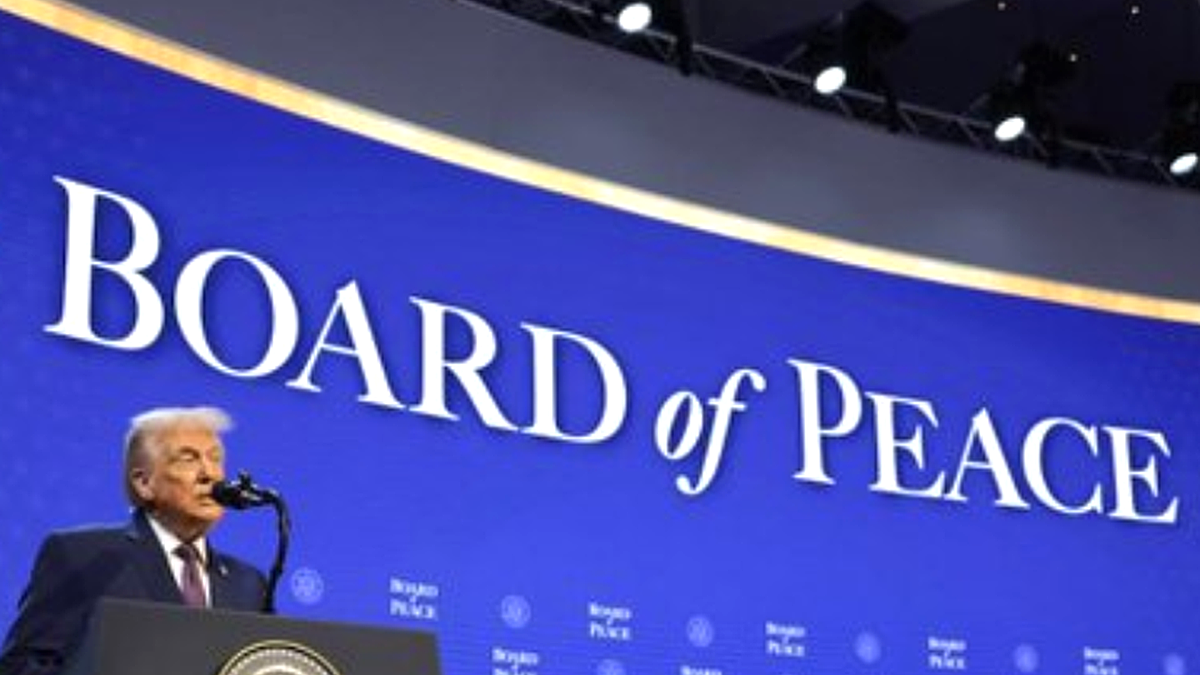
ISLAMABAD: Indonesia’s President Prabowo Subianto has stated that the country will withdraw from the United States-led Board of Peace if the platform ceases to serve Palestinian interests and aligns with Indonesia’s national priorities.
The announcement came following a meeting with local Islamic groups in Jakarta on Thursday, where Prabowo sought to address domestic concerns regarding Indonesia’s participation in the initiative.
A government statement released on Friday quoted Hanif Alatas of the Islamic Brotherhood Front, who relayed the president’s position after the discussions.
Prabowo emphasized that Indonesia joined the Board of Peace to advance Palestinian independence and provide immediate relief in Gaza, but remains prepared to leave if these objectives are not met.
Indonesia, home to the world’s largest Muslim-majority population, has long maintained strong diplomatic support for the Palestinian cause, including consistent advocacy for a two-state solution.
The Board of Peace, initiated by US President Donald Trump, was established to oversee post-conflict stabilization, reconstruction in Gaza, and related humanitarian efforts following a ceasefire between Israel and Hamas.
Indonesia became a founding member in January 2026 during the World Economic Forum in Davos, alongside several other Muslim-majority nations such as Qatar, Pakistan, Türkiye, and Saudi Arabia.
The decision to join prompted significant domestic debate, with critics arguing that participation could compromise Indonesia’s principled stance on Palestinian self-determination.
Religious organizations, academics, and civil society groups have expressed reservations, particularly amid escalating regional tensions including US and Israeli military actions against Iran.
The Indonesian Ulema Council and other bodies have urged a review or full withdrawal, citing perceived ineffectiveness in achieving genuine Palestinian sovereignty.
Prabowo’s reassurance to Islamic leaders appears aimed at mitigating such criticism while reaffirming Jakarta’s commitment to Palestinian rights.
Foreign Minister Sugiono has previously clarified that Indonesia’s involvement is conditional on promoting immediate peace in Gaza, broader regional stability, and ultimately full Palestinian independence.
Indonesia has pledged substantial contributions, including troops for an International Stabilization Force in Gaza and financial support for reconstruction, reportedly up to $1 billion.
These commitments have intensified scrutiny, with some analysts viewing them as placing Indonesia in a position of supporting post-conflict arrangements without sufficient Palestinian representation.
The Board lacks direct Palestinian authority in key decision-making structures, raising questions about its alignment with international norms on self-determination.
Domestic pressure has grown following reports of Indonesia preparing to deploy an initial contingent of 1,000 soldiers as part of a larger 8,000-strong force.
Student alliances and civil society coalitions have organized demonstrations rejecting the involvement, arguing it contradicts constitutional principles opposing colonialism.
Prabowo has countered by framing participation as a strategic means to influence outcomes from within, countering external interests, and ensuring humanitarian access.
The president’s conditional threat of withdrawal underscores Indonesia’s independent foreign policy tradition, often described as “free and active.”
Analysts note that the Board of Peace’s activities have been paused due to the ongoing conflict involving Iran, shifting international focus away from Gaza reconstruction.
This development has amplified calls for Indonesia to reassess its role, with some figures suggesting exit would preserve national honor and credibility among Muslim nations.
Prabowo’s statement reflects a balancing act between pragmatic diplomacy and domestic expectations rooted in widespread solidarity with Palestinians.
Indonesia’s position highlights broader challenges in multilateral initiatives amid polarized geopolitical landscapes.
The government’s communication emphasizes that any continuation depends on verifiable progress toward Palestinian statehood and sovereignty.
As regional dynamics evolve, Indonesia’s potential exit could signal shifting alignments in Muslim-world engagement with US-led peace efforts.
The episode illustrates the complexities facing non-aligned states in navigating conflicts with deep historical and religious significance.
Indonesia’s warning serves as a reminder of the conditional nature of its participation in international bodies addressing the Palestinian question.