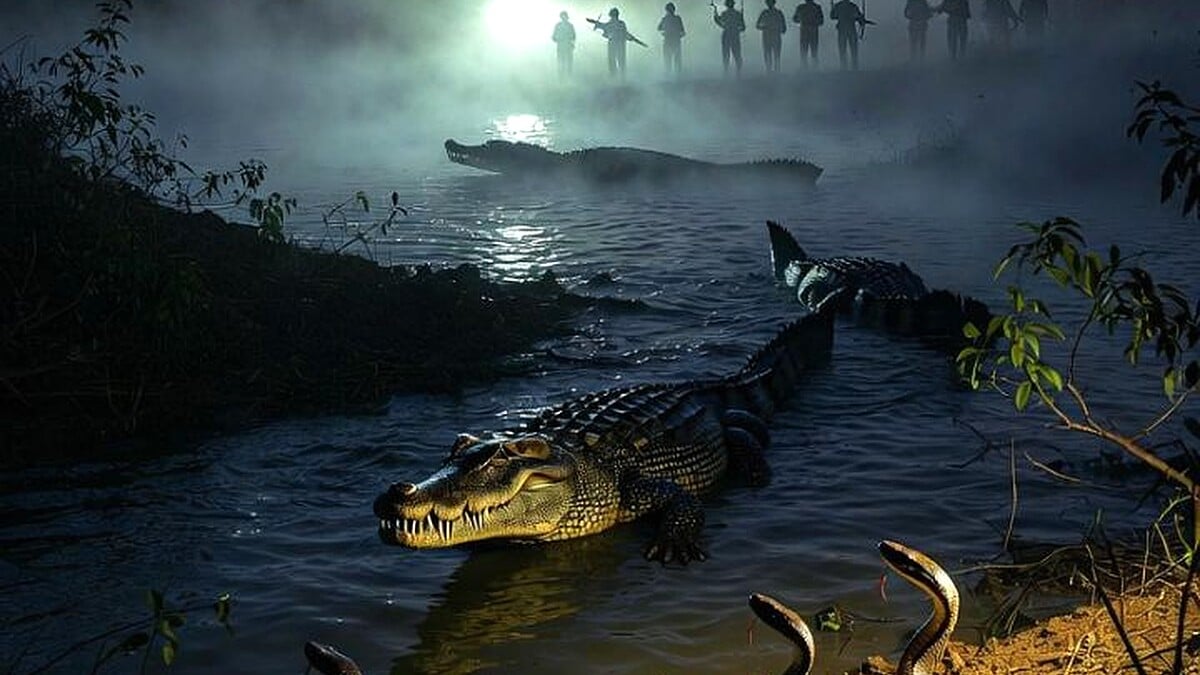




ISLAMABAD: India’s Border Security Force is weighing an audacious plan to deploy venomous snakes and ferocious crocodiles as living barriers against infiltration along its 4,096.7-kilometre border with Bangladesh.
The proposal targets riverine and marshy stretches where fencing remains impossible, turning nature into a deadly deterrent in one of South Asia’s most porous frontiers.
According to an internal BSF signal dated March 26, field units have been directed to explore the feasibility of releasing reptiles in vulnerable river gaps.
The directive explicitly aligns with instructions from Home Minister Amit Shah following a high-level meeting at BSF headquarters on February 9.
Nearly 175 kilometres of the border consist of riverine and swampy terrain prone to seasonal flooding, rendering conventional barriers ineffective.
Official data reveals that of the approved 3,326.14 kilometres for fencing, only 2,954.56 kilometres have been completed, leaving over 800 kilometres exposed to security threats.
Infiltration attempts surged dramatically in 2025, recording the highest figures in nearly a decade with 1,104 detected cases in early official tallies and over 7,500 attempts across the full year.
Indian authorities arrested more than 2,550 Bangladeshi nationals in 2025 alone for illegal entry, while total detentions since recent years exceeded 21,000 in some aggregated reports.
Smuggling of gold, narcotics like Phensedyl cough syrup and weapons has intensified in these unfenced zones, with BSF troops seizing contraband worth crores in repeated operations.
A November 2025 incident in Nadia district saw a Bangladeshi smuggler shot dead during a clash, underscoring the escalating risks faced by border guards.
BSF sources confirm the reptile plan remains under internal discussion with no official orders issued yet.
Officials have been tasked to identify suitable river stretches and assess operational viability, including procurement challenges and flood-related impacts on local populations.
The strategy is framed as an eco-friendly, low-cost alternative to physical infrastructure in densely populated and difficult topography.
Bangladeshi media outlets, including bdnews24.com, have highlighted the proposal, noting its potential effects on cross-border communities and wildlife dynamics.
Regional reports emphasise that densely forested and low-lying areas continue to facilitate criminal activities despite round-the-clock BSF patrols.
Simultaneously, the force is accelerating advanced technological integration to complement any natural deterrents.
BSF plans to install 1,000 biometric scanners along the Bangladesh border to create a digital database of infiltrators and smugglers.
AI-powered smart border observation systems are under development to analyse live feeds from cameras and sensors in real time.
These platforms will predict intrusion hotspots and reduce reliance on manpower-intensive monitoring across both Bangladesh and Pakistan frontiers.
Drones, night-vision body cameras and motion detectors have already been deployed in unfenced sectors, with over 5,000 such cameras distributed in recent months.
In January 2026, the 32nd Battalion in South Bengal intercepted a gold smuggler carrying biscuits worth Rs 1 crore using coordinated surveillance.
The hybrid approach combining reptiles in select rivers with AI surveillance aims to achieve zero-tolerance enforcement amid persistent challenges.
Critics, however, raise concerns over ecological disruption and risks to villagers on both sides during monsoon floods.
BSF field units must submit detailed reports on dark zones without signal coverage and map potential conflicts with local inhabitants.
The 2024-25 Ministry of Home Affairs report acknowledges the border’s inherent difficulties from hills, rivers and valleys, pushing for non-physical barriers.
This latest initiative reflects New Delhi’s determination to secure the sixth-longest land border in the world against migration, smuggling and security threats.
As discussions progress, the BSF’s innovative tactics could reshape border management strategies across riverine frontiers globally.
The proposal, though unconventional, underscores the force’s adaptive response to terrain-specific vulnerabilities that have defied traditional fencing for decades.
With infiltration figures climbing and technology evolving rapidly, the coming months may determine whether snakes and crocodiles join the frontline of India’s eastern defences.