



ISLAMABAD: A former senior CIA counterterrorism officer has publicly accused the Indian government of orchestrating the 1985 bombing of Air India Flight 182.
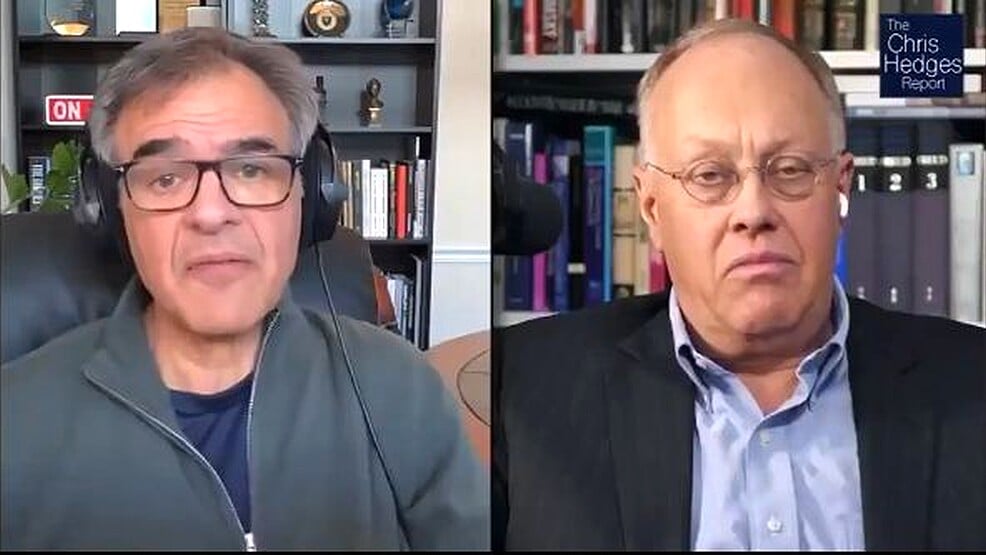
John Kiriakou made the startling assertion during a recent interview on The Chris Hedges Report.
The bombing of the Boeing 747 named Kanishka remains one of the deadliest acts of aviation terrorism in history.
All 329 passengers and crew perished when a bomb exploded mid-air over the Atlantic Ocean off the coast of Ireland on June 23 1985.
Among the victims were 268 Canadian citizens mostly of Indian origin 27 British citizens and 22 Indian citizens including all 22 crew members.
Only 131 bodies were ever recovered from the sea.
The aircraft disintegrated at approximately 31 000 feet with no distress call issued from the cockpit.
Kiriakou a well-known CIA whistleblower on torture programmes argued that the United States applies the label of state sponsor of terrorism selectively.
He stated that the Indian government could be blamed for carrying out assassinations and terrorist attacks in Canada including blowing up a 747.
The former officer added it is the Indians that blew up the 747 in Canada.
His comments surfaced in early April 2026 and quickly circulated on social media particularly among Sikh activist communities.
They have reignited long-standing conspiracy theories surrounding the Kanishka bombing.
Canadian investigations however have consistently attributed the attack to Khalistani Sikh separatist militants based in Canada.
The plot was linked to the Babbar Khalsa group and revenge for India’s Operation Blue Star in 1984 and the anti-Sikh riots following Indira Gandhi’s assassination.
Talwinder Singh Parmar was identified as a key figure while Inderjit Singh Reyat pleaded guilty to manslaughter in 2003 and received a five-year sentence.
Two other suspects Ripudaman Singh Malik and Ajaib Singh Bagri were acquitted in 2005 due to insufficient evidence.
The 2010 Major Commission of Inquiry led by Justice John Major described a cascading series of errors by Canadian security agencies including the RCMP and CSIS.
It highlighted failures in intelligence sharing and airport security that allowed the bomb to be loaded in Vancouver.
The inquiry called the disaster the largest mass murder in Canadian history.
Indian inquiries such as the Kirpal Commission also concluded the explosion was caused by a bomb planted in Canada by Sikh extremists.
Neither Canada nor India officially blamed Pakistan for the 1985 attack.
The primary motive established in official probes was retaliation by militants against the Indian state.
Regional media and Sikh advocacy groups have amplified Kiriakou’s remarks as validation of alternative narratives.
Some online claims mention mysterious ticket cancellations by Indian officials and alleged links between militants and diplomats though these remain unverified in mainstream courts.
International coverage of Kiriakou’s specific allegation has been limited with most global outlets continuing to reference the established Khalistani militant attribution.
The Air India bombing coincided with another explosion at Tokyo’s Narita Airport that killed two baggage handlers.
Both incidents were part of the same conspiracy according to investigators.
The tragedy prompted major reforms in Canadian aviation security and intelligence practices.
Families of victims have long expressed frustration over the lack of full accountability and the acquittals in court.
Kiriakou’s background lends weight to his words in certain circles.
He previously exposed CIA enhanced interrogation techniques and faced legal consequences for whistleblowing.
His latest comments form part of a broader critique of inconsistent Western terrorism designations.
The claim has sparked renewed debate on social platforms about state involvement in past incidents.
Official records from Canada and India maintain that the bombing was the work of non-state Sikh extremists operating from Canadian soil.
The disaster occurred amid heightened tensions in Punjab during the 1980s militancy period.
Over four decades later the Kanishka case continues to evoke pain among affected communities in Canada India and beyond.
Kiriakou’s accusation adds a provocative layer to an already complex and emotionally charged historical event.