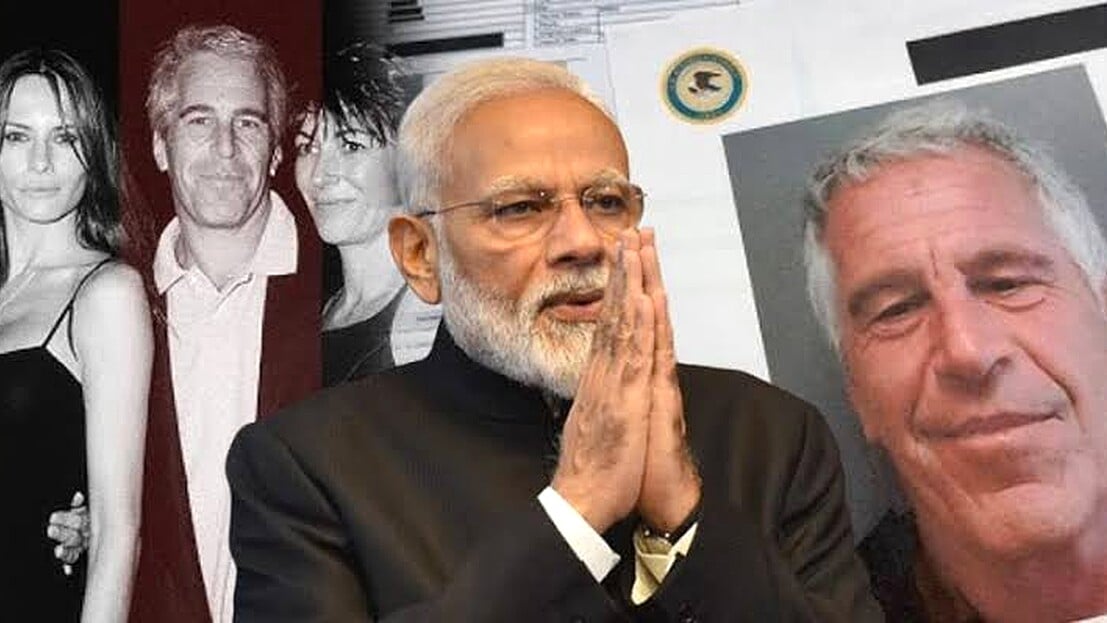




ISLAMABAD: Explosive leaks from newly released United States Department of Justice files have exposed indirect links between Indian Prime Minister Narendra Modi and convicted sex offender Jeffrey Epstein through his closest business confidant Anil Ambani.
The revelations centre on hundreds of messages exchanged between Ambani and Epstein between 2017 and 2019.
A New York Times investigation published two days ago reviewed these Justice Department documents and uncovered how Ambani positioned himself as a backchannel for the Modi government.
In March 2017 Ambani told Epstein that Delhi leadership urgently wanted meetings arranged with senior Trump aides including Jared Kushner and Steve Bannon.
The outreach occurred just months after Donald Trump took office and ahead of Narendra Modi’s first state visit to Washington.
Ambani explicitly sought Epstein’s guidance on India-United States defence cooperation and national security strategy.
Epstein presented himself as a White House insider with direct access despite lacking formal ties to the administration.
He shared prescient details on key appointments that later proved accurate.
In July 2017 Epstein informed Ambani that John Bolton would replace Lieutenant General H R McMaster as national security adviser.
That prediction materialised exactly eight months later when Bolton assumed the role in April 2018.
Ambani had also inquired whether former CIA director David Petraeus would become United States ambassador to India.
Epstein correctly replied that Petraeus was not under consideration and Kenneth I Juster received the posting in November 2017.
The messages further reveal Ambani urging use of India’s growing defence ties with Israel to strengthen relations with the Trump administration.
Epstein offered to facilitate introductions to Trump allies including Stephen K Bannon and Thomas J Barrack Junior.
Ambani claimed the Modi leadership had specifically requested these connections to prepare for high-level diplomatic engagements.
By late 2017 Ambani faced severe financial distress in his Reliance Group defence ventures and continued pressing Epstein for insider updates on foreign policy.
Over two hundred messages focused on defence deals overseas financing and strategic positioning against regional rivals.
A May 2019 meeting in New York saw Epstein later messaging Bannon that he had met Prime Minister Modi’s personal representative.
The representative reportedly complained that no senior Washington officials were engaging directly with Modi at the time.
These disclosures come from millions of pages unsealed under the Epstein Files Transparency Act of 2026.
The New York Times confirmed the exchanges originated from Epstein’s seized devices and iMessage records.
No evidence shows Epstein held genuine influence inside the Trump White House yet his information repeatedly aligned with eventual outcomes.
Regional media across South Asia including Pakistani outlets have highlighted the sensational Modi angle given Ambani’s status as the prime minister’s trusted economic lieutenant.
Analysts note that Reliance Group held stakes in multiple strategic defence projects during this period.
The leaks raise fresh questions about backchannel diplomacy employed by the Modi government to secure early Trump administration support.
Defence cooperation between India and the United States expanded significantly after 2017 with landmark agreements on military logistics and technology transfer.
Critics argue such indirect channels involving controversial figures risk undermining transparency in bilateral ties.
The episode has sparked intense debate in Indian political circles where the Modi administration has long projected an image of clean and direct foreign policy engagement.
Ambani’s office has declined all requests for comment on the Justice Department files.
International coverage led by the New York Times has now been echoed in regional reporting amplifying claims of Modi’s indirect Epstein contact.
The files portray a web of ambitious networking where business interests blended with state-level defence priorities.
Pakistan-based observers view the revelations as underscoring complexities in India’s United States outreach during periods of heightened South Asian tensions.
Further releases from the Epstein archive are expected to shed additional light on these global elite connections.
The story continues to dominate diplomatic discourse with fresh scrutiny on how personal intermediaries shaped early Trump-era India policy.