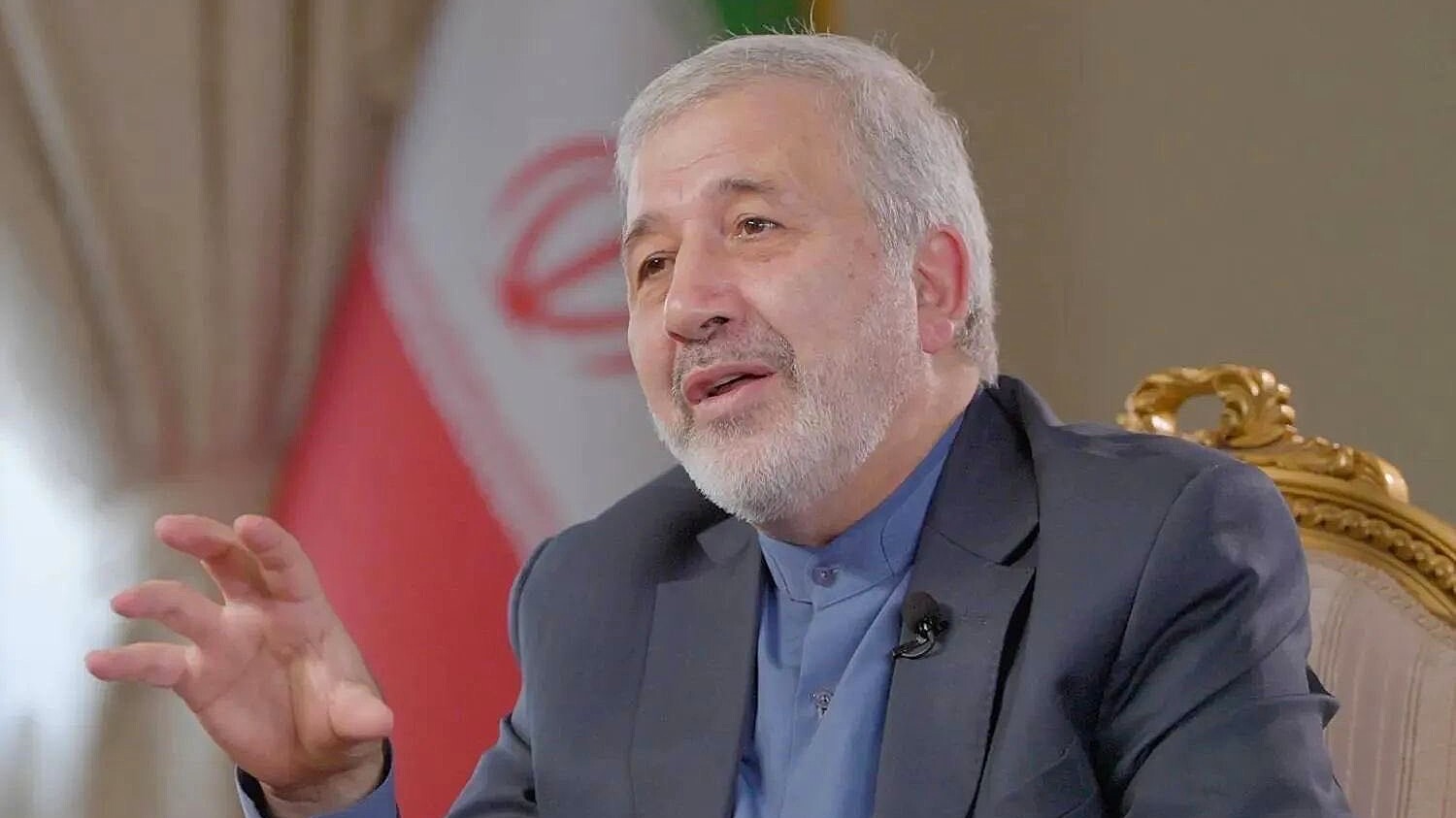
ISLAMABAD: Iran’s ambassador to Saudi Arabia, Alireza Enayati, has publicly thanked the Kingdom for its principled stance during the recent war imposed on Iran, highlighting Riyadh’s refusal to permit its territory or airspace for military actions against Tehran.
The statement underscores a notable shift in bilateral ties between the two longstanding regional rivals, following years of tension eased by a Chinese-brokered reconciliation in 2023.
Enayati specifically recalled Saudi Arabia’s condemnation of Israeli aggression against Iran and a direct communication from the Saudi foreign minister on the morning of key developments.
In that exchange, Crown Prince Mohammed bin Salman reportedly emphasized respect for Iran’s sovereignty and explicitly rejected any use of Saudi airspace or territory for attacks against Iran, irrespective of the originating party.
This position came during a 12-day conflict in June 2025, when Israel, supported by the United States, launched strikes on Iranian nuclear and military facilities.
The escalation included direct attacks on strategic sites, prompting Iranian retaliatory missile and drone barrages across the region.
Saudi Arabia’s decision not to facilitate operations aligned with broader Gulf efforts to avoid entanglement in the direct Iran-Israel confrontation.
Analysts note that Riyadh’s neutrality helped prevent wider regional spillover, preserving fragile stability in the Persian Gulf.
The ambassador’s remarks, made in interviews with regional media outlets, praised Saudi Arabia as a pivotal partner whose actions fortified bilateral relations.
He described the Kingdom’s approach as contributing to de-escalation and dialogue, contrasting with forces seeking to ignite broader conflict.
Enayati further indicated that Tehran consulted Gulf Cooperation Council states, including Saudi Arabia, on nuclear negotiations with the United States.
This coordination reflects growing alignment on averting war and promoting peace, even amid ongoing tensions.
Iran’s appreciation extends to Riyadh’s public condemnation of the aggression and support for diplomatic resolutions.
Such gestures have been reciprocated, with Iranian officials acknowledging the role of Crown Prince Mohammed bin Salman in fostering regional security.
The recent summons of Enayati by Saudi authorities over separate Iranian attacks on Gulf targets highlights persistent frictions.
Yet, the gratitude expressed focuses on the specific wartime neutrality, seen as a confidence-building measure.
Regional observers point to the 2023 détente as foundational, enabling such positions during crises.
The conflict weakened Iran’s proxy network but reinforced Tehran’s push for normalized ties with Arab states.
Saudi Arabia’s refusal to align militarily with anti-Iran operations signals prioritization of economic diversification and internal stability.
This stance also mitigates risks to energy infrastructure, vital for global markets.
Enayati’s comments reinforce Tehran’s narrative of seeking cooperation over confrontation in the Gulf.
They come amid efforts to rebuild after the 2025 war, including consultations on nuclear issues.
The ambassador warned against elements aiming to destabilize the region through escalation.
He praised “sober positions” rejecting hostility and favoring dialogue.
Saudi Arabia has consistently supported diplomatic tracks for US-Iran disputes.
This includes backing dialogue to resolve outstanding issues peacefully.
The Kingdom’s position during the war aligns with its broader policy of non-interference in ways that could invite retaliation.
Iranian leaders, including President Masoud Pezeshkian, have engaged directly with Saudi counterparts on regional developments.
Such interactions stress mutual interest in peace and avoidance of war.
The gratitude expressed by Enayati serves as diplomatic signaling amid complex dynamics.
It highlights how détente has created space for pragmatic cooperation.
Observers suggest this could pave the way for deeper economic and security collaboration.
The recent war demonstrated the high costs of escalation for all parties.
Iran’s retaliatory strikes targeted multiple locations but were met with defenses across the Gulf.
Saudi Arabia’s non-involvement helped contain the conflict geographically.
Tehran’s thanks reflect recognition of Riyadh’s role in maintaining balance.
This development occurs against a backdrop of evolving US policy and Israeli strategic calculations.
The ceasefire following the 2025 war remains fragile, with risks of renewed hostilities.
Yet, Gulf states like Saudi Arabia continue advocating restraint.
Enayati’s statement reinforces the value of independent positions in fostering stability.
It also underscores the resilience of post-2023 relations between Tehran and Riyadh.
As the region navigates post-conflict realities, such diplomatic acknowledgments gain significance.
They contribute to narratives of de-escalation over perpetual rivalry.
The ambassador’s words serve as a reminder of shared interests in a secure Gulf.
Iran views Saudi Arabia’s neutrality as supportive during a critical period.
This has strengthened perceptions of mutual respect.
Future interactions may build on this foundation for broader regional peace efforts.