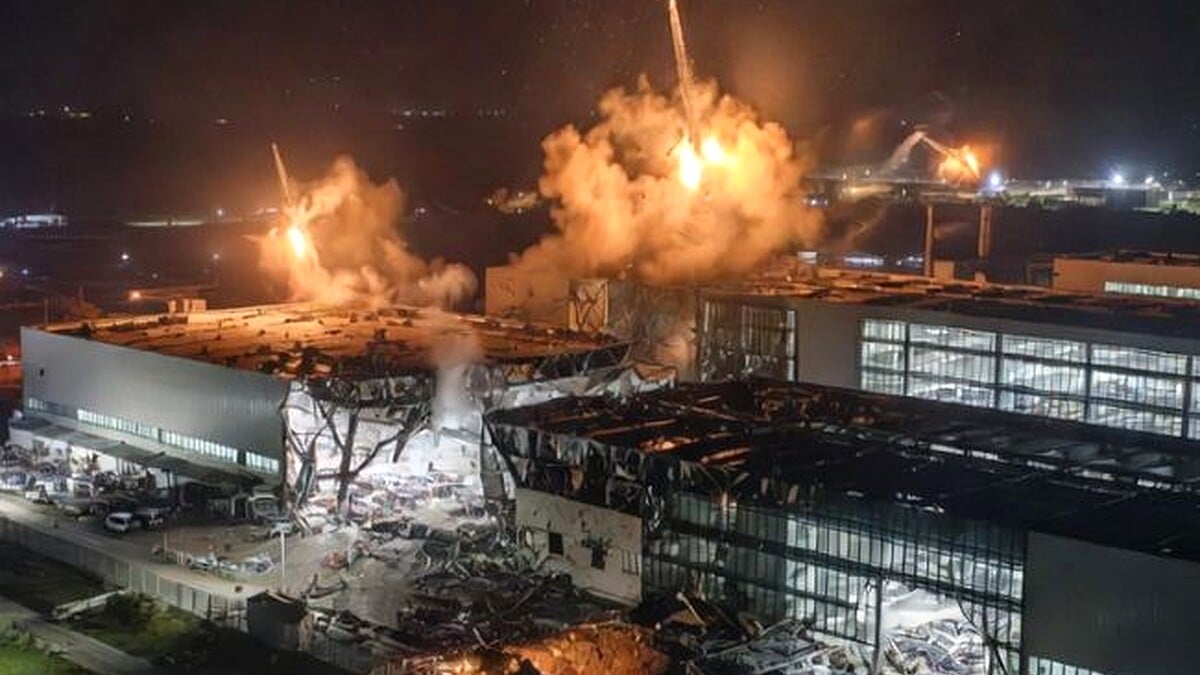




ISLAMABAD: An Iranian ballistic missile has inflicted what the CEO described as total loss on a key Israeli drone manufacturing facility in Petah Tikva, raising fresh questions over the effectiveness of Israel’s multi-layered air defences amid escalating regional tensions.
The strike targeted the Aero Sol Aviation Solutions factory, a specialist in security and tactical drones, just two days after its acquisition by Valorex for approximately 35 million shekels.
Aero Sol CEO Israel Vaserlauf confirmed the damage prevents any resumption of operations at the site.
The missile, carrying a large warhead, detonated near the factory fence in central Israel’s Petah Tikva industrial zone on April 2, 2026, creating a massive crater and shattering production halls, offices and machinery.
Vaserlauf estimated the financial hit at around 15 million shekels, including four million shekels in recent investments, specialised equipment and raw materials essential for drone airframes.
Regional media outlets, including Iranian state-linked Nour News, reported the facility as completely devastated with visuals showing collapsed structures and burnt machinery scattered across the site.
International coverage has remained limited, with primary details emerging from Israeli business portals such as Ynet and Calcalist.
Aero Sol specialised in low-noise tactical unmanned aerial vehicles used for intelligence, surveillance and reconnaissance missions by Israeli defence clients.
The factory served as the company’s sole manufacturing hub, producing composite components and platforms critical to Israel’s expanding drone fleet.
Valorex, the new owner listed on the Tel Aviv Stock Exchange with a market value of 213 million shekels, informed regulators that it is still assessing operational impact.
No major casualties were reported from the blast, yet the timing has amplified concerns about precision targeting in the ongoing Iran-Israel conflict.
Defence analysts note that Iran’s ballistic missiles have increasingly demonstrated the ability to penetrate or overwhelm Israeli interception systems, including the Arrow and Iron Dome layers.
The Petah Tikva strike occurred during a barrage that saw multiple missiles launched towards central Israel.
Footage released later revealed extensive structural damage, with emergency teams working to secure the large impact crater.
Vaserlauf, while acknowledging the severity, expressed optimism about potential relocation or rebuilding, though he stressed the immediate halt in production.
The incident highlights vulnerabilities in Israel’s defence industrial base, particularly in unmanned systems that have become central to modern warfare operations in Gaza and Lebanon.
Israel has long maintained technological superiority in drone technology, with systems exported globally and used extensively in asymmetric conflicts.
Disruption at even a mid-sized facility like Aero Sol could affect supply chains for tactical UAVs relied upon by the Israel Defence Forces for real-time battlefield intelligence.
Regional reports claim the strike was not random, pointing to possible intelligence on the factory’s strategic role in producing carbon-fibre components and drone platforms.
The acquisition by Valorex had been viewed as a boost for Aero Sol’s growth prospects before the sudden setback.
Economic losses extend beyond the physical plant to include halted contracts and potential delays in delivery schedules for defence orders.
Broader context shows Iran stepping up its missile capabilities, with recent tests focusing on hypersonic and ballistic systems designed to challenge advanced air defences.
Israeli officials have vowed retaliation while continuing interception operations, yet successive strikes on military-linked sites have sparked domestic debate over preparedness.
The Petah Tikva facility’s destruction adds to a list of high-value targets reportedly hit or damaged in the current escalation phase.
Defence industry sources indicate that rebuilding such specialised production lines could take months, if not longer, given the precision machinery involved.
Vaserlauf’s statement described the scene as everything blown to pieces, underscoring the warhead’s destructive power despite interception attempts.
This event coincides with heightened regional alerts, as both sides exchange threats and demonstrations of long-range strike capabilities.
For Israel’s drone-dependent military doctrine, any interruption in domestic manufacturing capacity carries significant operational implications.
Analysts monitoring the conflict expect further attempts by Iran to target defence infrastructure in coming phases.
The Aero Sol case illustrates how even limited penetration of defences can yield disproportionate strategic effects on production nodes.
Reconstruction efforts will likely require substantial investment and time, during which alternative sourcing may prove challenging.
The strike has also drawn attention to the concentration of sensitive industries in the densely populated central Israel corridor.
Security protocols around such facilities are now under urgent review following the incident.
As the situation evolves, the full extent of ripple effects on Israel’s unmanned aerial capabilities remains under assessment by military planners.