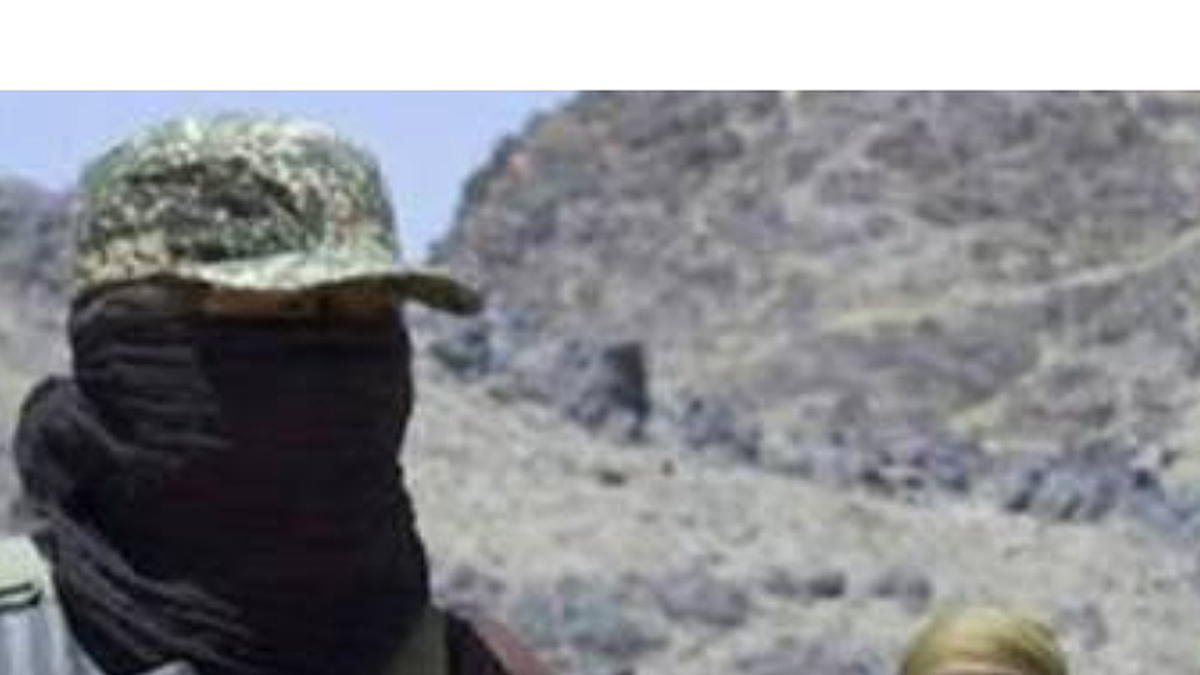
ISLAMABAD: A prominent commander of the proscribed Balochistan Liberation Army (BLA), identified as Naeem alias Doctor, has been killed in a targeted operation in Afghanistan’s Kandahar province, security officials confirmed on Wednesday.
The elimination of Naeem represents a significant blow to the militant group’s operational capabilities, particularly within its most active and lethal wing. Authorities described the slain militant as one of the BLA’s most important field commanders, deeply involved in planning and executing terrorist activities across Balochistan.
Security sources revealed that Naeem, also known simply as Doctor, held a central role in the BLA’s military structure. He was closely affiliated with the outlawed Majid Brigade, the faction responsible for numerous high-profile attacks in recent years.
The Majid Brigade has gained notoriety for its involvement in suicide bombings, improvised explosive device attacks, and assaults on security forces as well as strategic installations. This unit is widely regarded as the BLA’s most dangerous operational arm, frequently claiming responsibility for incidents targeting military convoys, government facilities, and infrastructure projects.
Naeem’s long-standing engagement in terrorism spanned several years, during which he contributed substantially to the group’s armed network. His position allowed him to coordinate attacks and maintain links across the organization’s fragmented structure.
Adding to his significance, Naeem was a close relative of Mahrang Baloch, a member of the Baloch Yakjehti Committee, an activist platform advocating for Baloch rights. No immediate reaction emerged from Mahrang Baloch or her representatives following the report of his death.
The operation that led to Naeem’s killing unfolded in Kandahar province, a region long used by various militant outfits as a sanctuary due to its porous border with Pakistan. Details of the action remain limited, with officials withholding specifics on the conducting forces or exact circumstances to preserve operational security.
Afghanistan has historically served as a rear base for BLA elements evading Pakistani counter-terrorism efforts. Several senior BLA figures have met their end in Afghan territory over the past decade, disrupting command chains and logistical support.
Pakistani security agencies maintain vigilant monitoring of BLA networks operating from across the border. Ongoing intelligence-led operations aim to dismantle these cross-border sanctuaries and prevent infiltration into Pakistani territory.
Officials emphasized that actions against elements threatening national peace and stability will continue without pause. The commitment includes neutralizing networks intent on destabilizing Balochistan and undermining development initiatives in the province.
The BLA, designated a terrorist organization by Pakistan and several international entities, has intensified activities in recent times amid broader regional tensions. Attacks attributed to the group have targeted security personnel, civilians, and economic projects, including those linked to the China-Pakistan Economic Corridor.
Naeem’s death comes at a time when Pakistani authorities report progress in degrading militant capabilities through sustained operations. Recent eliminations of key figures have contributed to a relative decline in large-scale incidents in parts of Balochistan.
Security forces reiterated their resolve to confront threats decisively. All necessary measures will be employed to safeguard citizens and preserve territorial integrity against separatist violence.
The incident underscores persistent challenges in countering transnational militancy. Cooperation with regional partners remains essential to address safe havens beyond national borders.
Pakistan has consistently called for constructive engagement with Afghan authorities to curb cross-border terrorism. Efforts focus on denying space to groups like the BLA, which exploit instability for operational freedom.
As investigations into the Kandahar operation proceed, officials anticipate further insights into the BLA’s current structure and external linkages. The group’s ability to regenerate leadership will face renewed scrutiny in the wake of this development.