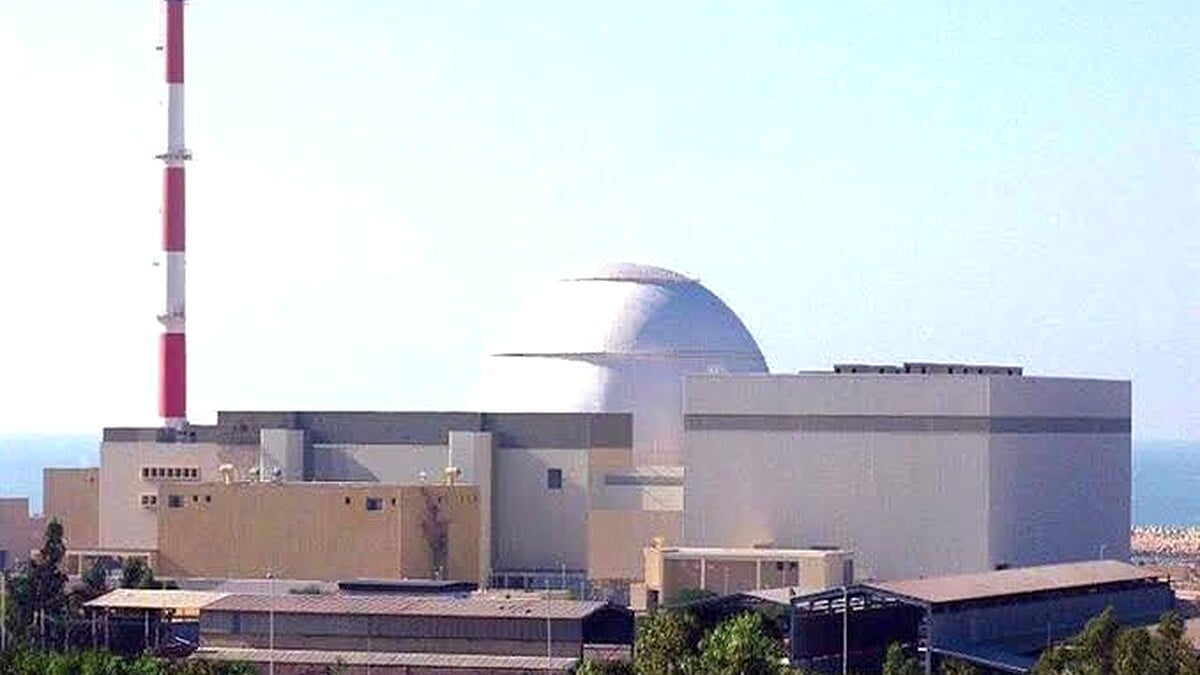




ISLAMABAD: Iran’s Foreign Minister Abbas Araghchi delivered a blunt five-sentence warning on X on April 4 that has sent ripples through Gulf capitals.
He stated that Israel and the United States have now bombed Iran’s Bushehr nuclear plant four times.
“Radioactive fallout will end life in GCC capitals, not Tehran,” Araghchi declared, comparing the silence to Western outrage over Ukraine’s Zaporizhzhia plant.
The International Atomic Energy Agency confirmed the latest strike: a projectile struck near the facility, killing one security guard and damaging a support building.
No radiation increase was detected and containment held, the IAEA reported.
Yet Araghchi’s message was not aimed at Washington or Tel Aviv.
It targeted Abu Dhabi, Riyadh, Doha, Manama and Kuwait City directly.
The physics and geography behind his claim are impossible to ignore.
Bushehr sits on the Persian Gulf coast at 28 degrees north latitude.
Tehran lies 750 kilometres inland, shielded by the Zagros Mountains.
Prevailing winter winds blow from northwest to southeast, carrying any plume straight across the Gulf toward the UAE, Qatar, Bahrain and Saudi Arabia’s Eastern Province.
Anticlockwise surface currents in the Gulf transport waterborne radionuclides westward and northwestward.
Peer-reviewed hydrodynamic models show these currents can reach Kuwait and Bahrain within approximately 15 days.
Atmospheric dispersion studies using thousands of HYSPLIT simulations for a Bushehr release scenario indicate deposition exceeding relocation thresholds could hit Gulf coastal zones.
The plume does not travel north into Iran’s interior.
It moves west across the water the Gulf states drink.
Qatar relies on desalination for 99 percent of its drinking water supply.
Kuwait and Bahrain depend on it for 90 percent of potable needs.
Saudi Arabia draws 70 percent of its drinking water from desalination plants.
The UAE sources 42 percent of its drinking water the same way.
The Gulf region operates more than 400 desalination plants and produces roughly 40 percent of the world’s desalinated water.
These facilities draw intake directly from Gulf seawater.
Any contamination with caesium-137 or iodine-131 would force immediate shutdowns or risk tainted output.
Gulf states maintain strategic water reserves of roughly one week.
A Bushehr breach would not mirror Chernobyl’s explosive release.
Instead, models describe a slow, invisible contamination arriving via currents over two weeks.
Sixty million people across the GCC depend on this shared water source.
The countries facing contamination host the very forces conducting the strikes.
Al Udeid Air Base in Qatar launches many of the sorties.
Al Dhafra Air Base in the UAE supports overflow operations.
Bahrain hosts the US Fifth Fleet headquarters for naval coordination.
Saudi Arabia’s Prince Sultan Air Base in the Eastern Province lies in a primary deposition zone identified by fallout models.
An E-3 AWACS was destroyed there by Iranian fire on March 27.
The allies provide the platforms.
The bombers hit the coastal reactor.
The reactor sits beside the water those same allies must drink.
Araghchi’s warning carries a pointed subtext.
You are hosting the war that could poison your own supply.
International media including Al Jazeera and regional outlets have reported the fourth strike and the IAEA’s assessment.
Russian technicians at Bushehr, partly operated with Moscow’s assistance, began evacuating 198 staff after the latest incident.
Iranian state media described the attack as part of a pattern targeting civilian infrastructure.
The containment structure has survived four strikes so far.
Engineering resilience, however, is not the same as geographic inevitability.
A single failure could trigger the scenario Araghchi described.
The Persian Gulf’s enclosed nature amplifies any radiological event.
Limited water exchange with the open ocean means contaminants linger.
Desalination plants lack robust pre-treatment for radionuclide removal at scale.
Emergency shutdown protocols exist but require days to implement safely.
Gulf populations have grown rapidly, straining water infrastructure.
Doha, Dubai, Riyadh’s eastern cities and Manama sit directly downwind and downstream.
Tehran, by contrast, remains upwind and inland behind natural barriers.
This geographic asymmetry explains Araghchi’s precise wording.
He is not speculating on engineering.
He is stating documented wind, current and hydrological patterns.
Previous scientific assessments of spent-fuel risks at Bushehr reached similar conclusions on regional spread.
Low but non-zero probabilities still represent existential threats for water-scarce states.
The IAEA continues to monitor radiation levels around Bushehr.
Readings remain normal after the latest strike.
Yet the agency has repeatedly called for maximum military restraint near nuclear sites.
Double standards in international reaction have been highlighted by Iranian diplomats.
Western governments expressed alarm over potential risks at Zaporizhzhia.
Similar concerns over Bushehr have drawn comparatively muted responses.
The Gulf Cooperation Council has not issued a unified public statement on the strikes near Bushehr.
Private diplomatic channels are reportedly active.
The irony remains stark.
Nations hosting advanced air and naval bases are simultaneously vulnerable to the secondary effects of those operations.
A radiological incident would not respect national borders or alliance lines.
It would contaminate the shared marine environment sustaining the entire region.
Desalination dependence has risen steadily with population and industrial growth.
Any disruption would trigger immediate water rationing across multiple states.
Food security would follow, as agriculture and industry also draw from desalinated sources.
Economic losses could reach billions within weeks.
The slow arrival of contamination via currents offers a narrow window for preparation.
Yet one week of reserves leaves little margin for error.
Araghchi’s message underscores that the reactor’s location makes fallout a Gulf problem first.
Tehran’s distance and topography provide natural protection.
This reality persists regardless of how many times containment holds.
Repeated strikes increase cumulative risk.
Each impact tests structural integrity under wartime conditions.
The Bushehr plant, Iran’s only operational nuclear power station, supplies electricity to the national grid.
Its coastal position was chosen for cooling water access decades ago.
That same access now creates downstream vulnerability for neighbours.
Gulf states have invested heavily in nuclear power themselves.
The UAE operates the Barakah plant with similar desalination concerns in mind.
A precedent at Bushehr could affect regional nuclear safety perceptions.
International calls for de-escalation near nuclear facilities have grown.
The IAEA director general urged restraint following the latest incident.
Russia, a partner in Bushehr operations, condemned the strike as unacceptable.
Evacuation of its personnel signals operational disruption.
The broader US-Israeli campaign against Iranian targets continues.
Strikes have also hit petrochemical facilities and other infrastructure.
Araghchi noted these attacks reveal strategic objectives beyond military targets.
The water supply warning stands apart for its direct appeal to Gulf self-interest.
It frames the conflict as one where hosts of foreign bases bear disproportionate environmental risk.
Geography cannot be negotiated or deterred by diplomacy alone.
Wind patterns and ocean currents operate independently of alliances.
The Gulf’s shallow, semi-enclosed basin concentrates any release.
Hydrodynamic simulations consistently show westward and northward transport of pollutants.
Atmospheric models reinforce the southeast plume direction under typical winter conditions.
Summer patterns differ but winter strikes align with prevailing flows.
The latest incident occurred in early April, a transitional period still influenced by northwest winds.
Cumulative damage from four strikes raises long-term structural questions.
Even without immediate breach, repeated impacts erode safety margins.
The guard’s death underscores human cost at the site.
Iranian authorities maintain the reactor core remains undamaged.
The support building hit housed non-critical systems.
Containment domes protected the vital reactor building.
Such engineering successes buy time but do not eliminate the geographic hazard.
Araghchi’s post has circulated widely in regional media.
It forces Gulf governments to weigh alliance commitments against domestic survival imperatives.
Public awareness of desalination vulnerability is rising.
Citizens in Qatar, Bahrain and Kuwait understand their near-total dependence on Gulf water.
Any credible threat to intake sources triggers immediate concern.
Strategic reserves provide short-term insurance.
Beyond one week, alternatives are limited.
Groundwater and treated wastewater cannot scale quickly.
The region’s oil wealth funds advanced desalination but not infinite redundancy.
A contamination event would require international emergency aid.
Cross-border coordination would prove challenging amid ongoing conflict.
The Bushehr incident highlights broader nuclear safety gaps in conflict zones.
Global norms against attacking nuclear installations exist but face enforcement tests.
The Zaporizhzhia precedent Araghchi cited showed intense diplomatic pressure.
Similar pressure appears absent for Bushehr so far.
This perceived inconsistency fuels Iranian accusations of double standards.
Gulf states, as direct stakeholders, hold leverage in private talks.
Their water security aligns with calls for restraint.
Whether public statements will follow remains unclear.
The IAEA’s role grows more critical with each reported strike.
Independent verification of no release reassures but does not prevent future risk.
Monitoring must continue amid heightened tensions.
The Persian Gulf’s strategic importance extends beyond oil.
Its water resources sustain entire nations.
Protecting that resource demands recognition of shared vulnerability.
Araghchi’s warning, grounded in verifiable geography, serves as a reminder.
The reactor belongs to Iran.
The fallout, if released, belongs to the Gulf.