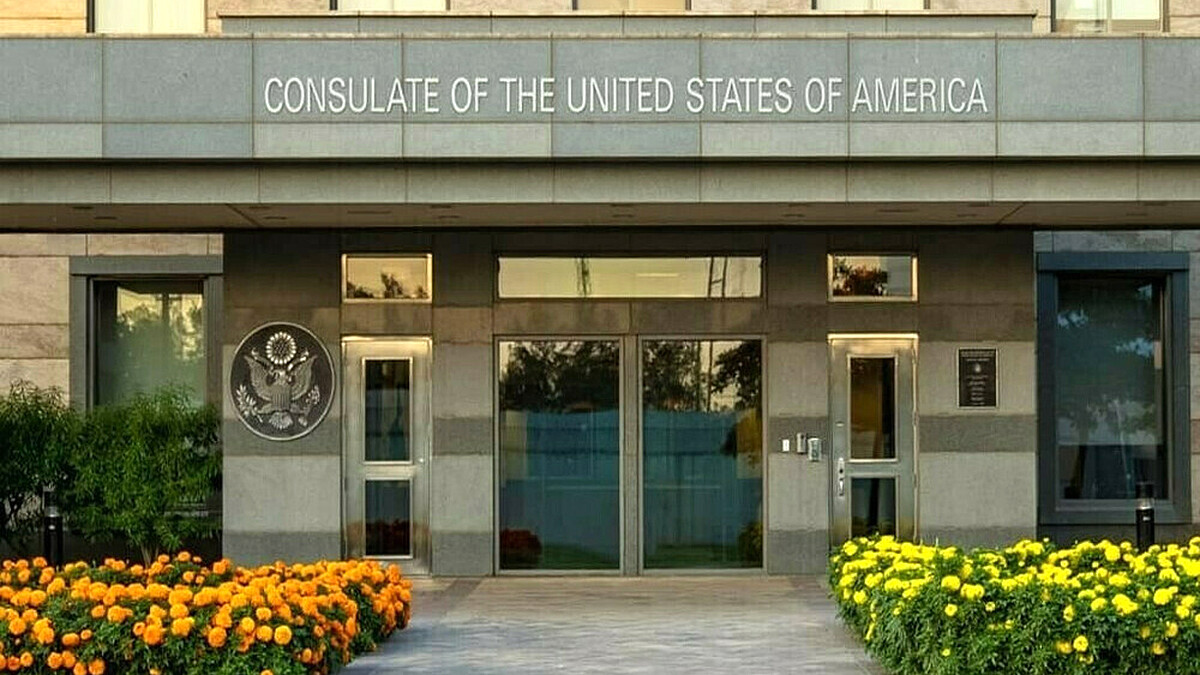
ISLAMABAD: The United States has ordered the immediate departure of non-emergency government personnel and their family members from its consulates in Karachi and Lahore, citing elevated safety concerns triggered by the ongoing conflict with Iran.
The directive, issued by the US Department of State on March 3, 2026, reflects growing fears of spillover violence into Pakistan following joint US-Israeli military strikes on Iran that began on February 28.
The operation, involving coordinated airstrikes on Iranian nuclear sites, military facilities, and leadership targets, has escalated into a broader regional crisis, with Iran launching retaliatory missile barrages against Israel and US interests.
Pakistan’s proximity to Iran, coupled with its substantial Shiite Muslim population, has amplified domestic unrest, prompting the precautionary measure.
The US Embassy in Islamabad remains fully operational with no changes to its status or staffing levels.
This selective evacuation spares the capital mission while focusing on the more vulnerable consulates in major commercial hubs.
The decision follows violent protests across Pakistan, particularly in Karachi, where demonstrators attempted to storm the US Consulate General on March 1.
Clashes between protesters and security forces resulted in at least 22 deaths and over 120 injuries nationwide, with reports of armed crowds breaching perimeter barriers in Karachi.
Similar demonstrations erupted in Lahore and other cities, fueled by widespread anger over the reported killing of Iran’s Supreme Leader Ayatollah Ali Khamenei in the initial strikes.
Anti-US sentiment, long simmering in parts of Pakistan, has surged amid perceptions of American aggression against a fellow Muslim nation.
The US Mission in Pakistan suspended routine consular services, including visa appointments and American Citizen Services, at the Embassy in Islamabad and consulates in Karachi and Lahore through at least March 6.
All US government personnel face restricted movements countrywide to minimize exposure risks.
Operations at the US Consulate General in Peshawar were temporarily halted effective March 2, further limiting diplomatic footprint in volatile regions.
Pakistan’s travel advisory from the US State Department maintains a Level 3: Reconsider Travel rating overall, driven by persistent threats of terrorism, armed conflict, crime, and kidnapping.
Specific provinces, including Balochistan and Khyber Pakhtunkhwa, carry Level 4: Do Not Travel warnings due to heightened instability.
The advisory underscores limited US government capacity to assist citizens outside major urban centers like Islamabad, Lahore, and Karachi.
Regional tensions trace back to late February 2026, when US and Israeli forces initiated strikes aimed at degrading Iran’s nuclear and missile capabilities, as well as targeting elements of its leadership and proxy networks.
Iran responded with missile attacks on Israel and US regional assets, closing parts of the Strait of Hormuz and disrupting global energy flows.
The conflict has drawn in multiple actors, raising alarms about a potential wider Middle East war.
In Pakistan, the fallout manifests through street protests organized by pro-Iranian groups and Shiite communities, who view the strikes as an assault on Islamic solidarity.
Authorities have deployed heavy security in major cities to contain demonstrations, yet sporadic violence continues.
The ordered departure aligns with similar measures in other regional posts, including Cyprus, amid fears of Iranian retaliation extending to US diplomatic facilities.
US officials emphasize that the move prioritizes personnel safety without signaling a full withdrawal from Pakistan.
The Embassy in Islamabad continues to offer emergency services for American citizens, urging them to monitor local news and practice heightened vigilance.
Analysts note that Pakistan’s delicate balancing act—maintaining alliances with the US while navigating ties with Iran—faces new strains from these events.
The border with Iran remains a conduit for potential militant activity, and cross-border trade disruptions could exacerbate economic pressures.
The US travel advisory reminds citizens not to rely on government-assisted evacuation in crises, encouraging independent departure planning where feasible.
As the Iran conflict enters its second week, the situation in Pakistan illustrates how distant hostilities can rapidly inflame local grievances.
Diplomatic missions worldwide adjust postures in response to fluid threats, with Pakistan’s case highlighting the intersection of geopolitics and domestic volatility.
The measure underscores Washington’s caution in a neighborhood marked by unpredictable escalations.