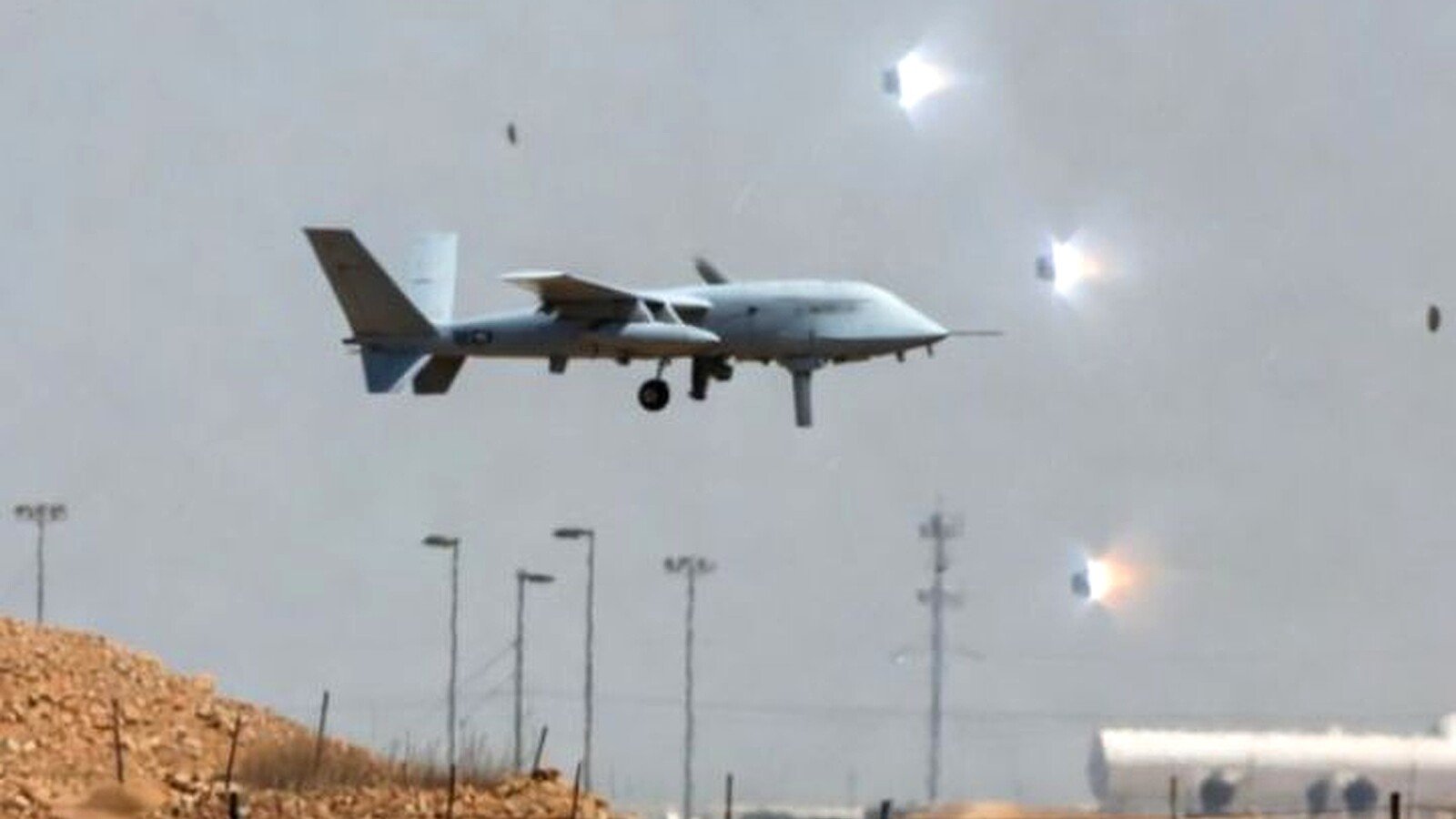
ISLAMABAD: Iranian drone attack struck the Central Intelligence Agency station housed within the United States Embassy compound in Riyadh, Saudi Arabia, marking a significant escalation in the ongoing regional conflict. Atleast two drones impacting the embassy premises early in the day.
According to reports from reliable sources familiar with the matter, one drone directly affected the CIA station, resulting in partial collapse of a section of the embassy roof and smoke filling interior areas.
An internal United States State Department alert described the damage as structural, with staff directed to shelter in place following the strike.
Neither the CIA nor the US government has officially confirmed the precise targeting of the intelligence facility, though both Washington and Riyadh acknowledged the drone impacts.
Saudi Arabia’s Defense Ministry stated that the attack caused a limited fire and minor material damage to the building.
No injuries among CIA personnel or embassy staff have been reported in connection with this specific incident.
The strike represents what analysts describe as a symbolic victory for Tehran, demonstrating its capability to reach high-value US intelligence assets in a key allied nation.
This development unfolds against the backdrop of intensified US and Israeli military operations against Iran, including airstrikes that have targeted Iranian leadership and infrastructure.
Recent actions have reportedly resulted in the death of Iran’s Supreme Leader Ayatollah Ali Khamenei and several senior military commanders.
Iran has responded by widening its retaliatory operations across the Middle East, launching missile and drone barrages at multiple locations.
Targets have included US diplomatic facilities in other Gulf states, energy infrastructure in Saudi Arabia and Qatar, as well as maritime assets in the Strait of Hormuz.
The attack on the Riyadh embassy follows a similar drone strike on the US Embassy in Kuwait, prompting closures of diplomatic missions in the region.
The United States has ordered non-emergency personnel and families to evacuate from several Gulf countries, including Kuwait, Bahrain, Iraq, Qatar, Jordan, and the United Arab Emirates.
American citizens have been urged to depart the Middle East immediately, with charter flights facilitated from select locations amid disrupted commercial air travel.
Global oil prices have surged sharply due to threats to energy supplies and shipping routes, exacerbating economic concerns worldwide.
Saudi Arabia has condemned the attack in the strongest terms, labeling it a flagrant violation and expressing rejection of Iranian aggression targeting diplomatic premises on its soil.
The kingdom’s authorities intercepted additional drones during the overnight operation, according to initial assessments.
This incident highlights the precarious security environment for US interests in the Gulf, where longstanding alliances face direct challenges from Iranian proxy and direct actions.
The CIA maintains a significant presence in Saudi Arabia to coordinate intelligence sharing, counterterrorism efforts, and monitoring of regional threats.
The station’s location within the heavily fortified embassy compound underscores the perceived vulnerability exposed by the drone penetration.
Experts note that Iran’s use of advanced drones, including models capable of long-range precision strikes, reflects improvements in its asymmetric warfare capabilities.
Such attacks aim to impose costs on the United States and its allies without engaging in full-scale conventional conflict.
The broader confrontation stems from accumulated tensions, including prior incidents involving Iranian-backed groups and responses to perceived threats from Israel and the US.
As operations continue, US President Donald Trump has indicated that military actions against Iran may persist for an extended period, potentially exceeding a month.
The conflict has already disrupted international shipping, closed airspace in parts of the region, and prompted evacuations of foreign nationals.
Diplomatic efforts to de-escalate remain limited, with no immediate signs of negotiation channels reopening.
The strike on the CIA station serves as a stark reminder of the risks to intelligence operations in forward-deployed locations during periods of heightened hostility.
Further details on casualties, precise damage assessment, and potential US response measures are expected to emerge in the coming days as investigations proceed.