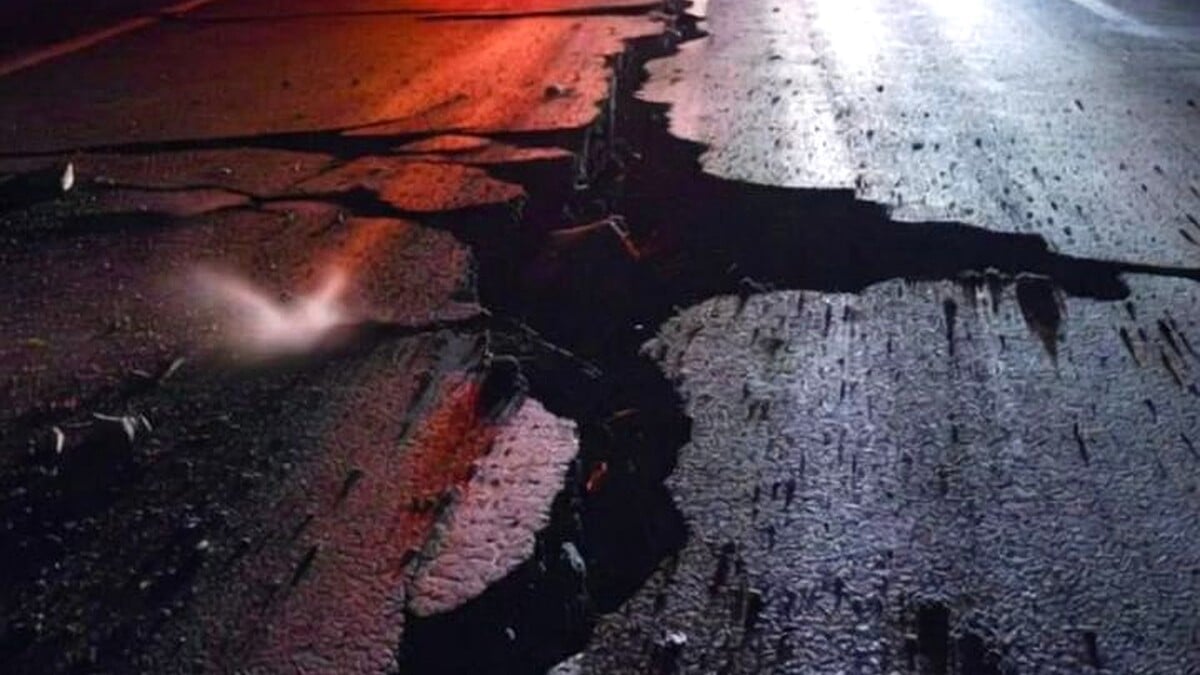




ISLAMABAD: A high-intensity earthquak jolted Lahore and large parts of Pakistan on Friday night around 9:15pm.
The tremor lasted nearly 45 seconds, causing widespread panic as residents fled their homes and high-rise buildings.
According to initial reports from the Pakistan Meteorological Department, the epicenter was located about 40km north of Lahore in the Punjab region at a shallow depth of just 10km.
This shallow depth amplified the shaking intensity, registering up to VII on the Modified Mercalli Intensity scale in urban areas.
Millions across Lahore, Islamabad, Rawalpindi, Faisalabad, and Gujranwala felt the powerful quake, with social media flooded with videos of swaying chandeliers and cracking walls.
Regional media outlets including Geo News reported no immediate fatalities but noted minor structural damage in older buildings across the affected cities.
Pakistan, situated on the seismically active Indian-Eurasian plate boundary, experiences frequent tremors, with this event being one of the strongest felt in eastern Punjab in the past decade.
The 2005 Kashmir earthquake of 7.6 magnitude remains a grim reminder, having killed over 87,000 people and injured 200,000 more.
However, prompt alerts from the Earthquake Early Warning system helped mitigate potential chaos this time.
The National Disaster Management Authority has issued advisories for aftershocks, urging people to stay away from vulnerable structures.
Experts from the Pakistan Meteorological Department stated that while the main shock has subsided, smaller aftershocks of magnitude 4.0 or above could continue for days.
No international agencies like the US Geological Survey have issued detailed bulletins yet due to the event’s recency, relying instead on local seismic data.
Authorities have deployed rapid response teams in Lahore and other cities to assess damages, with preliminary estimates suggesting economic impact in the range of billions of rupees if infrastructure checks reveal hidden faults.
Residents are advised to follow official updates to ensure safety amid ongoing uncertainty.