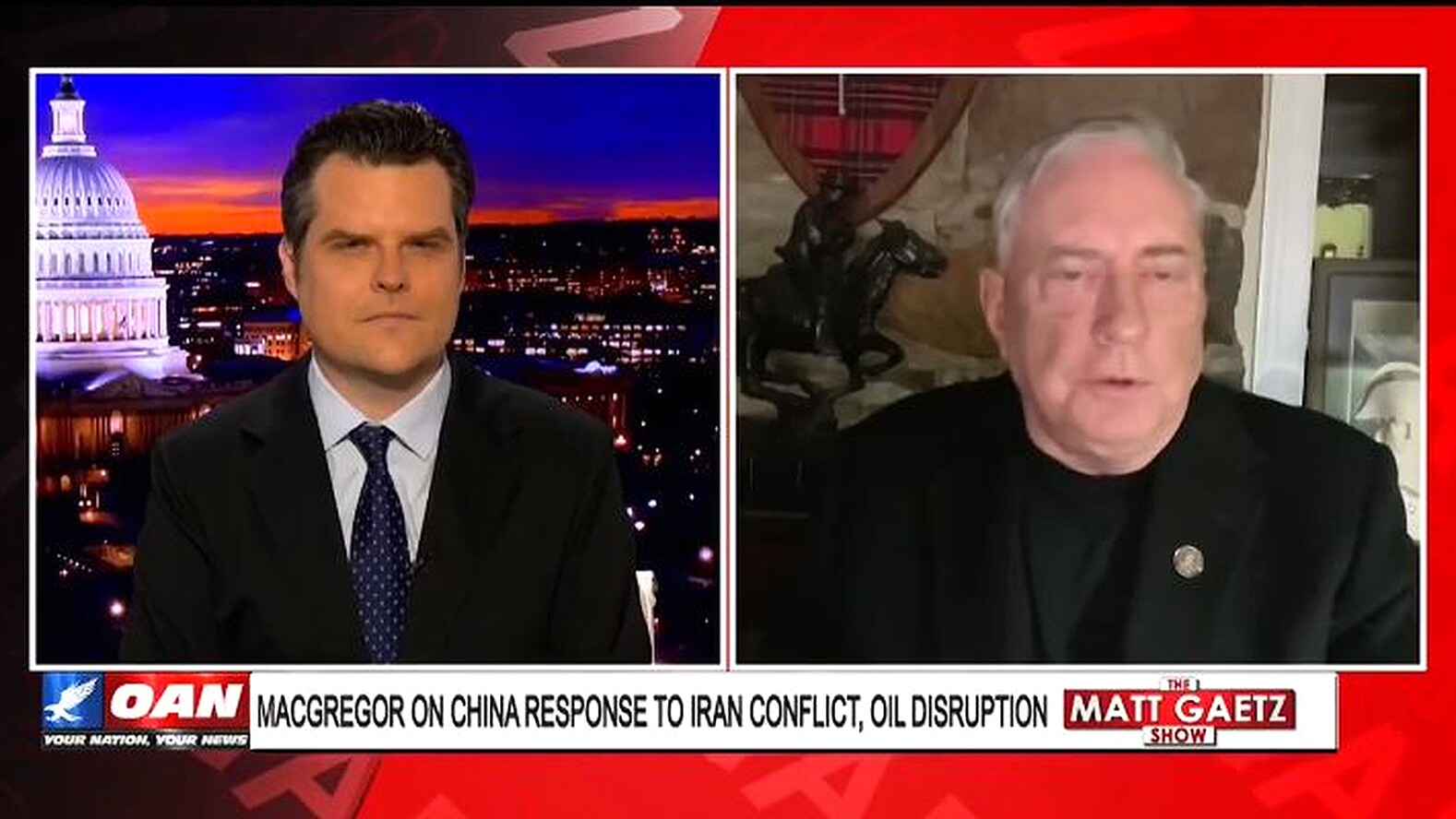
ISLAMABAD: Retired US Army Colonel Douglas Macgregor, a former senior advisor to the Secretary of Defense, has claimed that the American Navy is now using Indian ports to dock and unload amid heightened tensions with Iran.
The statement, made during a recent interview on One America News, has sparked widespread discussion on social media platforms, particularly in South Asia.
Macgregor suggested that threats to traditional US bases in the Persian Gulf have prompted this logistical pivot toward Indian facilities.
He framed the development as part of broader US military operations potentially linked to the ongoing conflict dynamics involving Iran.
Observers note that Macgregor, known for his critical views on US foreign policy, often highlights vulnerabilities in American strategy in the Middle East.
His remarks appear in a context where US naval assets face challenges in sustaining operations near Iran without relying on Gulf allies.
Several regional countries have reportedly expressed reluctance to provide full support for potential escalations against Tehran.
This has led analysts to examine whether Washington is diversifying its logistical footprint in the Indo-Pacific.
India and the United States have deepened defense cooperation in recent years through frameworks like the Quadrilateral Security Dialogue.
Agreements signed between the US Navy and Indian shipyards allow for maintenance, repair, and overhaul of American vessels.
Notable examples include visits by Military Sealift Command ships such as USNS Charles Drew in 2022 and 2023 at facilities near Chennai.
The submarine tender USS Frank Cable conducted a scheduled port visit to Chennai in August 2025.
These activities fall under Master Ship Repair Agreements with companies like Larsen & Toubro in Kattupalli and others.
Such arrangements enable routine support for US Navy ships operating in the broader Indo-Pacific theater.
Official statements from both governments describe these as confidence-building measures and enhancements to interoperability.
No public evidence confirms that these port calls involve unloading combat supplies specifically for anti-Iran operations.
US Navy logistics for Middle East missions traditionally depend on hubs like Bahrain, home to the Fifth Fleet.
Diego Garcia in the Indian Ocean also serves as a key forward base for resupply.
Oman and the United Arab Emirates provide additional access under longstanding arrangements.
India maintains a policy of strategic autonomy in foreign affairs, balancing ties with the US, Russia, and Iran.
New Delhi continues cooperation on projects like the Chabahar port with Tehran despite Western sanctions.
Indian officials have not commented directly on Macgregor’s assertion regarding operational use against Iran.
The claim has circulated widely on platforms like X, often amplified in accounts critical of India’s foreign policy alignment.
Some posts link the statement to potential risks for Indian infrastructure in case of Iranian retaliation.
Iran’s response doctrine focuses on US military installations and perceived direct enablers in the region.
No official Iranian declaration has identified Indian ports as targets based on routine US Navy visits.
Experts emphasize that goodwill port calls and maintenance differ from establishing forward operating bases.
The US-India partnership emphasizes maritime security in the Indo-Pacific rather than direct involvement in Middle East conflicts.
Recent developments include expanded exercises and information-sharing under bilateral dialogues.
The timing of Macgregor’s comments coincides with reports of US naval repositioning amid Iran-related escalations.
Analysts monitor whether such statements reflect classified shifts or represent individual commentary.
Macgregor has previously critiqued US reliance on regional allies and warned of overextension risks.
His background as a combat veteran and policy advisor lends weight to his observations in certain circles.
Defense watchers point out that logistical diversification becomes prudent when traditional routes face disruptions.
Threats to shipping in the Red Sea and Gulf of Aden have already forced rerouting for commercial vessels.
Similar pressures could influence military sustainment strategies.
India’s shipbuilding and repair capabilities offer cost-effective options for the US Navy.
This aligns with Washington’s push to reduce dependence on vulnerable chokepoints.
Both nations have highlighted mutual benefits in joint statements following high-level meetings.
The development underscores evolving great-power competition in maritime domains.
For South Asian audiences, the issue raises questions about regional stability and non-alignment principles.
Pakistan, sharing a border with India and maintaining ties with Iran, views such alignments with caution.
The broader implications for South Asian security remain subjects of ongoing debate among strategists.
As tensions persist in West Asia, logistical adaptations by major powers will continue shaping regional dynamics.