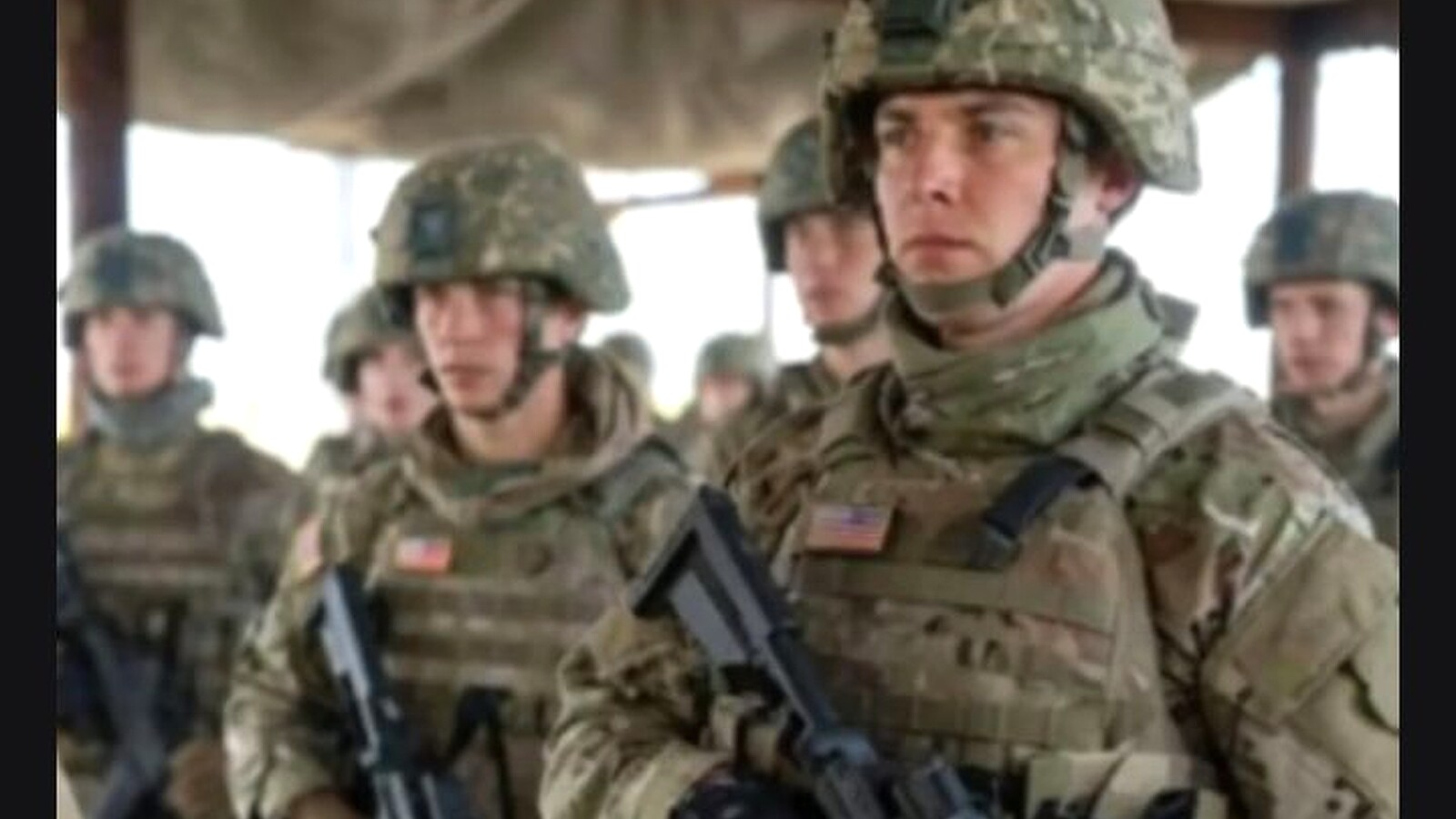
ISLAMABAD: The first United States service members to lose their lives in the ongoing conflict with Iran were killed when an Iranian ballistic missile directly struck a makeshift operations center at Kuwait’s civilian Shuaiba port on Sunday morning local time.
The incident marks a sharp escalation in the war that began with joint US-Israeli strikes on Iran over the weekend.
US Central Command confirmed the rising death toll on Monday afternoon, announcing that the remains of two additional service members were recovered from the site, bringing the total fatalities to six.
Initial reports from military sources indicated three deaths, but recovery efforts amid the debris revealed more victims.
The strike occurred without prior warning or activation of sirens, catching personnel off guard at the fortified tactical facility.
Defense Secretary Pete Hegseth described the target as a tactical operation center that had been reinforced, yet a single projectile penetrated layered air defenses.
This breach highlights vulnerabilities in regional missile interception systems despite ongoing efforts by US and allied forces to counter Iranian barrages.
The operation, designated Operation Epic Fury, commenced early Saturday Eastern Standard Time with coordinated US and Israeli military actions against Iranian targets.
Iran’s retaliation extended beyond its borders, targeting US-allied positions across the Gulf region, including facilities in Kuwait.
Shuaiba port, a key civilian maritime hub, housed the makeshift US setup supporting logistical and operational needs in the theater.
Geolocated imagery reviewed by international media showed smoke rising from the American facility hours after the impact.
Kuwaiti authorities reported intercepting dozens of missiles and drones in the broader Iranian response wave, though one evaded defenses at Shuaiba.
The attack also wounded at least 18 US troops seriously, according to Central Command spokespersons.
Additional injuries included shrapnel wounds and concussions among personnel in the vicinity.
Military officials have withheld the identities of the fallen service members pending notification of next of kin.
This marks the initial combat losses for American forces since the conflict’s outbreak, underscoring the rapid broadening of hostilities.
President Donald Trump and Defense Secretary Hegseth have both cautioned that further casualties are probable as operations continue.
Iranian state media and officials have framed their strikes as defensive responses to aggression against their territory.
The conflict follows heightened tensions, including prior warnings from Iranian leaders about readiness for war.
US military posture in the region had intensified with deployments of air and naval assets in recent weeks.
Kuwait, hosting significant US troop presence, has become a frontline in the spillover effects.
The port strike disrupted local maritime activities, with vessels evacuated to anchorage to avoid further risks.
Broader regional implications include alerts for American citizens in Gulf states to depart via commercial means.
Attacks have affected allied nations, with reports of strikes reaching facilities in neighboring countries.
Military analysts note that Iran’s missile capabilities demonstrated precision in penetrating defenses at Shuaiba.
The event raises questions about the effectiveness of current air defense architectures against evolving threats.
US Central Command continues to update on the situation, emphasizing ongoing recovery and assessment at the site.
The deaths have prompted renewed calls for vigilance among deployed forces.
As the conflict enters its early days, the human cost on both sides remains a stark reality.
Observers anticipate prolonged engagement, with officials preparing the public for sustained operations.
The incident at Shuaiba port serves as a somber milestone in this emerging Middle East crisis.