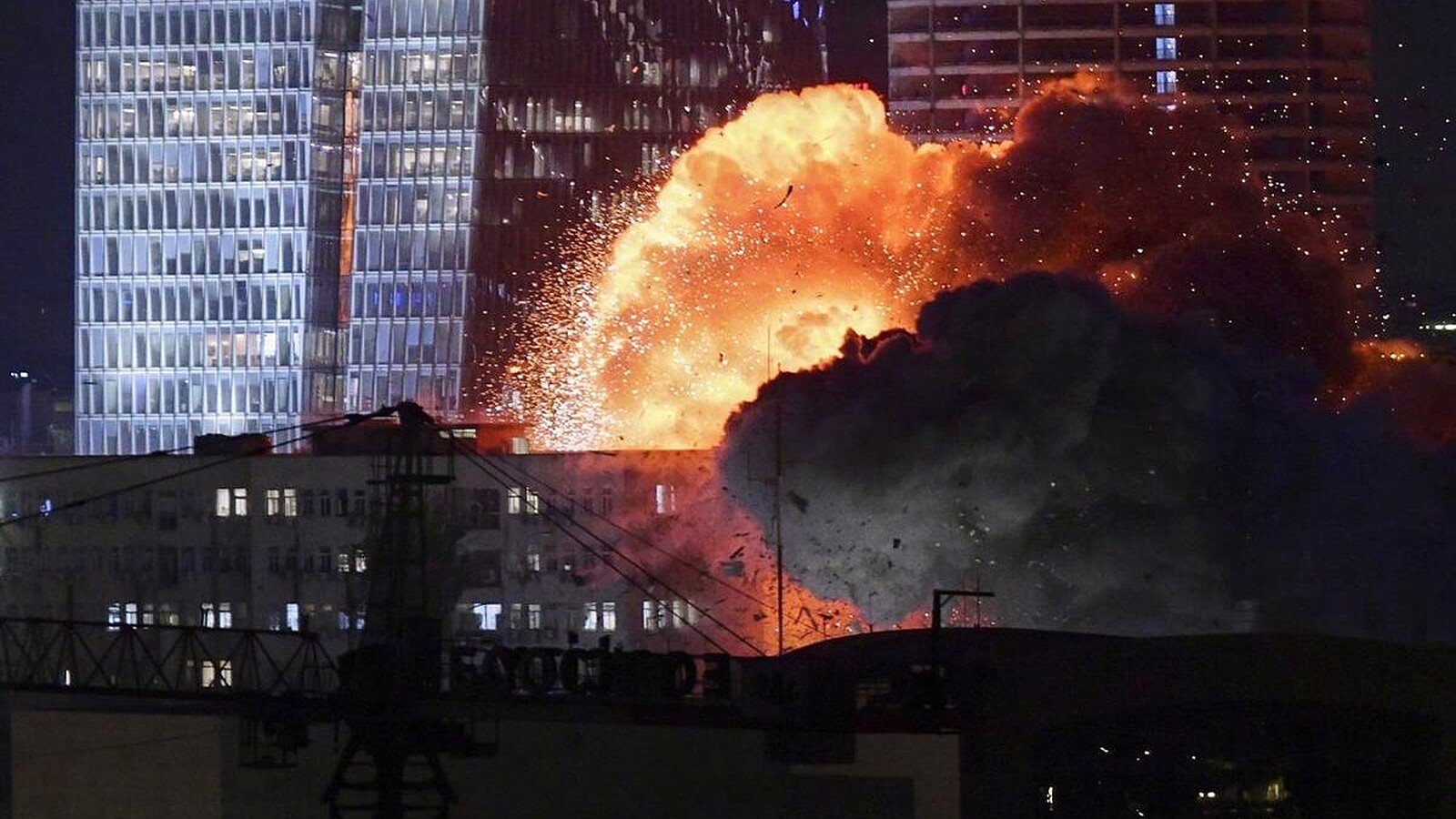
ISLAMABAD: A series of overhead explosions echoed across Jerusalem on Tuesday as AFP journalists reported the sounds following fresh missile launches from Iran toward Israeli territory.
The Israel Defense Forces confirmed detection of the incoming projectiles, stating that defence systems were actively operating to intercept the threat.
This latest barrage comes amid the fourth day of intensified hostilities between the United States, Israel, and Iran, which began with joint US-Israeli strikes targeting Iranian leadership, nuclear facilities, and missile infrastructure.
Reports indicate that the conflict escalated dramatically after the killing of Iranian Supreme Leader Ayatollah Ali Khamenei in an airstrike, along with numerous top officials, prompting Tehran to vow massive retaliation.
Iran has since launched multiple waves of ballistic missiles and drones, not only at Israel but also at US-allied Gulf states hosting American bases.
Israeli military assessments suggest Iran possesses around 2,500 ballistic missiles and has been attempting larger, more coordinated attacks, though hampered by prior strikes on launchers and command networks.
Defence officials estimate that combined US-Israeli operations have destroyed approximately half of Iran’s missile launchers, limiting the scale and coordination of retaliatory strikes.
On March 2 alone, Iran conducted at least six missile barrages toward Israel, a reduction from over 20 on February 28, reflecting degraded capabilities.
Air raid sirens blared across Israeli cities including Tel Aviv, Haifa, and Jerusalem, with interception attempts visible in the skies over the West Bank and central regions.
While many projectiles were neutralized by multi-layered systems like Iron Dome, some evaded defences, causing impacts and casualties in residential areas.
Explosions from interceptions and occasional direct hits have been reported in various locations, heightening civilian alerts and sheltering orders.
The conflict has widened beyond bilateral exchanges, with Iran-backed Hezbollah resuming attacks from Lebanon, including rockets and drones targeting northern Israel.
In response, Israeli forces have conducted simultaneous strikes on Tehran and Beirut, targeting military sites and Hezbollah infrastructure while advancing in southern Lebanon.
US involvement has included extensive airstrikes, with over 1,250 targets hit in Iran, focusing on air defences, naval assets, and missile production facilities.
President Donald Trump has described the campaign as aimed at destroying Iran’s missile capabilities, navy, nuclear ambitions, and proxy support networks, projecting a duration of weeks rather than years.
Israeli Prime Minister Benjamin Netanyahu echoed this, asserting the war would not drag on indefinitely and emphasizing decisive action.
Retaliatory Iranian strikes have extended to Gulf nations, hitting energy facilities and diplomatic compounds, including suspected drone attacks on US embassies in Saudi Arabia and Kuwait.
These developments prompted the US State Department to close embassies in those countries and urge immediate evacuation from 14 regional nations.
Civilian tolls have mounted rapidly, with hundreds killed in Iran from US-Israeli strikes, including reports of collateral damage at civilian sites.
In Israel, missile impacts have caused fatalities and injuries, though precise figures from the latest barrages remain under verification.
The escalation has disrupted regional stability, paralysing energy shipments through the Gulf and affecting global flight routes.
Analysts note Iran’s reliance on ballistic missiles for strikes on Israel, contrasted with drone-heavy attacks on Gulf targets, as it seeks to overwhelm defences.
Despite challenges, Tehran’s persistence in launching barrages underscores its determination to respond proportionally to perceived aggression.
International observers express concern over the potential for further proxy involvement, including from groups like the Houthis, though their recent activity has been limited.
The conflict’s trajectory remains uncertain, with both sides signaling continued operations amid efforts to degrade each other’s strategic assets.
As explosions continue to punctuate the night skies over Jerusalem and beyond, the region braces for further developments in what has become a multi-front confrontation.