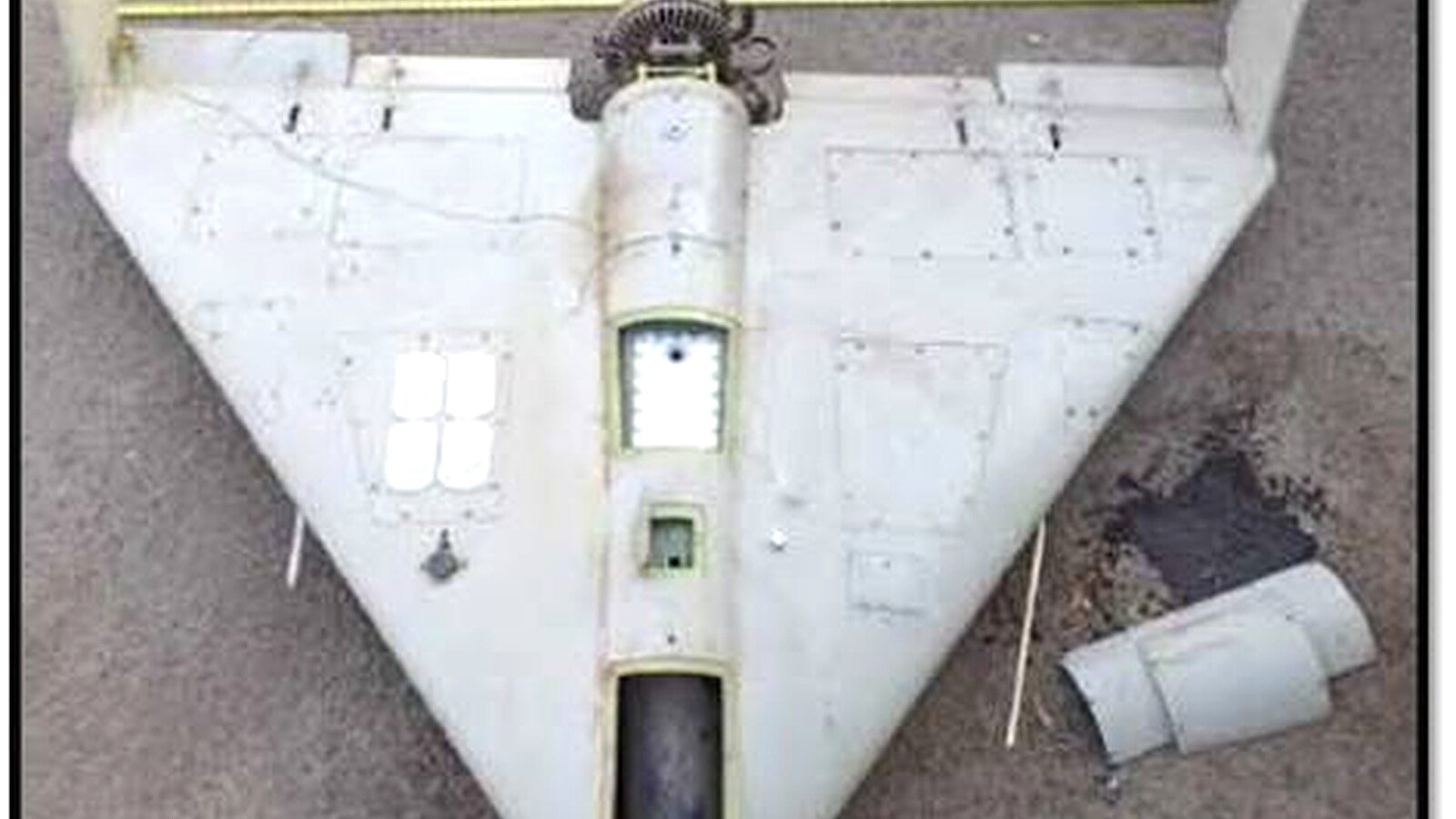
ISLAMABAD: Iran’s deployment of inexpensive drones has highlighted a stark economic imbalance in modern aerial warfare, where producing a single unmanned aerial vehicle costs as little as $35,000 while intercepting it demands expenditures ranging from $500,000 to $4 million.
This disparity, recently underscored in reports from international media, allows Tehran to sustain prolonged offensive operations with relative ease, potentially depleting adversaries’ finite stocks of high-value interceptors in a matter of weeks.
The figure originates from analyses of Iran’s Shahed-series drones, particularly the Shahed-136, a one-way attack munition widely recognised for its simplicity and mass-production potential.
Defence experts estimate the Shahed-136’s production cost between $20,000 and $50,000 per unit, with $35,000 frequently cited as a realistic midpoint based on component breakdowns and observed manufacturing.
In contrast, Western air defence systems rely on advanced surface-to-air missiles such as the Patriot PAC-3, which can exceed $4 million per interceptor when factoring in system integration and operational expenses.
Similar costs apply to other platforms, including SM-6 missiles used by naval forces, often priced in the multimillion-dollar range per shot.
This cost ratio creates an asymmetric advantage for the attacker, as each successful or even attempted interception forces defenders to expend resources far exceeding the incoming threat’s value.
Recent escalations in the Middle East, including Iranian strikes on regional targets and retaliatory actions, have brought this dynamic into sharp focus.
Iran has launched waves of Shahed drones alongside ballistic missiles in coordinated barrages, compelling allied forces to engage with costly countermeasures.
The strategy echoes patterns observed in other conflicts, where low-cost unmanned systems overwhelm sophisticated defences through sheer volume.
In Ukraine, Russian forces adapted Iranian-supplied Shaheds, designated Geran-2, achieving production rates that sustain attritional campaigns despite high interception rates.
Estimates indicate Russia produces thousands annually at facilities expanded for mass output, maintaining unit costs around $35,000 to $80,000 depending on upgrades.
Defenders in such scenarios face the dilemma of either allowing some penetrations or rapidly depleting interceptor stockpiles.
Western militaries, including the United States, have acknowledged this challenge by developing their own low-cost one-way attack drones.
The Low-cost Unmanned Combat Attack System (LUCAS), modelled closely on the Shahed-136, entered combat use for the first time in recent operations, with each unit priced at approximately $35,000.
This adaptation reflects a shift toward affordable mass tactics, enabling sustained strikes without exhausting expensive precision munitions like Tomahawk cruise missiles.
The irony is evident: a design pioneered by Iran now bolsters opposing capabilities, underscoring the democratisation of drone technology in contemporary conflicts.
Analysts warn that prolonged reliance on high-end interceptors risks logistical strain, as replenishment chains for systems like Patriot and THAAD involve complex production and long lead times.
In saturated attacks, even a 90 per cent interception rate leaves defenders vulnerable if munitions reserves dwindle.
Iran’s approach leverages industrial-scale production, including underground storage and rapid assembly, to maintain offensive tempo.
Reports describe stockpiles mounted on launchers, ready for deployment in volleys that force resource-intensive responses.
Gulf states and allies face particular pressure, as defending critical infrastructure against persistent drone incursions accelerates expenditure.
Some estimates suggest interception costs multiply defensive outlays by factors of 20 or more compared to the attacker’s investment.
This financial attrition complements Iran’s broader strategy of deterrence through asymmetric means, avoiding direct confrontation with superior conventional forces.
While advanced electronic warfare, cheaper interceptors, and directed-energy systems offer potential mitigations, current deployments remain dominated by expensive missiles.
Efforts to develop low-cost countermeasures, including interceptor drones priced at a few thousand dollars, show promise but require scaling.
The evolving landscape suggests future conflicts may prioritise quantity over quality in unmanned systems, reshaping doctrines worldwide.
Tehran’s drone programme thus not only projects power regionally but influences global military planning, compelling investments in resilient, economical defences.
As tensions persist, the economics of interception will likely remain a decisive factor in sustaining operational endurance.