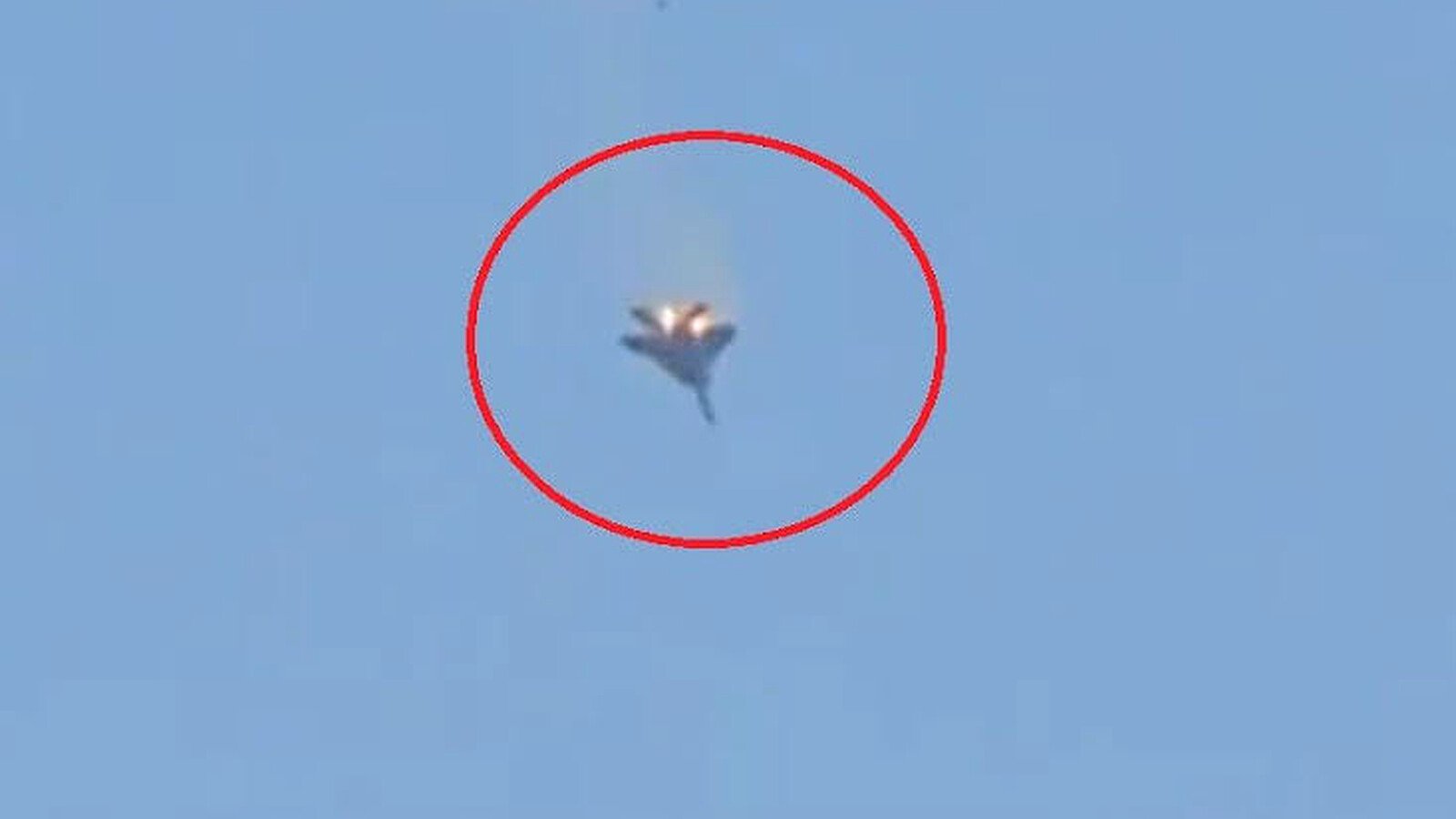
ISLAMABAD: Kuwait’s Ministry of Defence announced on Monday that several United States military aircraft crashed within its territory, confirming that all crew members survived the incidents with stable conditions following prompt medical attention.
The statement from the ministry’s spokesperson, Colonel Saud Al-Atwan, indicated that relevant authorities launched immediate search-and-rescue operations upon the crashes. Crews were evacuated from the sites, transferred to hospitals for assessment, and provided necessary care, remaining in stable health.
Videos circulating on social media, geolocated by international media outlets, depicted a fighter jet spiraling downward in flames with a pilot parachuting to safety. Analysis suggested the aircraft resembled an F-15E Strike Eagle, a twin-engine model operated by the US Air Force.
One prominent video placed the crash near Al Jahra, approximately 10 kilometres from the US-operated Ali Al Salem Air Base, a key facility hosting American forces in the region. The footage showed the jet trailing smoke before impact, underscoring the severity of the event.
Kuwaiti officials emphasised direct coordination with US authorities to investigate the cause, though no preliminary findings have been disclosed publicly. The US Central Command has not issued detailed comments on the incidents, despite inquiries from global news organisations.
The crashes occurred against the backdrop of an intensifying regional conflict involving the United States, Israel, and Iran. Recent days have seen expanded military operations, including strikes on Iranian targets following the reported elimination of high-level figures.
Iran has responded with retaliatory missile and drone barrages targeting US military installations and allied infrastructure across Gulf states. These actions have affected Kuwait, Saudi Arabia, the United Arab Emirates, Qatar, Bahrain, and others, marking a broadening of the confrontation beyond initial theatres.
Reports indicate Iranian projectiles have reached Kuwaiti airspace, prompting air defence activations. Some sources suggest the aircraft losses may stem from hostile fire, while others reference the possibility of friendly fire incidents amid crowded and high-tension operations.
Such occurrences remain rare for US fighter jets deployed overseas and typically prompt thorough investigations by military authorities. Historical parallels include a 2024 incident in the Red Sea where an F/A-18 was mistakenly engaged by naval forces, resulting in safe ejections but no fatalities.
The financial implications are significant, as each F-15 variant costs tens of millions of dollars, representing substantial assets in any air campaign. Loss of multiple platforms highlights the risks inherent in sustained operations within contested environments.
Kuwait’s proximity to major US bases amplifies its vulnerability in the current escalation. The Ali Al Salem facility serves logistical and operational roles, supporting broader missions in the Gulf and beyond.
Civilian involvement in rescue efforts appeared in some footage, with locals assisting downed personnel before official teams arrived. This cooperation reflects longstanding Kuwaiti-US defence ties established since the 1991 Gulf War.
The ministry reiterated its commitment to joint technical measures with US partners to clarify circumstances and prevent recurrence. No casualties among Kuwaiti civilians or forces have been reported in connection with these specific crashes.
Broader regional dynamics reveal a pattern of widening hostilities. Iran’s strategy appears to target US-aligned Gulf nations hosting American troops, aiming to impose costs on coalition partners.
Gulf states have expressed concerns over infrastructure damage and civilian risks from incoming projectiles. Some have intercepted threats successfully, though isolated impacts have occurred.
International observers warn that prolonged engagement risks uncontrolled escalation in one of the world’s most volatile regions. Diplomatic channels remain strained, with no immediate indications of de-escalation.
The incidents underscore the precarious balance in Middle East security arrangements. US presence in Kuwait, dating back decades, faces renewed tests amid evolving threats.
As investigations proceed, attention focuses on technical and operational factors contributing to the losses. Clarity on causation will inform future force protection measures.
Meanwhile, the conflict’s expansion continues to draw global scrutiny, with implications for energy markets, alliances, and stability across the region.