ISLAMABAD: Iran’s Islamic Revolutionary Guard Corps (IRGC) announced on Monday a significant escalation in the ongoing conflict with Israel, claiming a “targeted and surprise” missile strike on the office of Israeli Prime Minister Benjamin Netanyahu and the headquarters or location associated with the Israeli Air Force commander.
The IRGC described the operation as part of the tenth wave of retaliatory actions, executed in response to recent joint strikes by Israel and the United States that reportedly resulted in the death of Iran’s Supreme Leader Ayatollah Ali Khamenei and other senior officials.
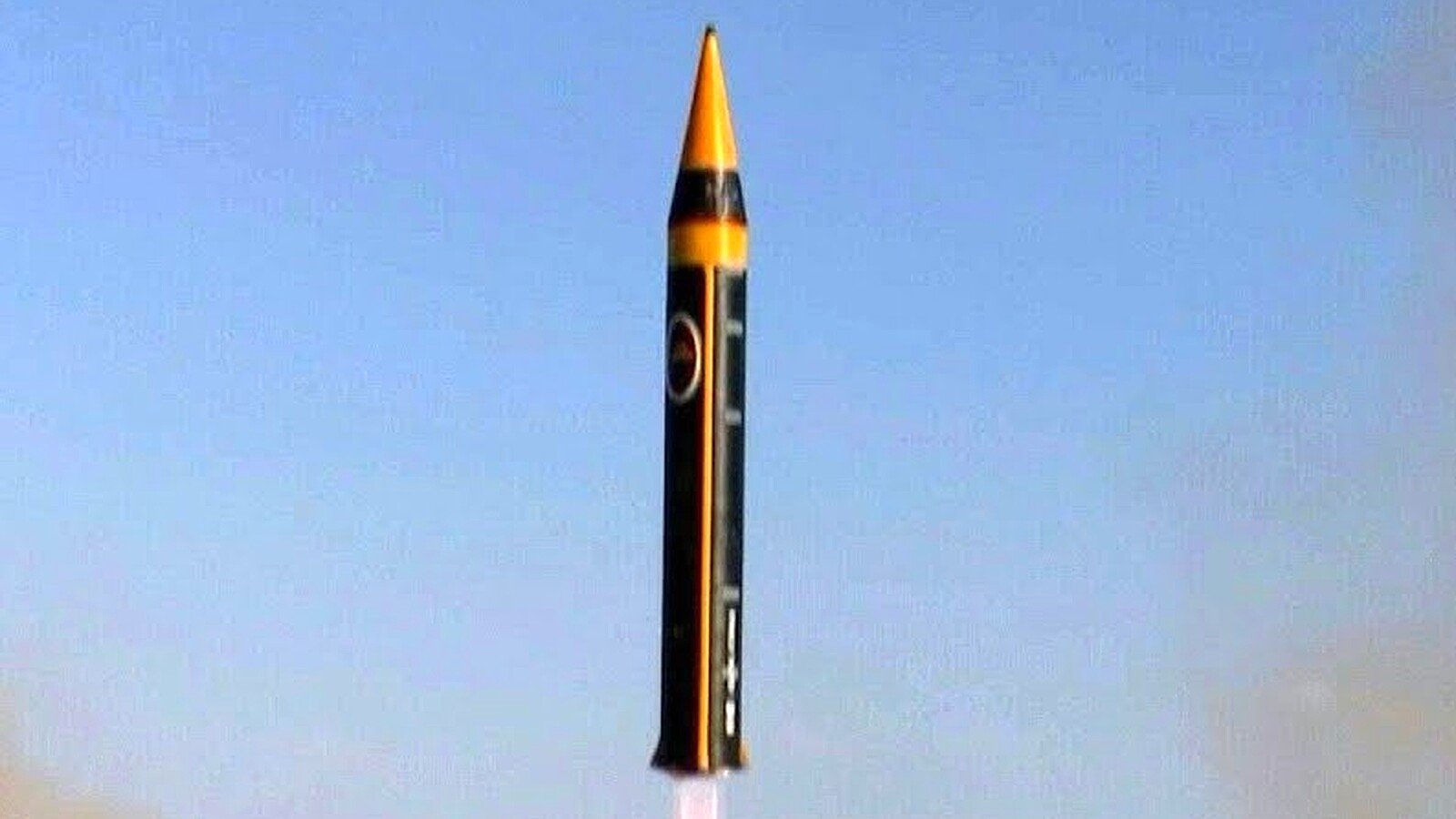
According to statements released through official Iranian channels, including Sepah News and Fars news agency, the attacks employed domestically developed Kheibar ballistic missiles, also referred to as Kheibar Shekan in some reports.
The IRGC asserted that these missiles successfully struck the designated high-value targets, including a government complex in Tel Aviv housing the prime minister’s office and a site linked to Air Force Commander Tomer Bar.
Iranian sources further indicated that Netanyahu’s fate remained unclear following the strikes, with promises of additional details to follow.
The Kheibar Shekan missile, unveiled in February 2022, represents a key advancement in Iran’s ballistic missile programme.
This solid-fuel, medium-range system boasts an operational range of approximately 1,450 kilometres, with some assessments extending to 2,000 kilometres depending on configuration.
It carries a warhead capacity of 450 to 600 kilograms and incorporates manoeuvrable re-entry vehicles and advanced guidance systems, including satellite navigation, designed to enhance precision and evade interception by layered air defence networks.
Experts note that solid-fuel propulsion allows for rapid launch preparation, reducing vulnerability to pre-emptive attacks compared to older liquid-fuel variants.
Iran maintains one of the largest ballistic missile arsenals in the Middle East, with over 3,000 missiles reported in inventories that include systems such as Sejjil, Emad, Ghadr, Shahab-3, and newer precision-oriented platforms like Kheibar Shekan.
These capabilities enable strikes across Israel and regional US military facilities without requiring forward basing.
The latest claims emerge against a backdrop of intensified hostilities, following reported US and Israeli strikes on Iranian targets that killed key figures and prompted Tehran to declare a fight for national survival.
Iran has positioned its missile force as a core element of deterrence, with technology transfers to allied groups expanding regional influence.
Israeli authorities have dismissed the Iranian assertions as “fake news” or “false propaganda”.
Official statements from Netanyahu’s office and the Israel Defense Forces indicated that missile launches from Iran were detected, with defensive systems activated to intercept threats.
Reports confirmed air raid sirens in Jerusalem and other areas, but no injuries were acknowledged from the strikes, and no confirmed impacts on the claimed targets occurred.
The military emphasised that incoming projectiles were neutralised, underscoring the effectiveness of Israel’s multi-layered defence architecture, including systems like Arrow and David’s Sling.
Independent verification of the IRGC’s claims remains limited, with conflicting accounts highlighting the challenges of assessing outcomes in real-time amid active hostilities.
Explosions were heard over Jerusalem, and footage circulated showing apparent interceptions, though the precise impact on intended sites could not be confirmed.
The exchange reflects a broader pattern of tit-for-tat operations that have drawn in multiple actors across the Middle East.
Iran’s response appears calibrated to demonstrate resolve while avoiding full-scale ground engagement.
Analysts observe that such missile barrages serve both military and psychological purposes, aiming to impose costs on adversaries and signal continued capability despite setbacks.
The involvement of high-profile leadership targets marks a notable rhetorical escalation, even as physical damage claims face scrutiny.
Regional stability hangs in the balance as both sides weigh further responses.
The United States and other international actors have monitored developments closely, with potential implications for Gulf security and global energy markets.
As the situation evolves, diplomatic channels may face renewed pressure to prevent wider conflagration.