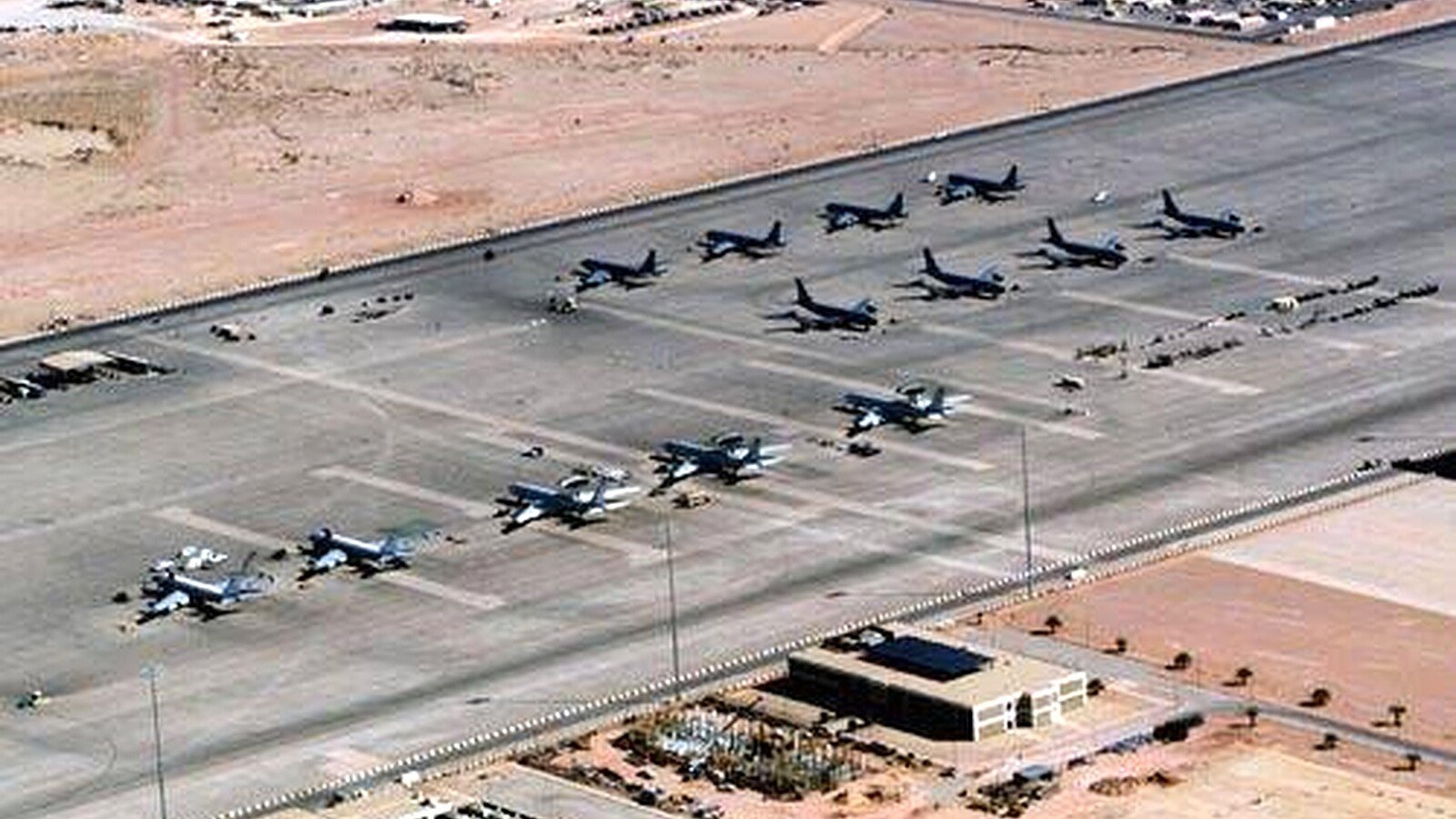
ISLAMABAD: Iranian missiles targeting Prince Sultan Air Base near Riyadh were successfully intercepted by Saudi air defences on Monday morning, according to a Gulf security source briefed on the incident.
The interception marked a second successful defence against Iranian projectiles aimed at the strategic military facility in recent days, amid escalating regional tensions following joint United States-Israel strikes on Iranian targets.
The source, speaking to AFP on condition of anonymity due to the sensitive nature of military matters, confirmed that missiles directed at Prince Sultan Air Base were neutralised without causing disruption to civilian aviation or resulting in casualties and material damage.
Witnesses in the vicinity of Kharj, a city southeast of Riyadh, reported hearing multiple explosions overhead, consistent with air defence engagements against incoming threats.
Prince Sultan Air Base, situated approximately 60 kilometres south of the Saudi capital, hosts a significant United States military presence, including over 2,300 American troops as of recent assessments.
The facility serves as a key hub for advanced air and missile defence systems, notably Patriot missile batteries and the Terminal High Altitude Area Defense (THAAD) system, which have been instrumental in countering ballistic missile threats.
Saudi Arabia’s interception capabilities have been bolstered through longstanding cooperation with the United States, particularly in response to prior regional threats from Yemen-based Houthi forces and other actors aligned with Iran.
This latest incident forms part of a broader pattern of retaliatory actions by Iran, which has launched missile and drone barrages against multiple Gulf states hosting American military installations.
Reports indicate that Iranian forces, including the Islamic Revolutionary Guard Corps, targeted bases in Bahrain, Qatar, Kuwait, and the United Arab Emirates, in addition to Saudi facilities, following American and Israeli military operations against Iran.
In Saudi Arabia, air defences also reportedly neutralised Iranian missiles near King Khalid International Airport in Riyadh during related engagements on Sunday afternoon, with eyewitness accounts describing visible interceptions in the sky over eastern districts of the capital.
No disruptions to air traffic were recorded, and authorities emphasised the absence of human or material losses from these specific interceptions.
The targeting of Prince Sultan Air Base underscores its strategic importance, as the site supports United States air operations and provides critical defence coverage for the Arabian Peninsula.
Military analysts note that such facilities represent forward-deployed assets essential for regional deterrence and rapid response capabilities.
Iran’s missile arsenal, including ballistic variants capable of reaching Gulf targets, has been a focal point of international concern, with ranges extending to cover key infrastructure across the region.
Saudi officials have maintained a stance of measured response, condemning attacks on sovereign territory while avoiding immediate escalation that could broaden the conflict.
The kingdom’s Ministry of Defence has previously announced successful interceptions of hostile drones near the same base, highlighting the robustness of layered defence systems.
Regional observers point to the involvement of multiple Gulf states in these defence efforts, with coordinated alerts and airspace management measures implemented to safeguard civilian populations.
Explosions reported in various locations, including near Riyadh and other eastern areas, have heightened public awareness, though official communications have prioritised reassurance regarding the effectiveness of defensive measures.
The absence of confirmed impacts or casualties in these interceptions contrasts with reports from other targeted locations, where limited damage to infrastructure has occurred.
Broader implications include potential effects on global energy markets, given Saudi Arabia’s pivotal role in oil production, though no direct strikes on major facilities were confirmed in this specific incident involving Prince Sultan.
Diplomatic channels remain active, with some Gulf states summoning Iranian representatives to convey protests against the attacks.
The sequence of events reflects heightened volatility in the Middle East, driven by interconnected conflicts involving state and non-state actors.
Defence experts emphasise the role of advanced interception technologies in mitigating risks from high-volume missile salvos.
Saudi Arabia’s air defence network, integrated with allied systems, continues to demonstrate high success rates in neutralising threats.
This development occurs against a backdrop of ongoing military exchanges, with no immediate indications of de-escalation.
Regional stability hinges on restraint from all parties to prevent further widening of hostilities.