ISLAMABAD: Iran’s Islamic Revolutionary Guard Corps has inflicted what military analysts and regional observers describe as the most embarrassing loss to United States military capabilities in the ongoing conflict with Tehran, after Qatari officials confirmed the destruction of the advanced AN/FPS-132 early warning radar at Al Udeid Air Base.
The strike, part of Iran’s retaliatory operation named True Promise 4, targeted the high-value US asset following joint American-Israeli attacks on Iranian nuclear and missile sites.
Qatari Ministry of Defence sources have corroborated that a precision Iranian missile strike successfully hit and destroyed the radar facility in northern Qatar, causing significant material damage with no reported casualties.
This confirmation from Doha marks a rare public acknowledgment by a Gulf host nation of successful penetration against a protected US installation on its soil.
The AN/FPS-132, an Upgraded Early Warning Radar system, served as a cornerstone of America’s ballistic missile defence network in the Middle East.
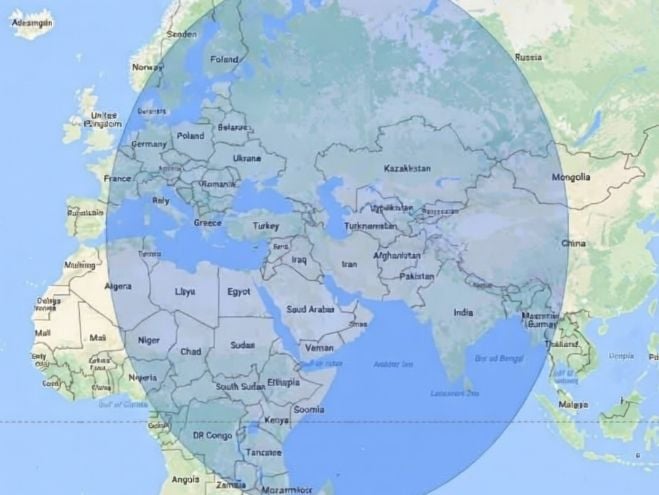
With a detection range extending up to 5,000 kilometres, the radar enabled real-time monitoring of launches across the region, parts of Europe, and Asia.
Its integration into broader architectures like Aegis and THAAD made it indispensable for protecting US forces and allies from Iranian ballistic threats.
Valued at approximately $1.1 billion based on 2013 US Defence Security Cooperation Agency notifications, the system’s loss represents a multibillion-dollar setback compounded by strategic humiliation.
Experts highlight that the radar’s inability to detect or defend against its own incoming threat underscores vulnerabilities in forward-deployed high-value assets.
Satellite imagery and circulated visuals depict severe structural damage to the radar dome and supporting infrastructure at Al Udeid, the largest US military base in the Middle East hosting Central Command forward elements.
This incident builds on a prior Iranian missile barrage in June 2025 that caused limited damage to the base but exposed defensive gaps.
Iranian state media and IRGC statements describe the operation as a precise and devastating blow, using advanced ballistic missiles possibly from the Fattah hypersonic family to overwhelm layered defences.
The penetration despite Patriot and other systems at the base illustrates evolving Iranian capabilities in saturation and precision strikes.
Qatari authorities, while condemning the violation of sovereignty, confirmed interception efforts but acknowledged the radar strike’s impact.
The ministry stated that pre-approved security plans thwarted broader attacks, yet the specific hit on the northern installation was not prevented.
This admission contrasts with initial claims of full interception in some reports, amplifying the perceived embarrassment for US posture.
The destruction disrupts the early warning chain, compelling greater reliance on airborne, naval, or satellite alternatives that increase operational complexity and costs.
Military observers note that such a high-profile loss on allied territory weakens deterrence credibility in the Gulf.
It exposes the challenges of defending fixed, expensive systems against proliferating precision-guided threats.
Broader regional fallout includes heightened tensions over energy routes and shipping, with potential for further escalation cycles.
Iran portrays the strike as proof of declining US invincibility, boosting domestic morale amid sustained pressure.
For Washington, the event prompts urgent reviews of asset hardening, radar diversification, and forward presence resilience.
Analysts argue this stands as one of the most significant symbolic and operational defeats for American forces in recent Middle East confrontations.
The confirmed destruction by Qatari officials elevates the incident beyond Iranian claims, cementing its status as a major setback in the war against Iran.