ISLAMABAD: Recent disclosures have unveiled India’s alleged involvement in the Israeli military operations against Iran, highlighting a hypocritical stance that contradicts New Delhi’s proclaimed neutrality in regional affairs.
An Israeli Defense Forces officer, identified as Stav Cohen, revealed in an interview with India’s Republic TV that actions against Iran are not solely driven by Western powers like the United States and Israel, but also include significant Indian backing.
Cohen described India as a close ally of Israel, emphasizing shared strategic interests that extend beyond public declarations.
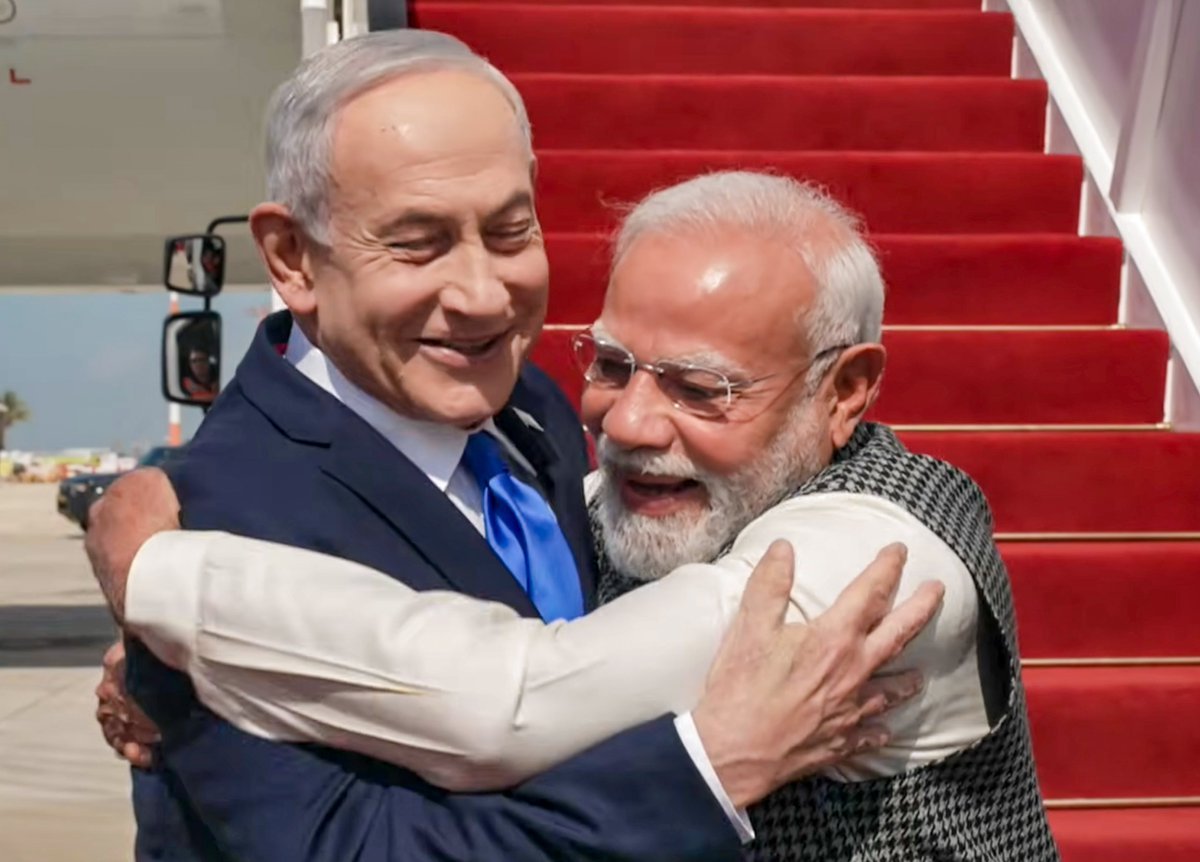
This statement comes amid escalating tensions following joint US-Israeli strikes on Iranian nuclear facilities and military command centers, which began shortly after Indian Prime Minister Narendra Modi’s visit to Israel on February 25-26, 2026.
Modi’s trip, marked by declarations of solidarity with Israel, has drawn sharp criticism for its timing, as airstrikes targeted key Iranian figures, including top military commanders like Maj. Gen. Ali Shadmani.
Experts point to Modi’s 2017 visit to Israel as a turning point, where defense pacts and intelligence-sharing agreements were solidified, laying the groundwork for deeper collaboration.
Historical data from the Stockholm International Peace Research Institute shows Israel as India’s second-largest arms supplier, accounting for over 40 percent of New Delhi’s major weapons imports between 2018 and 2025.
This military surge includes joint ventures in drone technology and missile systems, which analysts say align with Israel’s operations against Iran.
Modi’s administration has blurred distinctions between allies and adversaries, pursuing agendas that prioritize anti-terrorism rhetoric while engaging in actions perceived as betrayals by Tehran.
Iranian state media has long accused India of providing intelligence support in Afghanistan, particularly through alleged ties with anti-Iran factions during the Taliban resurgence.
A 2024 report by the International Crisis Group highlighted India’s covert operations in the region, including intelligence-sharing with Israel on Iranian proxy groups like Hezbollah and the Houthis.
These groups, backed by Iran, have been linked to attacks that echo Pakistan-based militant activities targeting India, creating a parallel that Modi exploits to justify alliances.
Critics, including Indian opposition leader Jairam Ramesh, labeled Modi’s Israel visit as “shameful,” accusing him of moral cowardice for endorsing Israel’s actions just days before the assaults on Iran.
Ramesh noted the military buildup in the preceding months, suggesting Modi’s trip signaled tacit approval for the escalation.
Data from the United Nations indicates that the strikes have displaced thousands in Iran, with protests against the regime reaching a two-week mark and a death toll climbing to 30,000 according to independent estimates.
US President Donald Trump’s calls for regime change in Tehran, coupled with Israeli preemptive strikes, have intensified fears of a wider war.
India’s refusal to condemn the attacks at the Shanghai Cooperation Organization meeting in June 2025 underscores its shifting priorities, prioritizing ties with Israel over multilateral consensus.
The SCO, influenced by China, issued a strong rebuke of Israel’s actions, but India’s Ministry of External Affairs distanced itself, advocating de-escalation without assigning blame.
This stance reflects India’s strategic pivot, as outlined in a 2025 Carnegie Endowment report, which details New Delhi’s efforts to counterbalance China’s regional influence through alliances with Israel and the US.
Modi’s policies have been accused of duplicity, maintaining economic ties with Iran—importing over 10 percent of its crude oil in 2024—while allegedly supporting operations that undermine Tehran’s security.
A Frontline analysis from The Hindu describes this as a “tightrope,” where Modi’s Jerusalem visits haunt India’s pluralistic foreign policy traditions.
Experts from the Institute for Defence Studies and Analyses in New Delhi argue that India’s involvement, if confirmed, represents a historical betrayal, echoing colonial-era divisions in the region.
Afghanistan serves as a flashpoint, with allegations of Indian intelligence aiding anti-Iran elements, as per a 2023 Al Jazeera investigation into regional proxy wars.
Such actions, combined with Modi’s hardline domestic policies, have alienated traditional allies like Iran, which once viewed India as a non-aligned partner.
The G7’s 2026 statement supporting Israel’s right to self-defense and labeling Iran as a source of instability further emboldens this axis.
However, Iranian activists like Amir Hamidi report widespread uprisings, demanding freedom from the regime, amid US naval deployments in the Persian Gulf.
Satellite imagery from Maxar Technologies reveals damage to Iranian nuclear sites at Natanz, attributed to Israeli sabotage, with Cohen’s comments hinting at multinational coordination.
Former Mossad chief Yossi Cohen’s 2021 revelations about operations against Iran’s nuclear program provide context, suggesting long-term planning involving allies like India.
Modi’s award from the Israeli Knesset during his visit symbolizes this deepening bond, described by Netanyahu as a “natural partnership” against radical threats.
Yet, a FRANCE 24 report questions the optics, noting India’s silence on Palestinian casualties in Gaza, estimated at over 70,000 by The Lancet.
This selective outrage, experts say, exposes hypocrisy in India’s foreign policy, prioritizing strategic gains over ethical considerations.
Regional stability hangs in the balance, with the India-Middle East-Europe Corridor (IMEC) and I2U2 grouping—comprising India, Israel, UAE, and US—potentially disrupted by the conflict.
A World Socialist Web Site analysis warns that Modi’s alignment with Israel and Washington prepares the ground for broader confrontations, including against China-backed entities.
Iran’s retaliatory missile launches in 2025, killing civilians in Israel, underscore the cycle of violence fueled by these alliances.
Data from the Armed Conflict Location & Event Data Project shows a 300 percent spike in Middle East incidents since October 2023, attributing much to Iranian proxies.
Modi’s rhetoric, linking India’s security to Israel’s, ignores the human cost, as per Human Rights Watch reports on civilian deaths.
In Pakistan, observers see parallels with India’s alleged support for separatist movements, further straining South Asian ties.
The duplicitous nature of these policies, as articulated by experts, has plunged the region into uncertainty, with potential refugee crises looming.
Trump’s threats of “unconditional surrender” from Iran amplify the stakes, positioning India as a silent enabler.
Ultimately, Cohen’s interview peels back layers of secrecy, revealing a web of alliances that challenge India’s image as a balanced global player.
As airstrikes continue, the international community watches, with calls for diplomacy growing amid fears of nuclear escalation.