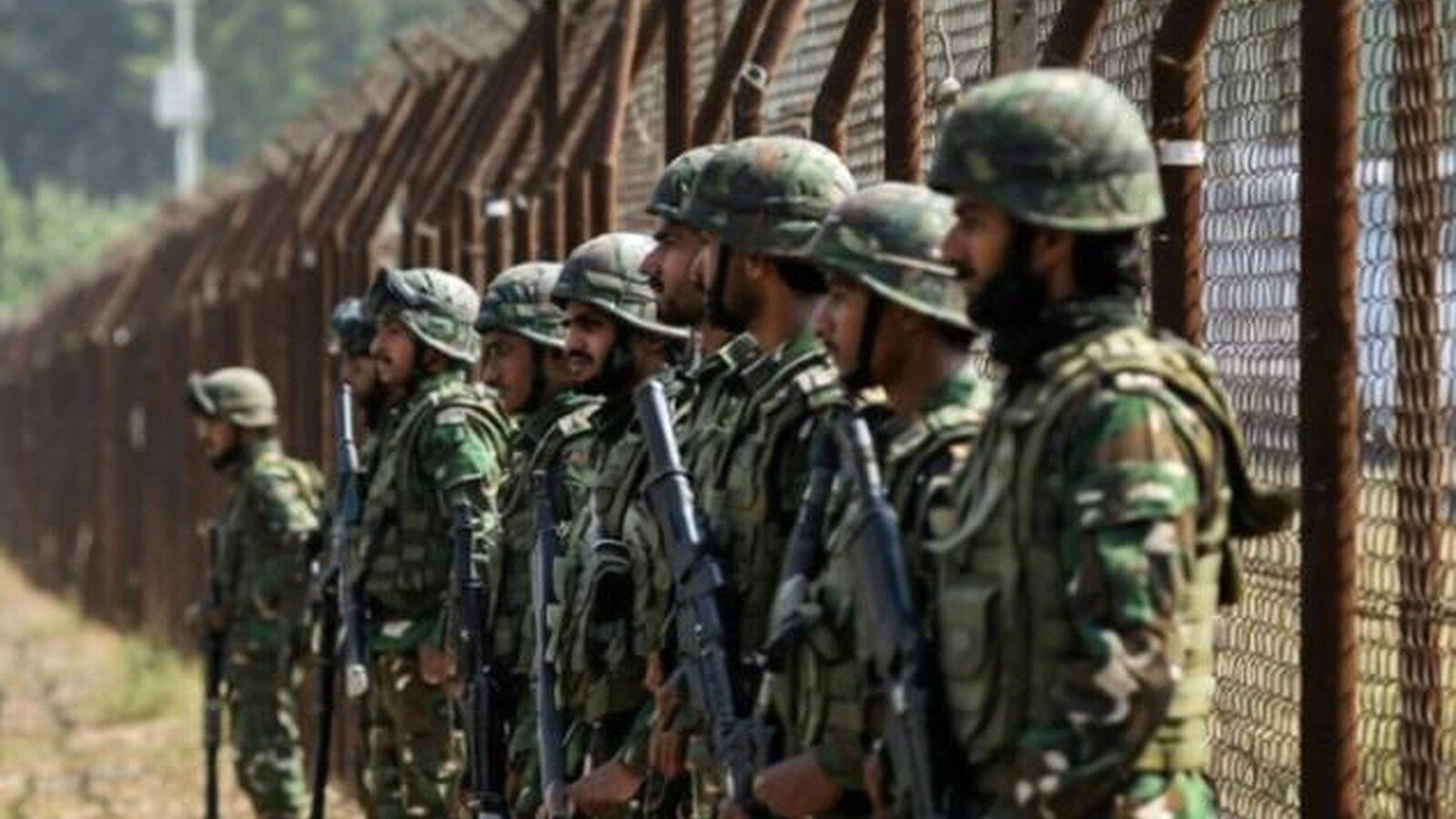
ISLAMABAD: The Indian Army has reaffirmed that Operation Sindoor remains active, declaring preparations for a significantly expanded second phase that would deliver a more severe response to any provocation from Pakistan.
Lieutenant General Rajesh Pushkar, General Officer Commanding of 2 Corps under the Western Command, made the remarks during interactions with media personnel and at a high-profile Operational Capability Demonstration held in Pathankot, Punjab.
He described the initial phase of Operation Sindoor, executed in May 2025, as a limited demonstration intended primarily for training purposes.
In that operation, India conducted precision strikes on nine major terror launchpads linked to groups such as Lashkar-e-Taiba, Jaish-e-Mohammed, and Hizbul Mujahideen, located in Pakistan and Pakistan-administered Kashmir.
The strikes followed the April 22, 2025, Pahalgam terror attack in Indian-administered Jammu and Kashmir, where 26 civilians, predominantly Hindu tourists, lost their lives in a targeted assault.
Indian officials attributed the attack to Pakistan-backed militants, prompting a swift military response that escalated into a brief four-day conflict from May 7 to May 10, 2025.
During the confrontation, India employed stand-off weapons, including cruise missiles and precision-guided munitions launched from aircraft such as Rafale jets.
Pakistan retaliated with its own strikes, leading to exchanges involving drones, air defence systems, and attacks on military installations on both sides.
The hostilities concluded with a ceasefire agreement reached through direct communication between the Directors General of Military Operations of the two countries.
Lieutenant General Pushkar asserted that the original operation brought Pakistan to its knees within four days, compelling Islamabad to request cessation of hostilities via DGMO channels.
He characterized the initial action as providing Pakistan with only a small sample of India’s capabilities.
The General emphasized that Operation Sindoor continues without interruption, with the objective of eradicating terrorism originating from across the border.
Preparations for what has been termed Operation Sindoor 2 or Op Sindoor 2.0 are described as far more extensive in scale and scope.
Details regarding the nature, geographical extent, or specific targets of any forthcoming actions have not been disclosed publicly.
The Lieutenant General indicated that the response would depend on the degree of provocation and could involve decisive damage across land, sea, or air domains.
He stressed the Indian Army’s full readiness to execute operations calibrated to inflict lasting impact.
These statements align with parallel remarks from Lieutenant General Manoj Kumar Katiyar, General Officer Commanding-in-Chief of the Western Command.
In separate addresses, he dismissed Pakistan’s nuclear rhetoric as a bluff rooted in weakness and affirmed a doctrinal shift toward achieving decisive ground victories rather than limited retaliatory measures.
He warned that future responses would exceed the intensity of the 2025 operation and would not confine themselves to terrorist infrastructure alone.
The rhetoric emerges against a backdrop of enduring regional instability between the two nuclear-armed neighbours.
Analyses of the 2025 conflict highlight India’s demonstration of air superiority, effective integration of indigenous defence systems, and ability to operate below the nuclear threshold without triggering full-scale escalation.
Post-conflict assessments note gaps in capabilities that India is addressing, including enhanced drone integration, improved intelligence structures, and greater self-reliance in equipment.
Pakistan, meanwhile, has focused on reinforcing its nuclear command and control mechanisms and military preparedness.
The absence of active large-scale kinetic operations at present suggests the declarations serve primarily as deterrence signalling and readiness affirmations.
International observers continue to monitor developments closely, given the potential for miscalculation in South Asia.
The Indian military’s posture underscores a long-term commitment to counter cross-border terrorism through calibrated but firm measures.
Such statements contribute to heightened vigilance along the Line of Control and international borders.
Regional stability remains fragile, with diplomatic channels playing a critical role in preventing unintended escalation.