ISLAMABAD – Pakistan ended the year 2018 on a high on the foreign policyfront as Islamabad started to regain glory at the regional level.
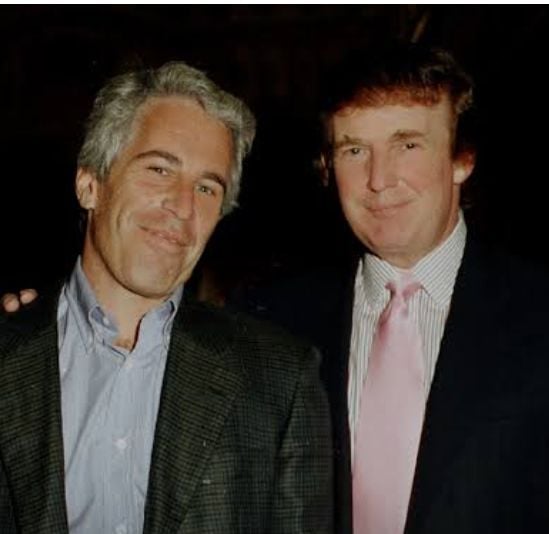
The year 2018 which had not started off well with the US President DonaldTrump’s announcement to cut off aid to Pakistan, ended on a positive notewith Islamabad starting to make a comeback as a main player in the region.
The US, which had discarded Pakistan in the outgoing year, returned to thetalking terms after finding no way out in Afghanistan.
Donald Trump wrote a letter to Prime Minister Imran Khan seeking help inresolving Afghanistan issue. PM Khan in response said that ‘the US hasrealised that peace cannot be attained in Afghanistan without Pakistan’shelp.’
Officially allies in fighting terrorism, Pakistan and the US have acomplicated relationship, bound by Washington’s dependence on Pakistan tosupply its troops in Afghanistan but plagued by accusations Islamabad isplaying a double game.
Trump had said in an interview that Pakistan doesn’t ‘do a damn thing’ forthe United States despite billions of dollars in US aid, adding thatPakistani officials knew of former Al-Qaeda leader Osama Bin Laden’slocation before his killing by US troops in a 2011 raid inside Pakistan.
PM Khan hit back saying that the US should not blame Pakistan for itsfailures in Afghanistan. Later, Afghan President Ashraf Ghani said that hehad formed a 12-strong team to negotiate peace with the Taliban, but warnedthat implementation of any deal would take at least five years.
Then there were a series of visits by the US officials, holding talks withthe Pakistani counterparts for the solution to the Afghanistan issue andthe regional peace. Although the trust between Pakistan and the US remainsweak, yet the regular interaction has upgraded the ties to the workinglevel.
Pakistan arranged talks between the US and the Afghan Taliban in Abu Dhabithis month. Another round will be held in Saudi Arabia in January. The UShas been appreciative of Pakistan’s new role, indicating improvement in therelationship.
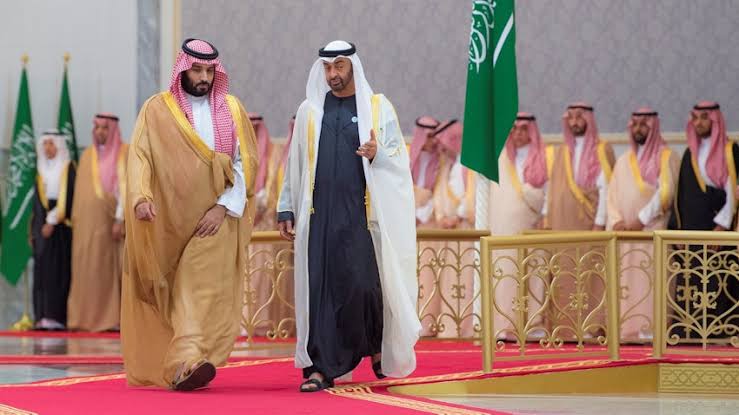
After taking over power in August, Prime Minister Khan undertook two visitsto Saudi Arabia and the United Arab Emirates. Both these visits were termedhighly successful.
The Prime Minister also visited China, Pakistan’s all-weather friend.Additionally, Foreign Minister Shah Mehmood Qureshi visited Afghanistanmany times and several other countries including the US, Russia and China.
Pakistan received foreign ministers from China, Japan and many othercountries over the last 4 months. The foreign minister led a delegation toNew York this year, in which he had more than 56 international engagementsboth in New York and Washington.
The US Secretary of State Mike Pompeo visited Pakistan; Ambassador ZalmayKhalilzad, the US Special Envoy for peace and reconciliation in Afghanistanvisited Pakistan 3 times.
“All in all, it has been a very intense, productive and proactive 120-130days of diplomacy that has been carried out by this government,” foreignoffice spokesperson Dr Muhammed Faisal said.
Most recently, the foreign minister visited 4 regional countries includingRussia within a span of 3 days. Before that, the foreign minister visitedKabul for a tri-lateral meeting between Pakistan, Afghanistan and China.
“We tried to reach out to India and a letter was written by our PrimeMinister to Prime Minister (Narendra) Modi in September 2018. It laid out acomprehensive roadmap on how to move forward with India on all issuesincluding, of course, the Jammu and Kashmir dispute. The Indians agreed toit, only to back track the very next day. We haven’t had much progress withthem on the bilateral front so far,” Dr Faisal said.
However, that did not stop Pakistan from inaugurating ground breaking ofKartarpur Corridor, in which two Indian ministers, one federal and theother a minister of state, along with Navjot Singh Sidhu, an Indianprovincial minister, were present.
Read Top Stories
“It was very positively received all around the globe, especially by theSikh community. We are actively working on developing the infrastructure inKartarpur,” Faisal remarked.
Qureshi also visited Iran this month to seek Tehran’s input on peace inAfghanistan. He briefed Iranian counterpart on the Afghan Taliban’s talkswith the US.
The FM participated in the China-led tripartite dialogue in Kabul which wasattended by Afghan Foreign Minister Salahuddin Rabbani and Chinese ForeignMinister Wang Yi. The meeting aimed to advance the ongoing peace talks inAfghanistan to catalyse an end to the 17-year invasion of the country bythe US troops.
Army Chief Qamar Javed Bajwa also visited Iran and had positive meetingswith civil and military leaders. During Bajwa’s visit, the two sides heapedpraise on each other despite differences on regional issues – mainlyAfghanistan.
General Bajwa met President Hassan Rouhani, Foreign Minister Muhammed JavadZarif and the chief of staff of Iran’s armed forces Major General MuhammadHossein Bagheri. Days before the army chief’s visit, Pakistan and Iran hadagreed to work together for peace in Afghanistan and regional stability.The two countries had held informal consultations on regional situationincluding Afghanistan.
In November, Russia had hosted talks on peace and Afghanistan Taliban whichamong Afghan leaders were also participated China, Iran and Pakistan.Sitting between Afghan representatives and their Taliban rivals, RussianForeign Minister Sergei Lavrov played the roles of mediator and experiencedhand in Afghanistan’s conflicts.
Russia hosted the landmark talks almost 30 years after it pulled out ofAfghanistan, ending a decade-long Soviet occupation that was seen asanother chapter in what historians called the “great game” by world powersto hold away over Afghanistan and nearby areas.
There were no significant breakthroughs during the Moscow meeting, whichwas attended by representatives of 11 countries. But delegates widelyacknowledged that the meeting itself was a feat.
Pakistan’s engagement with Russia is on the verge of translating into apartnership. The present government cannot claim all the credit for thisrelationship but taking it further would definitely be among the goals forthe year 2019.
Saudi Arabia and United Arab Emirates have come to Pakistan’s rescue amidthe economic crises which speaks about the friendly ties.
Friendship with China has been a cornerstone of the foreign policy and thecurrent government too has kept faith in Beijing. Exchange of visitsbetween Islamabad and Beijing are expected in 2019 to keep the friendshiprunning. Beijing has already promised a package for Pakistan to boost thecountry’s economy.
As the New Year starts, the government will have to improve trust levelwith the US, enhance contacts with Russia, retain its ‘key player’ positionon Afghanistan and retain ties with close friend China.
Removing misunderstandings with Iran would be a challenge. Enhancing tieswith the Middle East and the European countries would also be on the agenda.
Pakistan is also expecting the US’ support to bring India on the talks’table for the sake of regional peace.
By: Shafqat Ali